Amy

Every moment of happiness that the documentary Amy portrayed was foreshadowed by the knowledge of her sad and premature death. We watched as a young women who loves singing and writing poetry was transformed into a 21st icon, a global superstar and a figure of hate. Learning of Amy Winehouse’s alcoholism, bulimia and drug addiction I felt ashamed for having judged her in the past – I remember reading about the gigs she cancelled and I remember thinking that she had let her fans down and been selfish. I had no idea of the context. As I watched I also felt complicit in the diabolical system that contributed so heavily to her death. And as the film shows it all began with her ability to sing.

A short clip of Winehouse as a teenager singing Happy Birthday to a friend begins the film and immediately demonstrates her talent. She states on numerous occasions how much she loved singing. Of course, her love of music was what made her and broke her because a voice like Winehouse’s is the perfect voice for commodification. Without ever stating it the film shows what happens to a successful artist in a consumer capitalist society. It began by assigning Winehouse’s voice a price tag. Be it as recorded songs on a CD or as a ticketed performance these were all ways people could make money from her voice. As she became more successful so her voice became worth even more – her album Back To Black sold millions of copies worldwide. Her increased popularity tied in perfectly with the underlying logic of capitalism, namely growth – keep exploiting a resource for profit until it’s depleted.

So Winehouse’s art was continually exploited. The film shows bleak clips of various people close to her using her celebrity status and wealth for their benefit. Her father, ex-husband, managers and production companies (Universal Music Group included) are all shown pushing her to perform more and produce more music. Her rise in monetary value coincided with her increased addiction to drugs and alcohol yet so many of the people around her did not stop to ask too many questions – why would they when they were getting so rich? Meanwhile, the press and her fans treated her as an idol. They garnered her with almost mythic status and placed her on a pedestal that she never deserved to be on. Of course, the paparazzi were all to happy to wrench her down from this plinth when her addictions and suffering meant she could no longer perform as a commodified celebrity is expected to. One moment that sticks out from the film is when she’s onstage at Belgrade and as she stumbles and falls the band look on and laugh. Meanwhile, the audience cheer her and then, when she doesn’t sing, boos her. “Sing or give me my money back” chants some of the crowd.

Commodity, idol, hate-figure, voice, character in a documentary – it seems one of the things Amy Winehouse was rarely treated as was a human.

I contributed to this process. I bought her album Back To Black, thereby adding another figure to her record sales, further assuring her success. I did not look to the woman behind the music – a woman suffering from depression, bulimia, substance abuse and abusive relationships – I heard her only as a beautiful voice. This process continues today. Her death will have significantly boosted her sales figures and the film Amy will make Universal Music Group an awful lot of money. As the credits rolled I saw that even Winehouse’s teenage rendition of Happy Birthday caught on a video camera by her friend is owned by a record label – even that brief song has been commodified. Under capitalism nothing escapes the profit motive and all is governed by a certain form of addiction – the addiction to money.

Amy the film is not the final say – it’s a carefully edited version of events that tries to tell one particular story. It paints her ex-husband and father as simple villains and never really tries to understand their behaviour. It also turns Amy Winehouse’s life into a slick narrative with a clear beginning, middle and end – her life is contextualised by her music and her tragic death. Of course, the one person who had no say in this process was Amy Winehouse – once again she is robbed of a voice and presented as a certain sort of person – the sort of person whose ‘story’ will attract lots of people to cinemas. This is the numbers game of consumer capitalism – a game that can cause climate change, facilitate resource wars, initiate global recessions and, most certainly, relentlessly capitalise on a vulnerable but talented young woman far beyond her death.

This system will change but for now I’ll leave you with one of Amy Winehouse’s brilliant songs:
History Repeating

Shirley Bassey said it best, whatever innovations and revolutions are promised, it usually just turns out to be a little bit of history repeating. The same is true for British politics. David Cameron can walk triumphantly (and smugly) back into Number 10 whilst Ed Miliband hangs his head in shame and exits stage left but underneath the trials and tribulations of party politics history will just keep repeating. It is a history of capitalism in the UK and before we can change it we must have the courage to critique it.

What we have seen is a failure of politics, a failure of democracy at a cultural level, part of a larger story playing out across the struggling countries of the post-industrial west.” These words are taken from Dougald Hine’s exemplary blog, a philosopher who understands the underlying tectonics of politics and economics. Using some of his blog as inspiration I will analyse why contemporary politics are caught in the endless repetition of history.

*

Tories: the Tories think they have won and, for now, they have. They quite marvellously (and maybe even unintentionally) weakened their political rival the Labour Party. The Tories successfully made people believe that Britain’s economic woes were the result of Labour’s over-spending and conveniently forgot to mention that the actual cause was the unregulated banking sector capitalising on the housing market and using too-good-to-be-true sub-prime mortgages to profit from toxic assets. The public bailout of the banks nationalised a private debt to the tune of billions that has still not been paid back. Yet the Tories have done next to nothing to try to re-regulate the banks thereby increasing the likelihood of another recession all too soon.

They tried to scare people into voting for them – it’s either our ‘sensible’ economic plan or ‘chaos’ – and it worked. Unfortunately, capitalism churns on unchallenged and booms and busts will continue to affect Britain. Yet, the Tories are unashamed in their imposition of austerity – a policy that will exacerbate inequality, weaken the working and middle classes and actually undermine Britain’s economic recovery. Even the IMF has advised against such a plan but George Osborne has ignored it. They got votes by promising people houses and security. But the middle classes will not be safe from the Tory cuts – austerity will undermine public services that middle class people rely on and increased inequality will cause greater social discord, discord that will reach the doorstep of middle class houses.

Meanwhile, with no serious redress of the housing crisis and no attempt to curb ruthless profiteering in the housing market, prices will continue to rise and people will find themselves trapped in unaffordable mortgages or conned into suspiciously affordable mortgages born on an ongoing housing bubble. The Tories are signing their own death warrant. They’ll take as much credit as possible for any minor growth in the economy and then squirm if/when the next bubble bursts and the economy dips. They told us that voting for Ed Miliband would result in ‘economic chaos’. That chaos is going to unravel anyway and this time it will be on the Tory watch and they won’t be able to scapegoat Labour anymore.

Labour: is trying to figure out how to rebrand themselves. Some think it best to become a New-New Labour type party, whilst others think they need to appeal more to the working classes. Going right for Labour means trying to play the Tories at their own game – using the defunct discourse of class politics to convince people that they can rise up through the social ranks and embed themselves comfortably in the land of the middle class. Heading this direction affirms the view that Labour have now shifted right of centre, a process initiated by Tony Blair as he embraced the precepts of neoliberalism (he was, after all, Margaret Thatcher’s self-professed “greatest legacy”).

Going left for Labour means trying to appeal more to the working classes but in a post-industrial society the working classes are not what they used to be. Firstly, Margaret Thatcher effectively won the class war when she crippled the mining communities and their means of representation in politics, i.e. the unions (it’s also worth bearing in mind that basing one’s community around the extraction of a finite resource, i.e. coal, is always going to ensure a limited shelf life). Secondly, in our post-industrial economy many of the industries we have now revolve around 0 hour contracts, call centres and other service sector jobs – it is very hard to imagine flourishing and cohesive communities forming around these sorts of work. We have also outsourced so much of our labour to countries like China that we have far less of a working class anyway. So if Labour do go left they won’t be able to rely on their old industrial working class style rhetoric.

Ukip: will do what they do best – completely ignore the larger macro-economic issues and scapegoat immigrants for the inevitable loss of jobs following a recession. A tried and tested approach, remember Enoch Powell.

*

The Next Five Years: sadly things won’t magically get better. Unless the ruling government addresses the economic instabilities built into the British capitalist system then history will keep repeating – we’ll have more recessions which will result in people losing jobs, even more jobs will be lost as labour is taken on by machines and the sectors in which new jobs are created will only provide temporary redress (although maybe not for hairdressers and plumbers).

So in about five years time we’ll be fed up of the Tories who will have crippled the long-term chances of the British economy with over-zealous austerity. We will be desperate for change and will turn to the rebranded Labour Party, they’ll promise a land of milk and honey, and will blame the Tories for causing the latest recession. If they get into power, which isn’t guaranteed, they’ll try to ride the wave of what little economic growth follows the recession. Meanwhile, extreme right-wing parties will scapegoat immigrants for our economic woes and stir up xenophobia. It will be all too similar to the times that Thatcher beat Callaghan, Thatcher lost to Blair and Brown lost to Cameron/Clegg. Indeed, as Shirley Bassey astutely observed, it will all just be a little bit of history repeating.

More Than Hope

Following the election many are saying it is time Labour went back to the drawing board and engaged in some serious soul-searching. Two such pundits include Pat McFadden, shadow Europe minister, and Owen Jones, Guardian columnist. Below I analyse their views and argue that both do not go nearly far enough because they don’t address the underlying issue – an issue much bigger than a Labour party rebrand and petty party politics. In truth, it is an issue as big as capitalism itself.

McFadden was quoted in a Guardian article saying: “…if there was one thing Ed Miliband was clear about, he was turning the page on New Labour even more emphatically than Gordon Brown was, and we see the results even more emphatically last night. We don’t just need a new person at the top of the Labour party, we need a new argument, too. We will always be the people of the lower paid, but we need to be more than that and be the party of the aspirational family that wants to do well. We need to speak about wealth creation and not just wealth distribution.”

In his article Jones recounts the Conservatives’ masterful victory over their left-wing rivals: their successful scapegoating of the Labour Party for the 2008 recession, their forcing of Labour to turn their backs on immigrants and the right-wing media’s stirring of Scottish nationalism to ensure a mass shift to the SNP and their stirring/scaring of English nationalism to ensure more blue votes. The Tories severely weakened their opponent and are enjoying a majority for it. He concludes with his aspirations for a new Labour politics as so: “There will be a big debate now over the future of the Labour party, and what the left does next. This country desperately needs a politics of hope that answers people’s everyday problems on living standards, job security, housing, public services and the future of their children. That is needed more than ever, no matter what happens with the Labour leadership. What is needed is a movement rooted in the lives of working-class people and their communities. The future of millions of people depends on it.

*

I do not think either of these views are good enough. McFadden argues that Miliband’s leftwards shift from New Labour policies was a mistake. Now, Margaret Thatcher herself said that her greatest legacy was Tony Blair – he adopted right-wing neoliberal policies that she had initiated. He turned his back on the working classes and encouraged a capitalist rhetoric of ‘get rich and get middle class’. But the constant surge of boom and bust in capitalist economics, increasing levels of inequality and the squeezing of the middle prove that when push comes to shove the middle classes will be ignored by the establishment. We know trickle down economics are a sham as we witness the elite 1% drain wealth from wider society (e.g. in the public bailout of the banks and in the privatisation of the public sector). Yet McFadden still suggests that a traditionally working class party try to out compete a party that represents the wealthy establishment on the grounds of ‘wealth creation’ – good luck to them.

Meanwhile, Jones calls for a politics of hope rooted in working-class communities. Yet his book Chavs: The Demonisation of the Working Classes demonstrates how severely the working-class has been undermined since the class wars of Thatcher – working class industries obliterated, trade unions weakened and workers’ rights eroded. The working-class reality today is 0 hour contracts, abysmal working conditions (e.g. as in call centres), food banks and increasing poverty. Thatcher said there was no such thing as society and it seems her prophecy has proved self-fulfilling. So, whilst Jones’ critique is insightful his proposal is lacking. We need much more than a vague politics of hope: we need a pragmatic plan of action informed by an inspirational vision of what our society could be. We need a plan and vision that transcends petty party politics and, above all, transcends capitalism.

*

The recession of 2008 was not the fault of Labour it was the inevitable result of a deregulated and globalised banking sector that was ‘too big to fail’ and working under the ‘maximise profit’ mantra of capitalism. This trend of deregulation dates back to Thatcher and was not stalled by Blair, Brown, or Cameron. The rise (and rise) of the banking sector was a cross party achievement. Of course, the 2008 recession was just one of many – recessions are endemic to capitalist economics as bubbles are continually over-speculated upon and then burst. So Gordon Brown promising a departure from boom and bust economics during New Labour’s years, the Tories blaming Labour for the 2008 recession and George Osborne taking credit for the apparent economic recovery, are all just examples of a severely limited understanding of economics.

Neither McFadden nor Jones attempt to analyse the system of capitalism itself ensuring their proposals are either ill-informed or too flimsy. Booms and busts occur in capitalist economies because they have to – we are locked into a system that demands continual growth so we innovate new products and industries to ensure more money can circulate, and as the innovations increase so people speculate on them to make a profit.  When one well of profit dries up the infrastructure built around it collapses and the speculators start mining elsewhere. Profit maximisation is even inscribed in law as companies are obligated to maximise shareholder return on investment. We are literally locked into a system that demands us to make money before anything else. Unfortunately, Jessie J got it very wrong, it is about the money.

Until we can effectively challenge the all-pervasive power of capital we will never be able to articulate a sustainable and humane alternative to the status quo. Labour will constantly find itself losing as it tries to play the Tory game and the Tories will easily be able to scaremonger and scapegoat to ensure the establishment stays put. But the Tories and Labour are engaged in the neoliberal game, a game of wealth accumulation, greed and class warfare. Fortunately, there are other much bigger games to play. A politics of more than just hope is possible. Indeed, a politics of pragmatism twinned with idealism founded on a sustainable and stable economic basis is already in the making. Our task must be to understand how it works, to champion it where it is working and, above all, to make it. We have at least to be able to imagine the blueprint so we can start building. All this in another blog post soon, in the meantime here’s a bit of Jessie J…


Before We Blame Democracy

Some of those disappointed with the election results have blamed the concept of democracy. Others blame the British public themselves, the Guardian even called the electorate ‘evil’. I disagree with both of these views and think it unwise to blame a loosely understood theoretical system of rule and the people engaged in it.

Democracy: is often understood to mean ‘by the people, for the people’. Now, an ideal democracy – that is truly representative of people – in an ideal society – where the electorate understand the long-term impacts of their vote and have an equal say in affairs – sounds wonderful. Of course, the UK has neither an ideal democracy nor is an ideal society. Yet I think the latter should be blamed for poor election results before the former.

We live in a neoliberal, capitalist state run by politicians that have outsourced political power to corporations. Corporations who are now so embedded in politics that they can sue countries if their profits are threatened. Meanwhile, much of the so-called free press is owned by right wing media moguls who dictate that a certain message is shared – just think of The Sun before the election supporting the Tories in England and the SNP in Scotland, its anti-Labour agenda all too clear. Then there’s the competitive nature of capitalism, encouraging us to be selfish consumers and feeding us the myth that we are ‘self-made’ – as if we can achieve greatness without the help of others. And let’s not forget mass advertising that addicts us to products we don’t need and makes us feel ashamed of most aspects of our lives – we’re not rich/pretty/social enough etc.

So somehow in and amongst all these selfish incentives and mixed messages democracy is supposed to thrive? Unlikely. We must remember the sheer power of the establishment, power that runs back for centuries, physicalised in the very stonework of the Houses of Parliament themselves. The elite have had years of getting what they want. It’s not that democracy has failed it’s that it was bought out by the establishment before it even had a chance to work.

Evil People: so, just as the tears start to fall and people get angry what do we do – we turn on each other. Conservative voters are suddenly ‘evil’ as if people who raise families, suffer depression and worry about their retirement are related to Satan. No, this is far too simple and is just reverse snobbery. Now is not the time to write people off, we must try and understand why people vote the way they do – if someone has lived in a predominantly white and middle class community and read right wing newspapers then its not surprising they won’t trust immigrants, won’t know the extent of the suffering that austerity causes and will vote in a way they think will protect their best interests and, probably, the best interests of their immediate family. But behind crass stereotypes are real people worthy of friendship who can be inspired to join the movement to affect positive change, remember the time the York Mosque invited the EDL in for tea?

So let’s stop dismissing the British people for one box they tick every five years and let’s remember they are people just like us. They don’t want to be patronised or villified. Grass roots movements that oppose austerity and corporatocracy and want real democracy and community have the opportunity to invite all people into their movements, however they vote. Most of us do care about the well-being of our family, friends and environments, there is so much common ground to be had despite the media’s brilliant ability to conjure polarity out of potential cohesion.

*

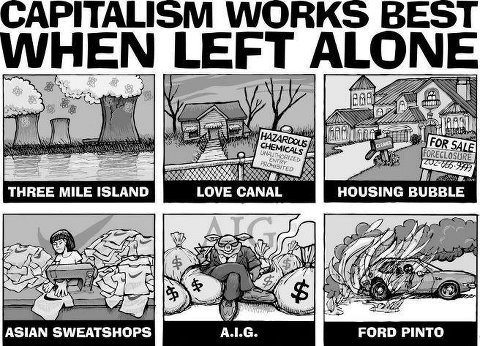
Democracy does not work because the system does not work and that system is neoliberal capitalism. It facilitates psychopathy and rips apart community because everything is done for cash, not love. Even the Labour party are neoliberal. The Green party are the only one that discusses sustainable alternatives. Meanwhile, people are not evil they are just subject to the stresses and forces of large politico-economic systems that infiltrate so much of their lives – education, leisure, work, relationships etc. Now more than ever do we need to challenge the system. This is a cross party endeavour, something the Tory party will soon discover as the pillars of the economy carry on collapsing around them. Challening capitalism is often akin to farting in front of the Pope but we’ve got to do it. We cannot leave capitalism alone, for obvious reasons…

Unregulated Capitalism

It’s All A Load Of Kabul Sh*t

The lyrics of Lily Allen’s song Kabul Shit speak for themselves. Climate change, corrupt politics and warmongering foreign policy are all astutely analysed in rhyming verses. So before you cast your vote this Thursday think on the words of that famous mockney singer:
 

There’s a hole in our logic,
There’s a hole in the sky
And one day just like magic
We’re all going to die,
‘Cause we didn’t turn the lights off
And we didn’t take the bus,
Even though we know we should have
Oh, silly old us.


These lines refer to the hole in the ozone caused by a range of chemicals including CFCs. Interestingly, in 1987 the Montreal Protocol was signed: an international treaty that phased out the production of numerous substances that contributed to ozone depletion. Unfortunately, the Kyoto Protocol – designed to limit the amount of carbon emissions and hence curb global warming – has proven much less effective even though 97% of climate scientists agree that humans are causing global warming. As Allen points out we carry on ignoring the evidence and consuming resources at a planetary pace, “Oh, silly old us.”


Well we should have recycled
And saved our resources
While there’s still someone else’s
Someone call the armed forces,
And we’ll blame it on terror
Also known as religion
But we shouldn’t feel guilt
For protecting our children.


Here Allen references resource wars – wars fought to gain control of a specific resource, such as land or water. The song alludes to the Iraq War – waged by the US and UK to allegedly find weapons of mass destruction but subsequently revealed to have been about ensuring access to oil. The war has been deemed illegal and many want to see George Bush and Tony Blair put on trial as war criminals. The lyrics also refer to terrorism, often evoked by Western governments to further justify racist and belligerent policies. Of course, some terrorism does reside in extreme forms of religion and one could even argue that capitalism is its own extreme religion forcing us to kill others for continued growth and profit. “But we shouldn’t feel guilt for protecting our children” is a wonderful sign off as Allen notes people’s tendencies to justify all sorts of actions for the safety of their own family, even if other families are harmed in the process – many of us did support the Iraq War even though it proved devastating for Iraqi civilians.


I don’t have the answers
I don’t know where we start,
Start to pick up all the pieces
Of everything we’ve torn apart.
Now, you’d think that we’d be grateful
For the fact we’ve got a choice
Instead we throw it back at people
Who don’t even have a voice.


This verse refers to scapegoating – the act of blaming someone for another’s wrongdoing. Recently we have seen Ukip scapegoating immigrants for the UK’s economic woes. Yet inherent to capitalist economics are periods of boom and bust linked to speculation on commodities (e.g. the internet, housing, financial ‘innovations’). However, rather than try and understand the root causes of these problems racist right-wing groups like Ukip play on xenophobia to try to turn people against immigrants. In the early 1900s the Jews were scapegoats, in the 1960s Enoch Powell called for ‘rivers of blood’ and recently Nigel Farage has been blaming Romanians. This is an ignorant and pernicious trope that Allen rightly challenges.


And the teachers always told us
Told us we should love thy neighbour,
And my mother always told me
Told me I should vote new labour,
But I don’t know who to trust
And I just find it all confusing,
All as useless as each other
Past the point of being amusing.
 

Allen highlights the increasing adoption of neoliberal policies by the UK’s main political parties. A trend initiated by Margaret Thatcher’s Conservative party in the 1980s and adopted by Blair’s ‘New Labour’ party in the 90s and 00s. Now it seems that neoliberalism is a song all the parties sing too – one that promotes privatisation, austerity and deregulation. When all parties put profit over people it’s not surprising they all appear as “as useless as each other“.

Lily Allen’s is a political and pop tour de force. In a few verses she analyses the status quo with laser precision. So, before you put a cross in a box remember that this status quo does not have to go unchallenged – the power of elites and capital, the neoliberal consensus, the damage of climate change, the erosion of democracy and the waging of wars are all things that can change if we adopt policies that promote people and planet together. We do have agency and we can take action – it begins with a vote. The alternative is denial, the consequences of which are already proving dire:


Excuse me, sir,
But is this what they call denial,
Just to carry on regardless
We’ll only do it for a while.
We’ll carry on straight down the line,
Down the road to nowhere,
Do you know where it is leading us
And do we even wanna go there?

https://www.youtube.com/watch?v=spTtXaR3vAI

The Establishment’s Deckchairs

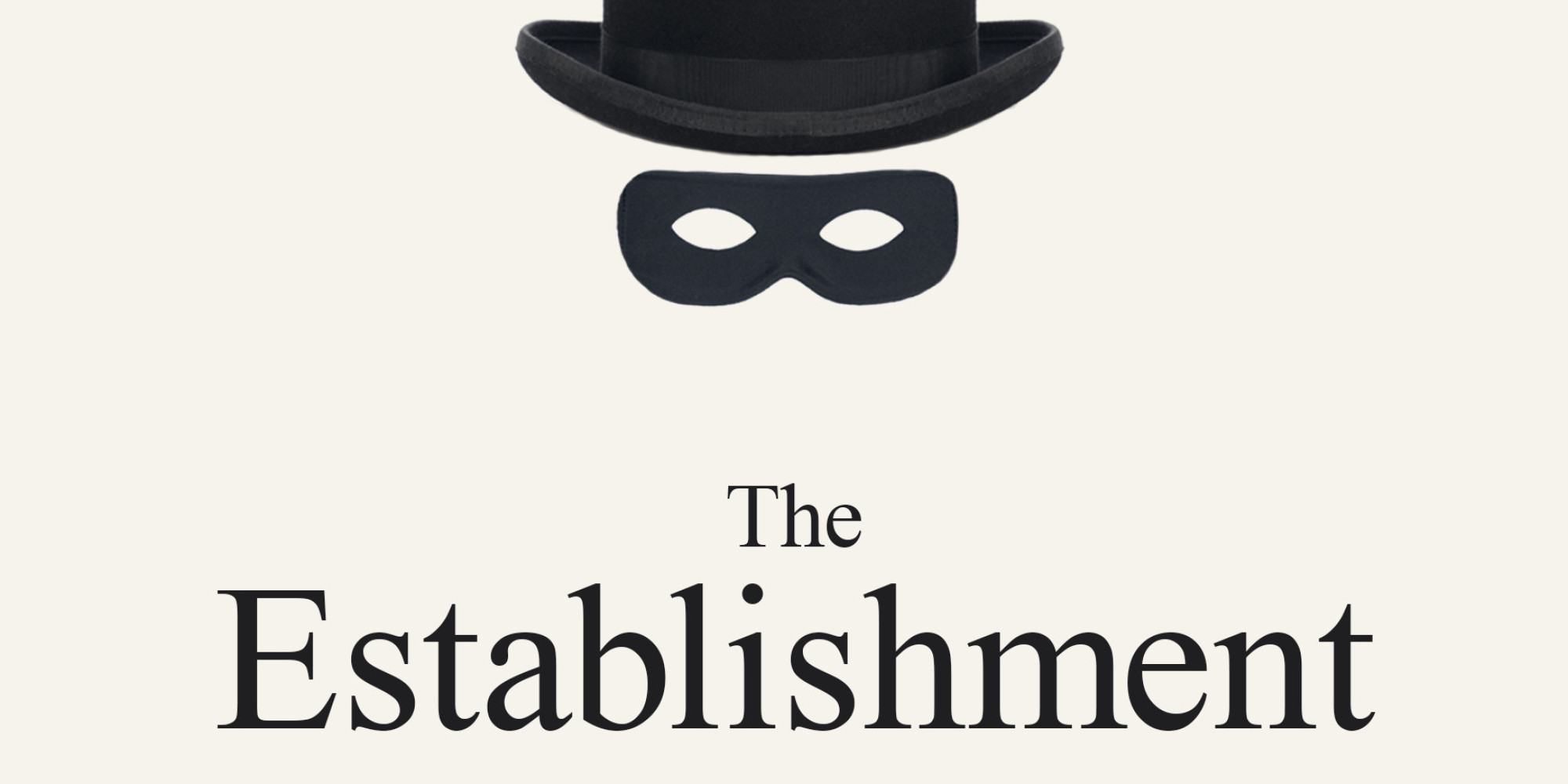
The Establishment is Owen Jones’ latest book. It is a brilliant critique of the UK’s elite and how they rig politics, economics, business, law and media in their favour. He highlights the hypocrisy of the neoliberals who decry state intervention but then rely on the state for the  implementation of their wishes. His critique is brutally well researched and his findings are damning, yet I do not think his examination of the establishment is sufficiently rigorous. In this brief post I shall add one further criticism to Jones’ multitude.

The Establishment

In essence, The Establishment charts the rise of neoliberalism in the UK. After the second world war and with the rise of the welfare state it was looking as if neoclassical capitalism was here to stay – an active and paternalistic state working with strong unions to foster economic growth. A few lone voices bemoaned these turns of event and think tanks were established to promote neoliberalism – the rolling back of and privatisation of the state with an emphasis on supporting those at the top of the ladder rather than the bottom. Margaret Thatcher and Richard Nixon are familiar figureheads for this movement and between them they ensured neoliberalism became the status quo. The bailing out of the banks after the late noughties recession and the current government’s commitment to austerity all form part of the neoliberal narrative. It explains why inequality is growing, the rich are getting richer and more people are being pushed below the poverty line.

At the end of the book Jones offers some “pretty timid” solutions to the current problem that sees a greedy fraction of the population twist the system to fill their coffers. He calls for the state to once again play a more active role in society with regards wealth distribution, taxation and public service provision. He wants a clamp down on the banking system and tax avoidance. He calls for a “democratic revolution” without offering much of a guide as to how the public could actually play a greater role in a highly corporatised and economically beleaguered country.

A distinct lack of viable solutions aside my main concern with The Establishment is its failure to articulate the deeper political and economic impetus that has guided our country for decades and served the establishment very well. It is called capitalism – “an economic and political system in which a country’s trade and industry are controlled by private owners for profit, rather than by the state.” Capitalism takes capital and adds an -ism to it, in other words, it turns money making into a religion. Capitalism measures everything with money. For something to make sense in a capitalist system it must be price tagged. At a national scale a country’s overall material throughput – namely how much stuff and how many services are bought and sold – is measured in GDP, gross domestic product. Jessie J got it wrong, it turns out it is all about the money, money, money.

With this backdrop in mind it becomes clear that whether or not capitalism is guided by a neoclassical or neoliberal inclination it is still capitalism. Increasing profits and GDP will always be the priority, whatever the cost. We are relentlessly having to churn up finite resources, abuse human labour and innovate more soon-to-be-obsolete products so our economies can ‘grow’. So, whether the state is guided by an establishment willing to make concessions to the working class or by one that is cut throat in its pursuit of the bottom line we are still just rearranging deckchairs on the Titanic as we remain committed to a political and economic (il)logic that prioritises profit over people and planet.

The lack of a coherent analysis of capitalism may explain why The Establishment is so heavy on criticism, around 300 pages of it, but so very light on solutions, we only get 20 pages of “pretty timid” suggestions. The irony is that Jones has lain waste to the crooks that rig the system in their favour yet fails to hammer home a criticism of the very system that assures their power – capitalist economics. Until we understand the perils of a commitment to contemporary capitalism we remain seated on the deck of a swiftly sinking ship frantically rearranging the deckchairs. Tbc…

50 Shades of Neoliberalism

The Green Party’s 2015 Election Broadcast is spot on – David Cameron, Nick Clegg, Nigel Farage and Ed Miliband all singing to the same tune. And that tune is neoliberalism. Whilst having many definitions neoliberalism is a form of capitalism typified by a laissez faire approach to economics that prioritises privatisation, free trade and austerity. Neoliberalism is also underpinned by an adversity to state intervention, unless that state intervention is designed to facilitate privatisation, free trade and austerity.

The Green Party’s music video shows Ed Miliband being tempted to join the other ‘old boys’ reminding us that once upon a time Labour stood for a neoclassical  approach to capitalism – one that encouraged state intervention in economics and championed workers rather than bosses. Unfortunately for neoclassicalism New Labour happened and as Margaret Thatcher – arch neoliberal – once said, her greatest achievement was Tony Blair. He set the ball rolling for Labour’s adoption of neoliberalism.

So it seems that when we’re asked to vote on politics come May what we are inevitably voting on is economics. Be it Tory, Lib Dem, Ukip or Labour, all are just different shades of neoliberalism, with some making tokenistic gestures towards alleviating poverty whilst others roll back the state faster and harder. But the Greens aren’t grey and are questioning these economic paradigms. Paradigms that have been so embedded in our culture over the past few decades that they seem like immutable truths.

But just as one globally popular boyband will inevitably be  replaced by another so too can the economic status quo shift. It’s just that we’re the ones that are going to have to vote on it.