Does Watching Gilmore Girls Make U Homo?

This website is a WordPress one and as the administrator I get to check out the back end. There, I can look at how many people have (or haven’t) read my latest post, I can edit my draft posts and I can even discover what search terms people have used to find this site. I’m not quite sure how this works but I guess it has something to do with Google. Search terms that have been used include: “anal sex is disgusting”, “anal sex is for the selfish and self absorbed”, “princess fierce faggot”, “hufflepuff rebranding”, “tomato images”, “liam fox utter twat”, “you tube smack me on the bottom with a woman’s weekly” and the title of this post: does watching Gilmore Girls Make U Homo?

It’s an interesting question, not least because of the proposed correlation between sexuality and Gilmore Girls but the idea that watching something can make someone homosexual. For example, at what point would a heterosexual person (and I’m assuming a male or maybe a concerned partner, parent, Priest etc) become homosexual? Would watching one episode be enough or would it have to be a whole season or every single episode ever, including those awful new ones? And how would the process work? Would said heterosexual man suddenly find himself exclusively attracted to men or would it take a bit longer as he gradually starts to find his male mates hotter than his female ones? As you can see, there’s a lot going on in one simple question.

Clearly homophobia is something going on here as the implication is that being homo is bad (unless this straight person yearns to be gay and is trying to figure out a way of changing). There’s shame and repression going on here as men’s sexuality tends to be marked as rigid – straight or gay, with bisexual men either being confused or greedy – and a deviation from that rigidity, rather than being something exciting, is seen as shameful and negative, and regularly violently repressed. There’s misogyny going on here as the assumption is that for a man to watch a show with two female protagonists is so emasculating that it alters his sexuality, which is nearly as bad as being a woman. There’s the assumption that it’s easy to label sexuality, as if one can point at an occurrence, e.g. two men holding hands, and say “gay”. Or two lads drinking beer together and chatting about birds, “straight”. Or a guy watching Gilmore Girls, “homo”. Yet I think these acts of labelling tell us more about the finger pointer and the culture they live in than anyone’s sexuality and I think it’s worth exploring that culture and its labelling further. Now, here’s the closest I could find to a coming out story on Gilmore Girls.

No Homo

“I’m gonna take my shirt off, no homo…I’m gonna take my pants off too, no homo…I’m gonna give you a hand job, no homo.” It’s a little phrase, no homo, that does a lot of work. It’s like a get-out-of-jail-free card in Monopoly – it means you can do the arrestable deed but not get imprisoned for it. It means a straight guy can do a gay thing and still be straight. The list of these things are many and varied, from nudity around other straight men, masturabation, kissing, intercourse and aboslutely loads of things that gay men love doing together. Except the straight men doing it aren’t gay, right?

I’m currently reading the fascinating book Not Gay: Sex Between Straight White Men by Jane Ward, which shines a queer theorist’s light on the bizzare world of heteronormative, racially motivated not-gay gay intimacy and sex. From hazing rituals in Frat Houses to initiation “ceremonies” in the military, all sorts of excuses are given as to why men do these things together – to become part of a fraternity (the gayer the dare, the tougher the bond), because there aren’t any women around, because the women who are around don’t have the sort of sex these guys want, because of childhood trauma, inverted Oedipal complexes, an adolescent phase that will be grown out of, by accident. There are all sorts of reasons but one that never comes up is that these men are gay. Heaven forefend that one of these straight guys might be gay – that’d be awful right, almost as bad as being a woman.

What Ward’s book makes clear is the amount of effort these men, and the people around them, put into maintaining the infrastructure of heteronormativity – that there are two genders (male and female), heterosexuality is the default sexual orientation and sex/marriage should be between people of opposite sex. Biological sex, sexuality, gender identitiy and gender roles are all mixed together to create the doctrine of the heteronorm. So, if you slip from that doctrine, and kiss your mate, you have to justify it somehow – “no homo” is a start or saying it was a dare or you were really drunk. As long as you can justify it within the rules there’s some wiggle room. But come out and say you prefer men to women, then you’re gay, and out you go. The heteronorm is a heavily bifurcated place built on rigid beliefs about the human. Some of these beliefs might stem from the Bible – that God created Eve from Adam’s rib, or biology – that penis = man and vagina = woman. When it comes to sexuality, well, Leviticus said a man should not lie with a man and some scientists say sexuality is in our DNA, so as long as I don’t have the gay gene I’m fine (I can even shag my mates, within reason!). Regardless of the veracity of either of these belief systems what’s clear is that there’s little space for fluidity – of desire, expression, identity and romance. Instead the heteronorm establishes its rigid, violent and patriarchal boundaries, and polices them with force, often by denigrating and abusing the “other” – e.g. gay, female and/or black. Thus, from the queer angle that Ward offers we can see no homo a little differently – instead of an expression of a man’s inherent straightness, he is actually expressing his desire to hold onto the idea that he’s inherently straight. But is he?

https://www.youtube.com/watch?v=iHhBvLxdrZs

What A Complete Bastardography

“Gay, precocious and mentally unstable from an early age.” That’s how Simon Jay is described on the back of his memoir, Bastardography, and it’s also an apt description of his one-man show of the same name on at Theatre N16 in Balham. Jay hand picks a selection of experiences from his youth whether it’s a fellow kid turning a DIY flamethrower (Lynx can + lighter) on him for being gay or his obsession with the film Psycho and not forgetting his many dalliances with psychiatrists, psychologists and nurses as he skirts Borderline Personality Disorder. The result is a revealing romp through recent history with one of the funniest guides.

Jay isn’t even 30 and this isn’t his first show – his unique take on America’s latest dictator  president, Trumpageddon, sold out at the Fringe before hitting London, he’s put on a musical about a girl with a robot arm and he even collaborated with me on a series of monologues called Universally Speaking (they were particularly good) – but what’s most impressive about the guy isn’t his talent in directing, acting or writing, no, it’s his resilience. That the world threw so much shit at Jay and he turned it into this really rather fabulous production is testimony to his strength. He cracks many a joke, disregards the fourth wall, points out his penis collage, attempts to circle the stage in heels, is candid with his experiences and does all this to a soundtrack of Pocahontas, Glenn Miller and film quotes. Tickets here!

Margaret Thatcher spoke at the start of the play and her words stuck with me. It was her famous speech of 1987 in which she bemoaned the fact that “children are being taught they have an inalienable right to be gay” and subsequently “cheated of a sound start in life.” The next year she introduced a number of anti-gay laws including Section 28, that forbade any school from teaching that homosexual relationships are ‘acceptable’. Jay was born in 1987 and I was born in 1988. The law was eventually repealed in 2003, when I was fifteen. I wonder what it might have been like to grow up in a world where I had role models and cultural narratives to turn to and I imagine Jay wonders the same thing. Perhaps if things had been different we wouldn’t have been cheated of a sound start in life. So kudos to Jay for turning a legacy of hate into a queer, creative, mental health odyssey that, whilst very dark at times, always shines with love.

F*cking Men And Passengers

One a play at the Vaults Theatre in London about the lives of ten gay men, the other a Hollywood romance about a decidedly straight couple falling in love as they zoom through outer space. The former is a great piece of writing accompanied by some wonderful acting and the latter is actually surprisingly good given that it’s a romance at zero gravity. However, as I watched these productions I felt I had seen them before albeit in different locations: men f*cking in Manchester for example and straight couples falling in love, well, pretty much everywhere. And it was the way the scripts unfolded that disturbed me the most (spoilers).

F*king Men introduced us to a world of brief encounters between men in dark parks, closeted professionals worried their careers would collapse if they out themselves, put upon sex workers and porn stars, HIV stigma and homophobia. It was also a world full of laughter, love and heart as different individuals and couples tried to make it work in a world where guys just seem to want to f*ck all the time. Meanwhile, in Passengers there’s only room for two straight people as Chris Pratt and J-Law discover they’ve woken up ninety years before the spaceship has reached its destination. As it turns out Pratt woke up first, then, a year later, woke up J-Law. Obviously, when she finds out she’s pretty mad but she ends up forgiving him and (straight) love conquers all, it even fixes a hole in the spaceship caused by a tiny asteroid.

And it’s funny isn’t it that the scripts of gay men’s stories don’t always end quite so happily as those of straight lovers. Now, I know I’m comparing an Off-West End show with a Hollywood blockbuster, it’s hardly like with like, but I’m concerned that so many of the shows I see about gay men are bittersweet or sometimes just bitter. It’s like each time we have to go through all the homophobia, shame, prejudice and self-loathing before we can get to asking what might happen next. Whereas there are so many scripts for straight folk that they can do as they please and often get happy endings to boot. Passengers ends in engagement after all (which, I appreciate, doesn’t necessarily guarantee happiness) whereas F*cking Men ends with a young sex worker being given extra pay with which he might just be able to afford the mortgage on a flat with a kitchen – but, unlike the hole in the ship, the shame, stigma and self-loathing haven’t gone away. So, dear LGBTQIA+ allies, it’s another call for help – please help us queer folk get happier endings (and not just of the orgasm variety), please help edit the societal scripts that force us into hiding and get us hurt, and please listen to and share our stories. Next year I want to see two lesbians stuck in outer space, or two trans men, or two intersex folk, and I don’t want that plea to sound like a joke because I’m not being funny. And if you’re not going to write the script then I will and in the meantime I’ll carry on enjoying F*cking Men – seriously, it’s great – get your tickets here. Trailer below most definitely NSFW.

https://www.youtube.com/watch?v=P6wOE-_-bgM&oref=https%3A%2F%2Fwww.youtube.com%2Fwatch%3Fv%3DP6wOE-_-bgM&has_verified=1

The Friday Night Kindness Kabaret

You know that gay stereotype, the ‘bitchy queen’ one, when the queer in question gives you a lot of sass and destroys your sense of fashion (or lack thereof) in two biting sentences. Then they down a double gin and tonic before offering a witty critique of each person in the room and why they’re all so damn ugly. In fact, I don’t just think you know this stereotype, I think you help promote it. Every time you laugh at those sorts of punch lines, every time you reduce your LGBT friend to a series of tropes and every time you call something ‘gay’, you are overtly/tacitly promoting the culture of queerphobia that still runs so strong in 21st century society. But wait a sec, aren’t I being a little too mean in a post about kindness?

Sure, I’ll be kind, but if you find yourself reading this post and you’re one of those friendly-but-kinda-ignorant straight people then you probably weren’t at the Kindness Kabaret last night in Soho. I was and it was fuming brilliant. There was burlesque from the epic Rubyyy Jones, some ace tunes from internationally ignored superstar Vanity Von Glow, jokes galore from Shon Faye, words of wisdom from writer Matthew Todd and witty banter from hosts Pat Cash and David Robson. But why was it called the Kindness Kabaret? Because Pat and David both feel that there isn’t enough kindness on the London gay scene. And from my own experience I know they’re right – there’s often aloofness, judgement, prejudice, cynicism and a whole host of other unkindnesses. And that’s not because queer folk are all relentlessly nasty but it’s because we have been relentlessly alienated, shamed and abused for being who we are and it’s no surprise that we internalise this Pandora’s box of prejudice and spit it back at one another. So, yeah, I will be kind but first it’s important that you realise the bittersweet fact of the Kindness Kabaret, i.e. that there needs to be one.

And what was even more fantastic about last night was that even though I went by myself I actually met some fantastic people. I got chatting with two friendly guys (and, no, before you jump to that conclusion I did not engage in a threesome and even if I had that does not make me fit your narrow, prejudiced stereotypes) and learnt lots about Sweden’s gay scene, the oldest coffee shop in Soho (I had my first cappuccino and unfortunately I liked it) and British colonialism’s abysmal homophobic legacy that is still present in far too many former colonies’ legal systems. So, in a scene that is often ravaged by unkindness, I thought it was pretty epic I found the opposite and had a bunch of tequila shots as well. As for you straight folks, I know you have your struggles too and one day I’ll post about them but in the mean time I’m asking you to listen to mine. And yes, I’m angry, of course I’m fucking angry, remember that LGBT sexual health and lifestyle education was banned from 1988 until the early noughties in the UK (aka, my entire childhood) and our education system still hasn’t caught up. And that’s just the tip of the iceberg. Remember this also, that under the frosty, hostile exteriors of those ‘bitchy queens’ there are vulnerable and fragile interiors scarred by a world so often full of hostility, indifference and prejudice. But you can be part of helping heal those wounds. So, yeah, I’ll be nice but you have to be too.

The HIV Monologues

On 24th May 1988 the authorities decreed that any local authority in the UK “shall not intentionally promote homosexuality or publish material with the intention of promoting homsexuality…or promote the teaching in any maintained school of the acceptability of homosexuality as a pretended family relationship.” This was Section 28 of the Local Government Act and so a generation of children, myself included, were subjected to yet more homophobia and a complete lack of education in how to live a happy, flourishing and safe LGBTQIA life. On 21st June 2000 Scotland repealed this abysmal amendment and the rest of the UK caught up by 18th November 2003. But we haven’t really caught up because there is still so far to go and that’s where The HIV Monologues come in (a few spoilers ahead).

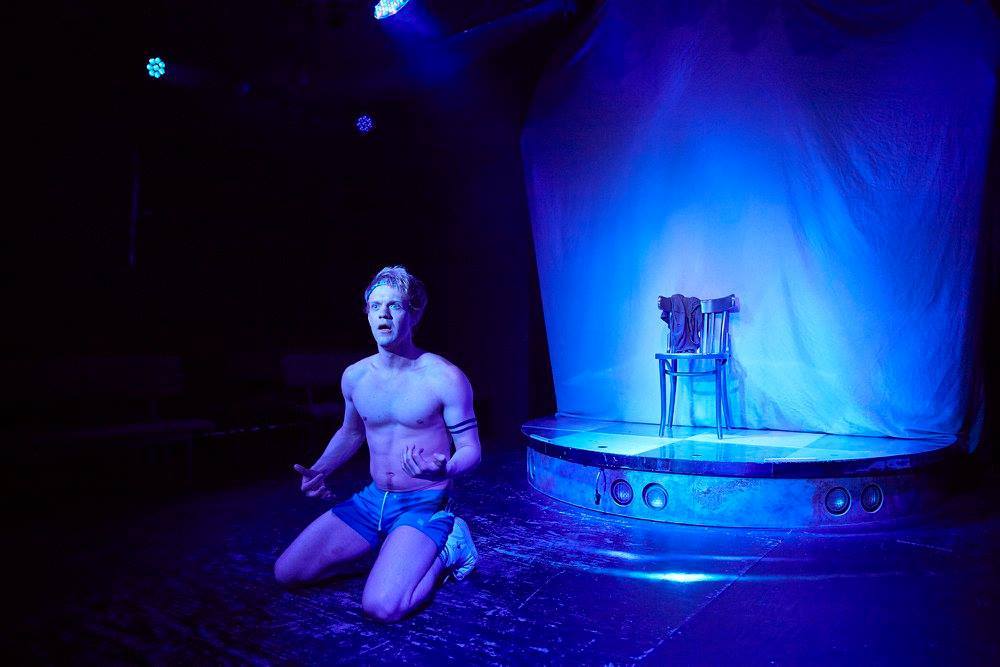
This was never going to be an easy play to watch and it wasn’t but not because it was terribly acted, far from it, but because it’s about HIV. It’s a seemingly simple story about Alex and Nick who are out on a Tinder date. It’s going really well until Nick says that he is HIV positive. Moments later and Alex gets stuck in a window trying to escape and Nick is pretty pissed off. Denholm Spurr makes a great Alex – insecure, selfish but irritatingly cute. He’s one of those likable unlikable characters, a bit like Fleabag from the hit BBC show, and as the story unfolds we do come to care about him. Meanwhile, Sean Hart portrays Nick’s despair, resolve and power brilliantly as he comes to terms with the new normal of his life. The monologues do occasionally become dialogues and when Spurr and Hart are on stage together the chemistry works (more on that in the next paragraph). I also absolutely loved Irene the Irish nurse played by Charly Flyte, who was treating AIDS in the 1980s. A presumably straight woman, she befriends one of her gay, male patients and takes up the cause. A scene in which she tells a bunch of salivating journalists what shame really is was just fantastic and I felt it a shame her character was only met once as she clearly had a life and story of her own that I wanted to know more about. Then there was Barney played by Jonathan Blake who had me crying before he’d even said anything. Blake (not Barney) was one of the first people to be diagnosed with HIV in the UK (and he was played by Dominic West in Pride) and his depiction of Barney was spot on as the partner to one of Irene’s patients. Warm, funny and quietly powerful Barney/Blake is someone I’d like to go for a drink with.

For me the most powerful scene was when Nick aPicturend Alex are on stage together, hiding in the toilets of G-A-Y about to have sex. Alex has just finished performing in an important play about HIV funded by the Elton John AIDS Foundation (hint, hint, come on Elton, get your wallet out). But neither of them have any condoms. Instead, Alex says he’s got a pill and Nick’s confused because he’s already taken his anti-HIV pill (of which there are many different types that reduce the viral load of HIV and allow the immune system to repair itself, start here to find out more) but Alex is taking PrEP: Pre-exposure prophylaxis, which prevents HIV infection. I’ll repeat that, it prevents HIV infection. And what ensues is a beautifully described moment in which Alex and Nick enjoy having sex together for the first time. Of course, in the world of the play and the real world PrEP is still not accessible on the NHS and people who don’t have access to the medication nor the appropriate education are still needlessly contracting the virus. As I said, even with the repeal of Section 28 we still haven’t caught up.
.
The HIV Monologues are on this Thursday & Friday, get your tickets here. Asides being brilliantly acted the monologues are well crafted and poignant pieces of writing by Patrick Cash and director Luke Davies evokes a whole rainbow of emotions from his cast. The stage and lights are also fab. So, no excuse, go, go, go. Be entertained, get educated and then go do what you can: help ACT UP in the fight to get PrEP mainstreamed, support your friends who might be at risk of getting HIV or who have it and educate everyone else, straight or gay, who has missed out on years of vital education. And then one day we’ll all meet at that epic G-A-Y after party funded by Elton John!

The Chemsex Monologues

Chemsex kinda does what it says on the tin, mixes chemicals and sex. The drugs used can include mephedrone, crystal meth, cocaine and ketamine. Naturally, a whole load of stereotypes get flung at the people and groups who engage in these activities which is why The Chemsex Monologues are so important because they reveal the all too human side behind the prejudiced slurs and sensationalised stories. But before you read my review go book your tickets, it’s on tonight until Saturday at 9.45pm at the King’s Head Theatre in London.

Directed by Luke Davies, written by Patrick Cash and designed by Richard Desmond this was an intense hour-and-a-bit. Through a series of monologues we were introduced to various characters: the narrator, played by Richard Watkins, who falls for that hot boy on the scene with the great abs and the endless energy. Then Denholm Spurr brings that boy to life as Nameless, who gets to live his dream and meet a porn star. Meanwhile, Charly Flyte plays Cath, the ever faithful fag hag who’s getting a little fed up of her so-called fag. And Daniel, the wonderfully upbeat sexual health worker who loves handing out condoms and lube at saunas and brings red wine to a chemsex party rather than chems. All the cast were fantastic, they found the nuances of character and the expressive range to ensure each monologue was delivered as the multi-layered story it was written as. It wasn’t just someone stood up and talking for fifteen minutes instead we were drawn into worlds of sweaty bodies, M&S ready meals and chemically fuelled orgies. That all the monologues wove together to tell a larger, interlinked story and showed the same characters from different angles proved very satisfying but I shan’t spoil anything (but what I will say is that I’m very glad how things turned out with Swallows).

What also worked so well in this production as in Queers (also produced by Dragonflies Theatre), was that thread of emotion that meant the stories told were more than just anecdotes but had real heart. That Cath was so much more than a fag hag but also a loyal friend, a hardworking single mum and an amazing source of positivity. That Nameless was more than the boy in short shorts (and nothing else) but had so much love to give and poetry to share. That both the narrator and Daniel could see the cracks in the facade of this seemingly glamorous world and still be there to offer a hand. I’d also like to add that I sincerely hope Matthew Hodson is as nice in person as the characters he plays are – Daniel was a legend as was the character Hodson played in Queers (no pressure Matthew). However, the niceness of these characters just exacerbates the tragedy that runs throughout the play. There’s a moment when Daniel’s wondering to himself why so many people do mix chems and sex. He thinks back to a GCSE classics class and remembers that the word ecstasy comes from the Greek extasis: a displacement or removal from the proper place. “Why do so many gay men want to be outside themselves?” he wonders and I thought that was a very good question. Is it just for fun or is it that this so-called real world can be so endlessly hostile and unwelcoming, so shaming of minorities yet so quick to tokenise and ridicule them whilst remaining indifferent to their suffering. If this is one of the messages woven into The Chemsex Monologues then it’s a wake up call for so many of us to stop being so indifferent and unfriendly because people like Nameless, Daniel, Cath and whatever-the-narrator’s-actually-called are priceless and should be made to feel at home. Anyways, enough of that, go book your ticket.

ChemSexMs
Denholm Spurr as Nameless in The Chemsex Monologues


Does The Thought Of Anal Sex Disgust You?

Not wanting to write about the Referendum again and inspired by fellow blogger Freakypeach’s great post on anal sex, I thought I’d put my head above the parapet and put a good word in for the bum. I want to write this because I know a lot of very nice people who do lots of nice things, however, when the topic of anal intercourse is breached their niceness slightly slips. Some make faces of disgust, some shudder, some don’t want to talk about it, some imply it’s just a little too deviant, whilst others brush it off as ‘unhygienic’ and then start talking about the weather. So consider this post my attempt to counter the stigma attached to anal sex and if, at the end of it, you’re still not convinced then please just remain quiet on the matter and support those friends of yours who want to engage in whatever consenting forms of sex they wish.

https://i0.wp.com/www.travelphotolenses.com/wp-content/uploads/2016/01/DavidBum_WM.png

“But it’s the bum!” I have heard many anti-anal-sex folk cry. “We poo out of it.” And their knowledge of human anatomy is spot on as, I imagine, is that of those who’ve had anal sex. And yes, whilst we do poo out our bums like many other things the bum can be cleaned. Douches, flannels, bidets, showerheads…there are an awful lot of ways to keep one’s back passage clean, advisable for all of us, not just those wishing to use our bottoms for sexual gratification. So yes, like the penis, vagina and any other part of the body, the bum can be dirty but it can also be clean. “But it’s poo, I mean, poo!” Yes, I heard you the first time and maybe this is just about your own lack of anal hygiene that you’re assuming everyone else suffers from. If you really can’t get over this hurdle then please just skip to the last paragraph.

So, with a nice and clean bum (or not, whatever works for you) we can now engage in some anal intercourse and guess what, it can be extremely pleasurable. People of all genders enjoy it and many folk even have prostate glands up their back passages and that can enhance the pleasure. To be quite honest there’s a world of experiences to be had up there whether you’re doing it with your fingers, a dildo, butt plug, vibrator or someone else (or a number of people for that matter). Of course, if you don’t want to have anal sex that’s absolutely fine and I hope no one ever makes you feel bad for not doing it but this post is about the people who do want to do it. Please don’t negate, trivialise, ridicule and/or discriminate against their desire to do whatever they like with their bottoms.

In essence, this boils down to stigma. As a male member of the queer community (although these facts don’t tell you whether I’ve had anal sex, want to or even fancy people of my own gender, that’s still none of your business) I’ve witnessed and experienced a certain sort of prejudice: if I got a quid every time I’ve had to watch ‘straight lads’ faux bumming each other because that’s the height of humour (and they’re too repressed and insecure about their sexualities to actually get down to it and shag their mates) I would be rich. Or every time people I like have warned me against the dangers and the lack of hygiene as if I haven’t considered these things for myself. Or people proclaiming “but we poo out the bum” as if that ends the debate. Or been told that what queer men do to each other is deviant. Or read about queer people being beaten up and killed for liking anal sex. The list goes on. If you have nothing positive to say about the joy that is anal sex then please say nothing. Please just support your friends in their adult decisions to have sex however they like. Here’s to the bum!

Queer People Need You!

Do you have to be Lesbian, Gay, Bi-Sexual, Transgender, Queer, Intersex or Asexual to care about LGBTQIA issues?

Answer: No!

Now here’s a blog on how to be a queer ally, however straight you are.

But first the word ‘queer’. Why am I using it? Many might know it as a term of offense used to denigrate LGBTQIA people and this is certainly true. As a word it simply means ‘strange, peculiar or eccentric’ from the Old High German twerh ‘oblique’ itself coming from the Proto-Indo-European root *terkw ‘to turn, twist, wind’. By the late 19th century it was being used to describe homosexual people in a pejorative fashion. Fortunately, by the 1980s the word was being reclaimed by queer activists and scholars. And now queer is used as an umbrella term for people who don’t identify as heterosexual and are not cisgender (i.e. do not identify with the sex they were designated at birth). Interestingly, if I tell you I’m queer I’m not actually telling you that I fancy people of the same gender, or of both genders, or identify as the opposite sex. No, those exceptionally personal issues (what I do in my bedroom and how I relate to my own body is my business, not yours!) are not revealed instead I am saying I challenge the binary nature of gender (i.e. male or female) and any essentialisation of people for their sexuality. Of course, the queer community is a large and diverse one and even though I use the term to refer to the LGBTQIA community in general many might not. Many will prefer LGBTQIA and many will use queer to mean something else. However, for the sake of this blog I am using it as the umbrella term described above.

Anyways, in case you missed it, that was lesson one on being a queer ally – understanding the lingo, very important. Lesson two is about using it and this will vary from person to person. I’ll use myself as an example. I’ve often had people try to define my sexuality for me – people would label me with terms I never used to describe myself sometimes because they wanted to understand me, pigeonhole me and/or bully me. When it comes to politics I consider myself queer – I challenge gender and sexuality norms and I advocate for the equality and rights of the LGBTQIA community  – but when it comes to my personal life, am I gay, bi-sexual, queer or something else? None of your business! So please don’t assume you know what my sexuality is because you don’t and don’t ask me either unless you feel it’s appropriate to. If you’re straight the likelihood is you won’t be asked to defend your sexual preferences on a regular basis or even reveal them so please stop asking me what I like to do with my sexual organs! Just be happy with the knowledge that I am Robert and I’m a queer activist. However, I’m just one example, and many people are bisexual, transgender, gay etc and want to be recognised as such – it’s your job to find out what that means to them and to use the appropriate terminology.

Lesson three is about stereotypes. We’ve all got a bunch of them in our heads be they the mincing queen, the butch lesbian, the greedy bisexual, the weird old gay guy etc, and without even thinking about it we project them at other people. One I often get is when I ask to be introduced to other queer men and people immediately assume it’s for sex, I must be one of those “promiscuous gays.” Unfortunately, much of the time I’m just wanting to meet more people from a community I consider myself part of, yet people are still quick to pigeonhole me. Even worse is that if I do ask to be introduced to a man because I’m attracted to him I then conform to the “promiscuous gay” stereotype and just confirm everyone’s prejudices. So I’m screwed either way (although, ironically, maybe not screwed in the way I might want to be!). So those stereotypes you’ve got, whatever they are, just drop them. Even if you think you see someone conforming to a stereotype, they really aren’t because they’re a human and they come with a rich and varied story of their own. It won’t help you or them if you reduce them to a few tokenistic gestures and even if they do like to gesture in that way that doesn’t make them the stereotype. And remember, the more we stereotype minority groups the easier it is to pigeonhole them, to margininalise them, to dehumanise them, to ignore them and to hurt them. So it’s hashtag time, #humansnotstereotypes.

There are so many more lessons to be learned, for all of us, but for now I’ll sign off this post with an ace song from gay twins Tegan and Sara because, surely, even if it’s for sex or just friendship we all would benefit from getting a little closer. And just in case you find the concept of learning lessons about queer people a little patronising then please just see this as a chance to learn more about an awesome bunch of people who can make awesome friends and allies, and who throw pretty epic house parties (oh, and one other thing, never use ‘gay’ as a pejorative adjective. Nope. Don’t want to hear it. Just never. Thanks).

If You’re Not Gay It Does Make A Difference

“The worst mass shooting in modern American history was also a hate crime against the gay community. It’s not the first time LGBT (lesbian, gay, bisexual and transgender) people have been the targets of violence.” BBC News.

For more information on the recent hate crime in Orlando that claimed 50 lives please read this article and then search for more. For this blog, however, I want to focus on the guardian journalist Owen Jones’ appearance on Sky News to discuss the atrocity.

It does not take long for an argument to arise between Jones and Mark Longhurst and Julia Hartley-Brewer. Jones works hard to ensure that all present acknowledge that this is a homophobic hate crime and act of terror. He describes it as “one of the worst atrocities committed against LGBT people in the western world for generations.” This is a statement of fact yet Longhurst and Hartley-Brewer don’t get it. Longhurst tries to ignore the LGBT angle by saying it was a crime carried out against “human beings” and whilst this is, of course, true, the point is that Jones is trying to focus on the homophobia inherent in the crime. Jones repeats his statement but Longhurst nullifies it again by refusing to recognise the anti-LGBT nature of the crime and talks instead of “the freedom of all people to enjoy themselves.” At which point Jones comes out with the zinger, “You don’t understand this because you’re not gay.” Longhurst disagrees vehemently and Hartley-Brewer tells Jones that he does not have “ownership of horror of this crime because [he’s] gay.” These minutes of ignorance and miscommunication are vital in derailing the rest of the press preview as the three continue to argue before Jones becomes largely silent and the conversation moves away from the LGBT community to gun control and the perpetrator, even after Jones said there has been a distinct lack of press coverage on the homophobic nature of the violence.

I hope you, whatever your sexual orientation, can see the problem here. Jones offers the scenario that this attack might have taken place at a Synagogue and if it had done then it would be clear that anti-Semitism was one of the overriding motives for the attack. If then, a Jewish person was discussing how distraught they felt at the attack it would not be for anyone else to tell them that the attack isn’t about Jewish people, it’s about people. This would totally devalue what the other person is saying and, crucially, what they are feeling – that a community they are part of has suffered a dreadful attack. We are all very different people and members of very different communities and the simple point is that whilst we can speak for ourselves and our own experiences of the world we cannot speak for others. It is not for me as someone who is not Jewish to speak on behalf of Jewish people, nor as someone white to speak on behalf of black people, nor as a man to speak for women. Instead, I can try to understand the different trials facing other groups and offer my support.

That is what I attempt to do with some of my posts and whilst I try hard not to speak on behalf of others I realise I might fail but I am always happy to learn how to do it better. Neither Longhurst nor Hartley-Brewer appear to show much sympathy for the LGBT community, they spend more time talking about the perpetrator and gun control, it is only Jones who talks about it. And even though the others both identify as ‘not-gay’ during the preview neither sympathise with what Jones is saying and instead attack and criticise him. They both had an opportunity as presumably straight people to speak and act in solidarity with the LGBT community and they both missed it. And this is a shame for so many reasons not least because the LGBT community needs a lot of solidarity right now.

So yes, it does make a difference if you’re not gay – it means you might never have a same-sex relationship, it means you might never be discriminated against for your sexual preferences, it means the attack in Orlando was not an attack aimed at a community you are part of. But it doesn’t mean you can’t support us. The full acronym I use is LGBTQIA – Lesbian, Gay, Bi-Sexual, Transgender, Intersex, Asexual. However, I think there needs to be another A, an A for Ally.