If Your Climate Movement Ain’t Queer, I Ain’t Coming

As I am increasingly becoming aware sexuality and gender are often treated as adjuncts to the rest of life. They are acknowledged (sometimes) but often left to happen in their own private spheres away from other issues and concerns. This means LGBTQ+ folks have to deal with their stuff on their own, if they’re fortunate to be able to deal with it at all. Having done this (or constantly being in the process of doing this) they can then join the latest climate movement campaigning to save the planet. They’ll bring their glitter and their brilliance, their fierceness and their compassion, and their years of resilience in the face of hostility and indifference, and make that climate movement even more fantastic. Sadly, what is much more rare is that the climate movement is already inherently queer and welcoming of queerness. More often than not straight and cis folks just don’t know how to invite queer people into a space beyond the “it would be so lovely to have some gay people here” diversity box ticking sort of approach. Or they spend a lot of time talking about biodiversity but don’t really know how to talk about or represent diversity. And I want to see this change because climate change is queer.

Climate change is queer because many of the marginalised groups who are facing and will face the brunt of climate change are queer. Take the disproportionate number of homeless people who are LGBTQ+, in the US this counts for 40% of homeless youth even though they represent only 7% of the overall population. So many LGBTQ+ people are thrown out of their homes and forced into poverty and extremes of climate will only make their experiences worse. Climate change is queer because if we’re talking about extinction it’s important to remember that LBGTQ+ people have faced extinction before: the concentration camps of Nazi Germany, the AIDS plague of the 1980s, and in every law around the world that marginalises, criminalises and/or sentences them to death. Climate change is queer because some of the movements that fought back against these extinctions, including ACT UP, tried brilliantly (but not always successfully) to build beautiful, resilient, rebellious and loving communities who could face the injustices of the world and live well together. Climate change is queer because queers know how to organise!

Climate change is queer because queer is intersectional and climate change affects the world intersectionally. For example, “race is the biggest indicator in the US of whether you live near toxic waste.” Furthermore, it might be valiant to be arrested in protest against government inertia in the face of climate change but privilege, especially of race and class, will affect how one might experience a prison system. That’s not to say don’t get arrested for your cause but it is to say there is a pressing need to discuss privilege and intersectionality (sorry Extinction Rebellion but prison ain’t a yoga retreat). Climate change is queer because queer recognises history. The ecocidal oil & gas companies of today have their bloody roots in the rampant globalisation of neoliberal capitalism, itself made possible by the mass production birthed in the factories of the industrial revolution, itself a product of the genocidal slave trade and mass colonisation of the world by European countries, especially the UK, themselves inspired by the countries that attacked and enslaved them many centuries before. Climate change is queer because these problems have further roots in patriarchy. How a system of toxic masculinity and violent bifurcation has bred such a destructive array of gender norms: ones that see the trans community routinely attacked and ridiculed, ones that see the glorification and protection of rape culture, ones that see so many people live in fear of their own lives simply for who they fall in love with. Climate change is queer because I think the ways we’re destroying the earth are reflected in the many ways in which we’re destroying ourselves and this goes right to the heart of our very identities. We’ll need to do some serious soul searching beyond the binaries, norms and conditionings, to find the souls so many of us have lost.

Climate change is queer because I shouldn’t have to write a flipping blog post ‘justifying’ why climate change is queer just to get you to think about something that is already well documented: that queers exist and matter. In essence, climate change is queer but I’m not sure how many people acknowledge this (or even care). Don’t get me wrong, I do want to join your climate movement and I think much of it is fab. Like you, I care passionately about this planet but I want you to care passionately about queerness and intersectionality otherwise I won’t feel welcome. And if the movement isn’t welcoming of me and my queerness then what’s the fucking point?
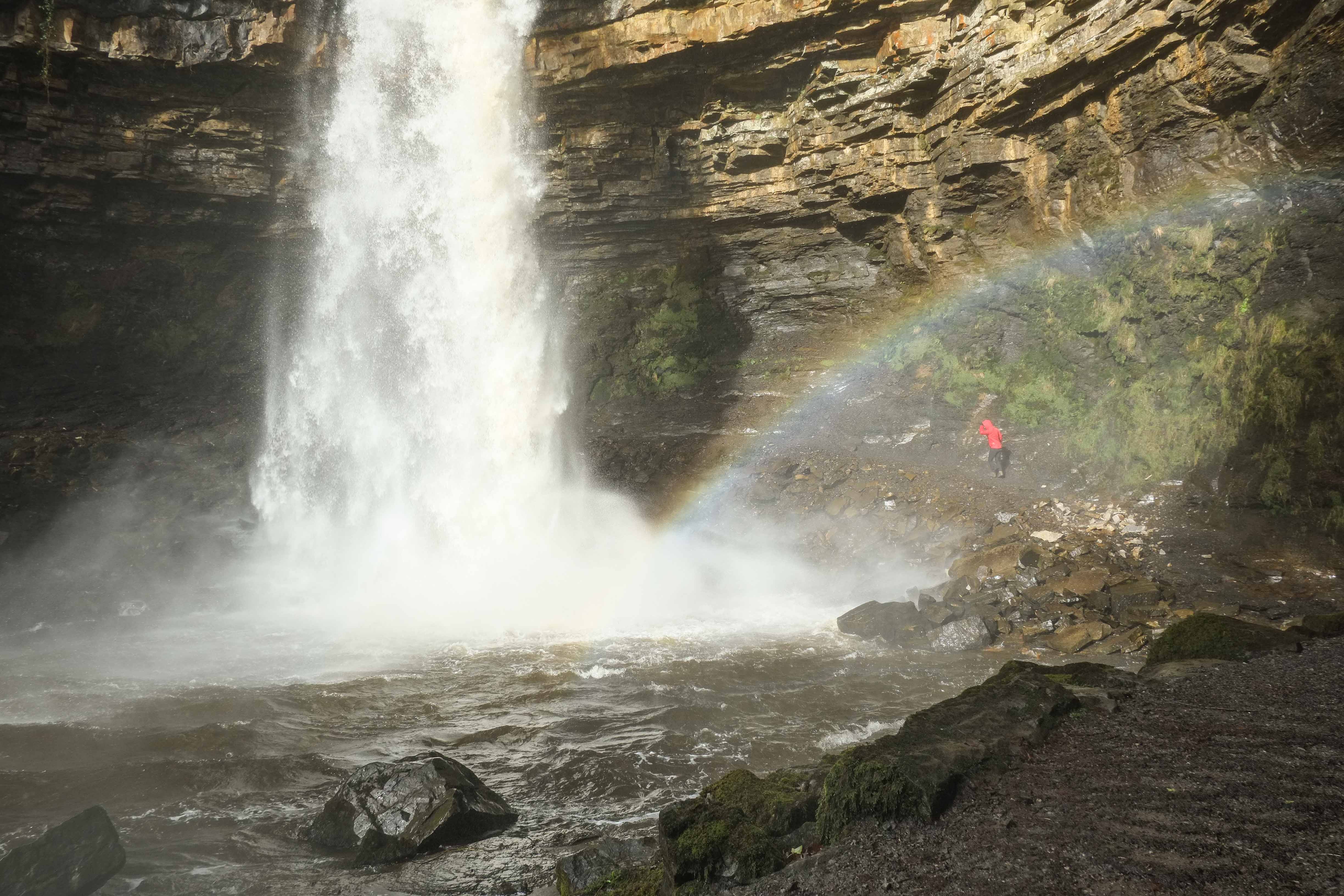
This is me in a rainbow by a waterfall, pretty queer, huh!

Beach Rats: That Gay-Not-Gay Film

The realms of male sexuality are often violently policed. You’re either straight and fit in or you’re gay and will be ostracised. There’s little space for exploration and straight men doing gay things will often get bullied and shunned for it or will come up with ingenious ways of avoiding having to be associated with gayness, yelling “no homo” is but one example. It is this space of confusion and prejudice that the film Beach Rats explores as 19 year-old Frankie navigates the boardwalks of Coney Island. Inspired by a selfie of a young topless guy in a baseball cap (yup, this film was based on a selfie) this film premiered at the Sundance Film Festival back in 2017 and won much critical praise. There is much to praise – plenty of epic writing, acting and filming, but it’s the central story I want to critique and the tropes used to tell it. Ultimately, I find this film as confused as its protagonist, and not in a good way.

Firstly, the writer-director Eliza Hittman has been very clear in numerous interviews that this is neither a coming out nor a coming of age film, she calls it “a coming of consciousness” story as Frankie tries to get to know himself. He does so by taking drugs with his mates and hanging out on the beach, getting a girlfriend, and using a gay hook-up site to get with older men. So the film is very much about Frankie’s sexuality but both Frankie and Hittman are adamant that he is not gay, as Frankie says: “I don’t really think of myself as gay”. He might think of himself as bisexual or heteroflexible or queer or just never desiring of attributing a label to his sexuality, or he might just be really confused. By Frankie being not-gay the film also becomes not-gay, seeking to explore that strange and violent world of toxic masculinity and male sexuality. This could make for a great and nuanced film but, sadly, Beach Rats is still overloaded with gay content and relies much too heavily on gay tropes to tell an all too familiar and cliché story. As for those tropes, here are a few (spoilers).

The high volume of topless, sweaty men. The film poster comprising of these topless, sweaty men. The lingering shots on Harris Dickinson’s face. The lingering shots on his six-pack and bum. The full frontal male nudity. The sex between men. The sex between younger and older men. The fact that depicting sex between younger and older men was considered taboo – even though for many guys it’s completely normal! The use of gay hook-up sites. The fact that depicting the use of hook-up sites was considered taboo even though it’s a completely normal way for guys to meet up. Straight (or perhaps not-gay) male characters mocking the gay hook-up sites. The same characters choking and punching a gay guy called Jeremy towards the end of the film and leaving him stranded on a beach. The fact we don’t know if Jeremy survives. That Jeremy is basically a disposable trope: a plot device with little character or characterisation who is a stepping-stone in Frankie’s unhappy and dangerous life. That violence towards gay men is used as a plot device and left uncontextualised and unresolved (this trope is so common it’s got a name – Bury Your Gays). The way women are often emotionally and sexually used by confused men without apology or adequate resolution for those female characters. That distraught mothers and girlfriends are means via which a troubled man can continue his journey of discovery.

It’s a long list and in isolation, many of these elements don’t have to be considered gay or a gay trope but put them together and I think Beach Bats manages to appropriate, fetishise, exoticise and capitalise on gay life without ever acknowledging it. The film yells one loud “no homo” while cashing in on the pink pound. Furthermore, so many of the above issues don’t just happen onscreen, they happen in real life. So many LGBT+ people are beaten up and killed, ostracised from society, and suffer, and I don’t enjoy seeing this reflected on the screen with little nuance and empathy. For me, a film like Beach Rats is the product of a predominantly heterosexual team trying (and failing) to tell a gay-not-gay story. It’s not that straight people can’t tell these stories and shouldn’t be allowed, it’s that they need to do their research and better express their allyship. This needs to happen off-screen as well. If we truly want to explore the world of male sexuality and create a world in which men can more wholesomely explore their sexualities then it’s “no homo” that needs to be buried, not gays.


I Think It Is Called Belonging

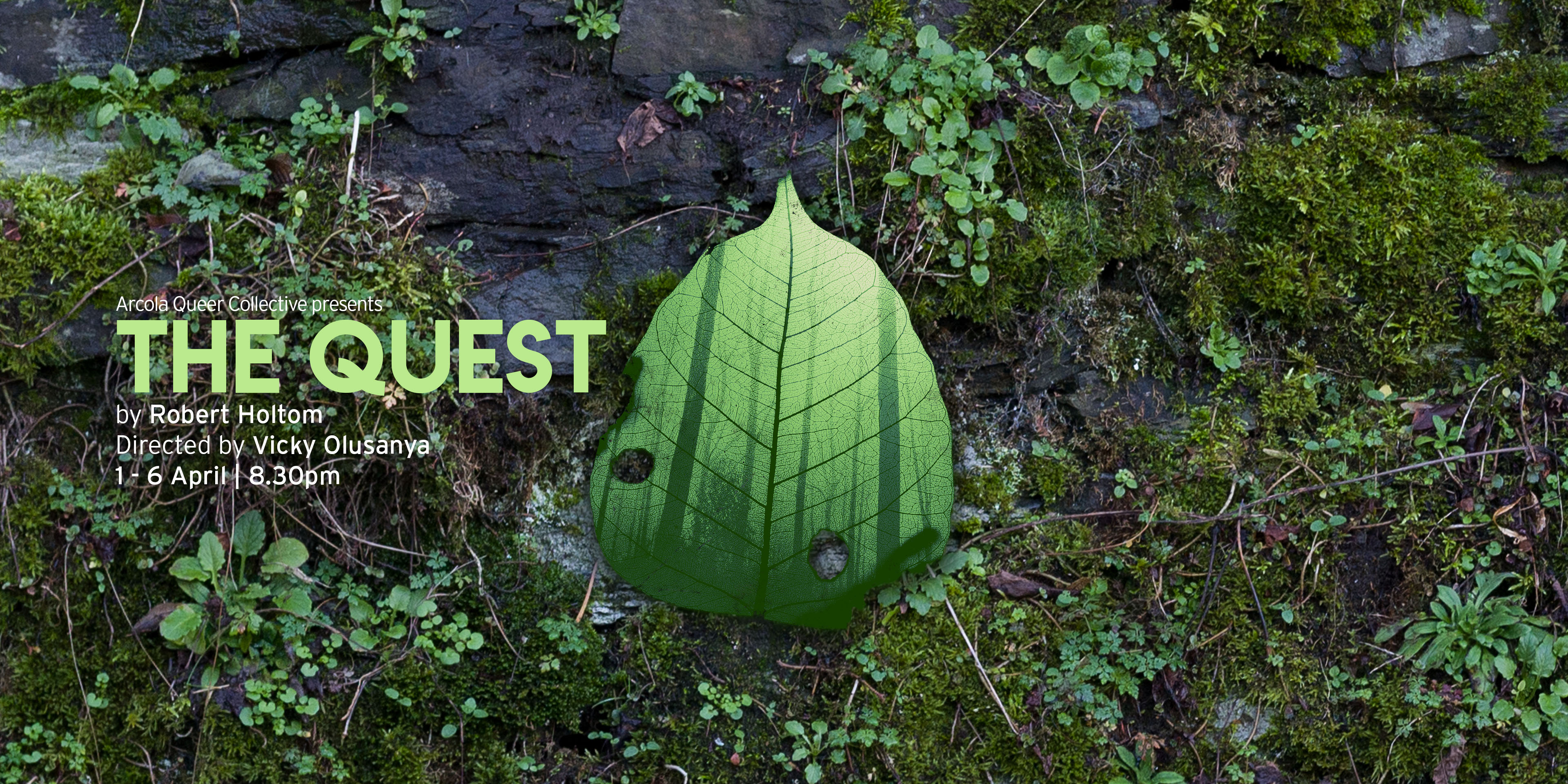
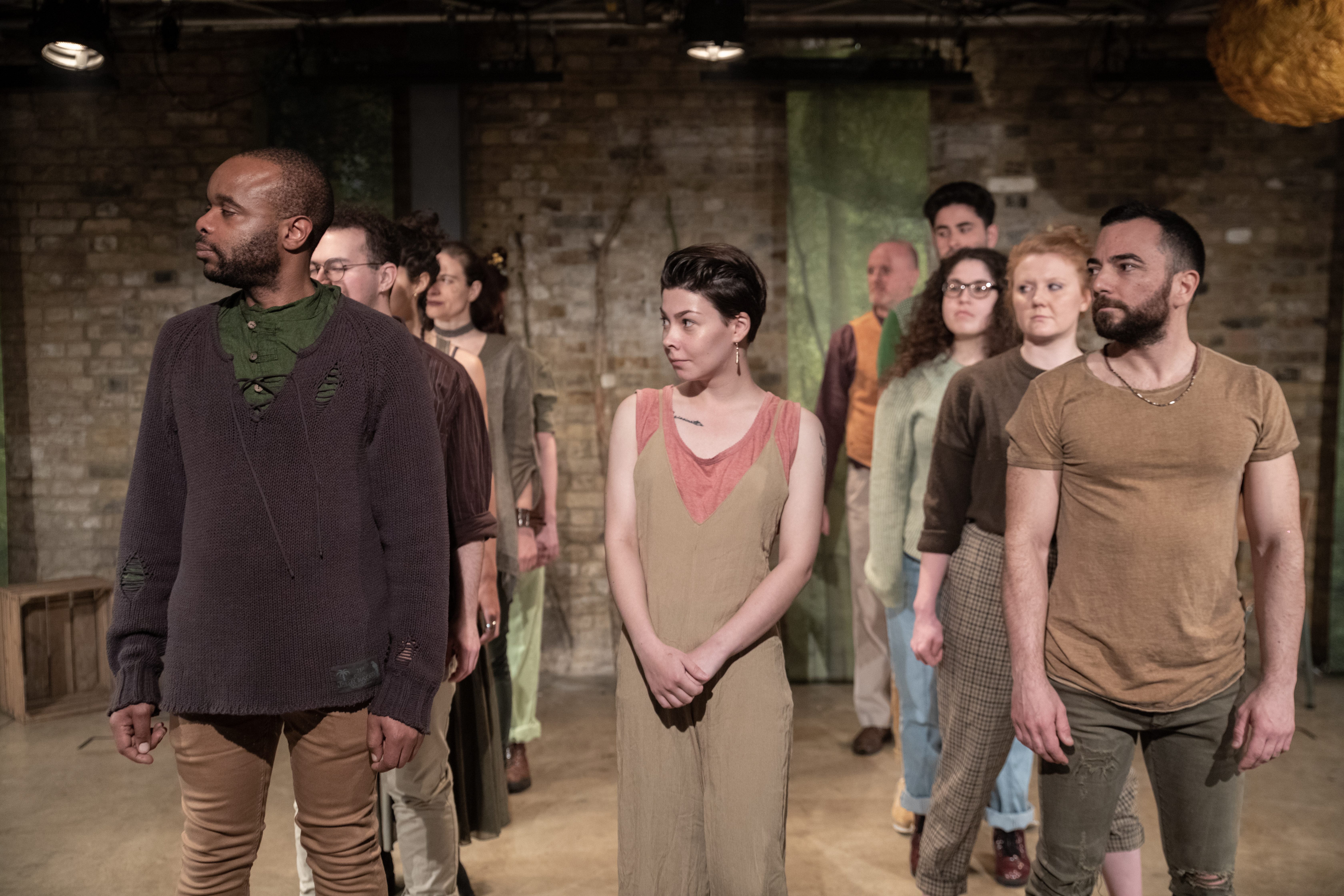
The Quest, think Queer As Folk meets Lord of the Rings, just ran for a week at the Arcola Theatre in East London. For six nights I got to watch a fabulous, queer troupe bring a range of characters and worlds to life. There was Fred, the bisexual teenager on his first Tinder date, whose past catches up with him, and Zemuel, of the mythic Valley of Embers, sent on a quest to banish the monster that haunts them. There were other characters too such as adoptive mothers, gossiping friends, a village Elder, a sarky waiter, a loving dad, teachers, a LOTR-disliking intersectional feminist, a best friend and a waterfall lover. The directing was fantastic and it was amazing to see my words brought to life on stage. And the audiences loved it. There was laughter, tears and many words of congratulations. Many people felt deeply moved by the stories of Fred and Zemuel, and they hit home for a lot of the team as well, as growing up queer in an oft hostile world means we are all faced with monsters. So, really, this was so much more than a play, it was its own quest, one for belonging.

Because that’s what I crave as a member of the queer community. I want to feel like I belong among people who care for me and care for our wider community. People who are spiritually, emotionally and physically nourished, and given a chance to heal the wounds of their past so they can live lives of greater freedom and face the difficulties of today. I want us also to be able to enjoy the many joys of our lives – such as making an ace piece of theatre. There is so much unbelonging in the world, for so many of us, and the queer community is hit by this unbelonging at a number of intersections. As the King of Brunei imposes the death penalty for gay people, so the fight for survival is still very much real. In Britain there will continue to be high rates of LGBT+ suicide, especially among young people, there will be LGBT+ homelessness, and a range of mental health problems exacerbated by societal prejudice and indifference. It’s a tough world to live in and the quest for Queertopia continues. A quest that straight and cisgendered folks need to join, so they can offer their power and allyship to their queer companions who will stand by them in return (and make ace pieces of theatre to boot).

So, thank you to the wondrous cast and crew of The Quest who helped prove that Queertopia can exist here on earth. While the play might be over I know we have all come away with pride and, hopefully, a little more of our soul – a sense that even though many of us might still struggle with belonging in this world, we can at least belong to ourselves more deeply and, hopefully, one another. Now in an act of unforgivable arrogance I will leave the last word to Zemuel, after they have vanquished their monster and returned to the villagers in the Valley of Embers, their new home…

“They are all there. A feeling wells inside of me, one I can barely name, but I think it is called belonging.”

The Valley of Embers – photo courtesy of …

Does The Quest For Queer Happiness Have A Destination?

Only two days now until the premiere of The Quest, a play I’ve written that parts mythic, part modern and follows the stories of Zemuel and Fred, both yearning to find home in an oft hostile world. It’s being put on as part of the Arcola Theatre’s Creative Disruption festival, which celebrates its many community theatre groups, including the Queer Collective, of which I am a part. Since January an ace group of queers have been tirelessly bringing the script to life with movement, voice, body and even sticks. The result is already beautiful and I can’t wait to see it on stage. You can too, get your tickets here!

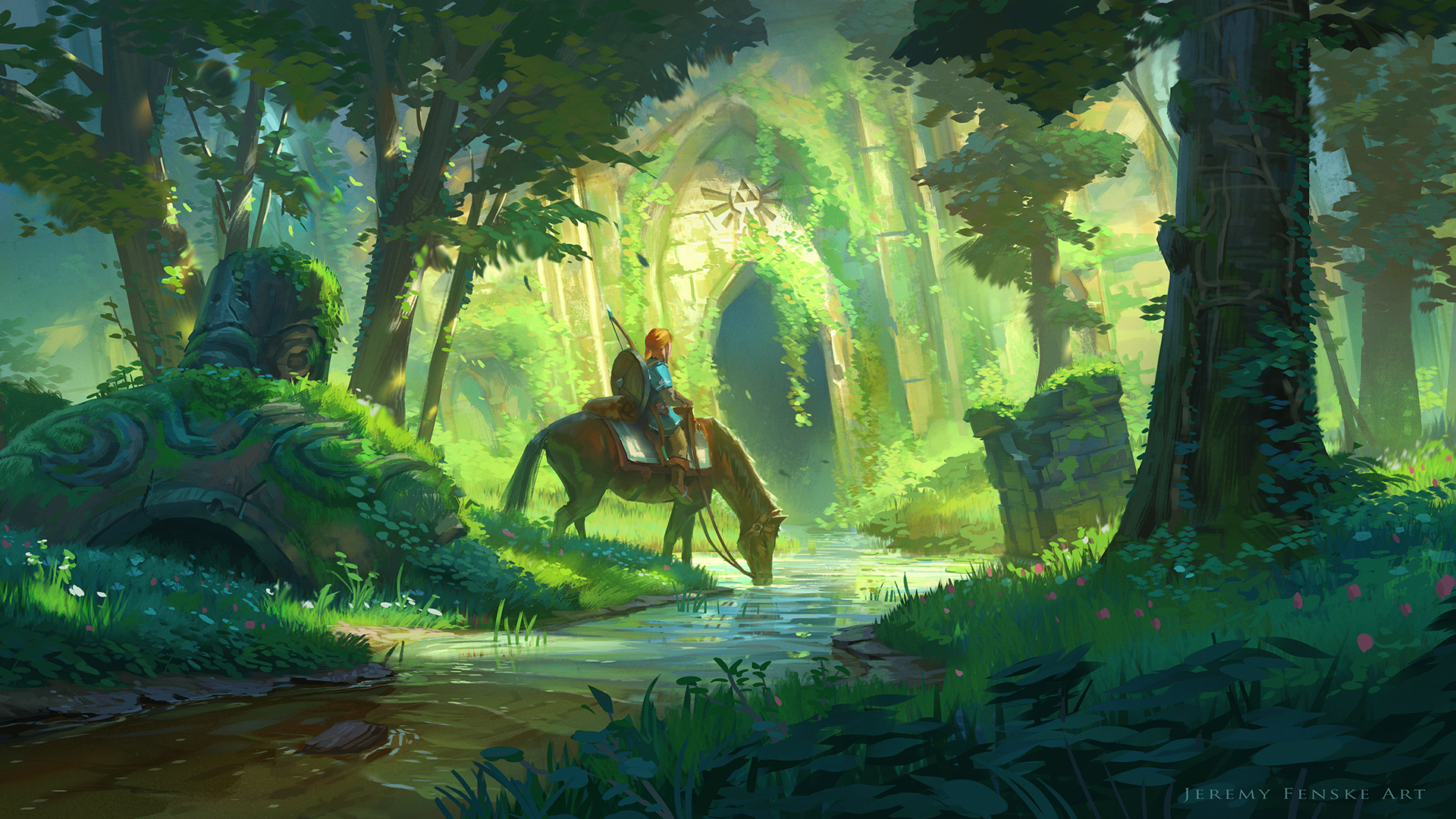
Inspired originally by Matthew Todd’s great book, Straight Jacket, which outlines a number of problems the gay, male community is suffering from and how to face them. Whilst I was reading it I went off for an adventurous week in a rewilding Welsh valley. It was all very Legend of Zelda and whilst the people there with me were fabulous there was not much space for queerness. So the Queer Warrior character came to life to challenge this as well as the repetitive plot of the Zelda games – a young dude going off to rescue a Princess from a big monster, yawn. I wanted to be able to imagine an inherently queer fantastical world, one in which all LGBT+ folks can experience wholesome rites of passage as they step deeper into their identities. However, while I think it’s very important to be able to imagine these things I also know that I don’t live in such a world. All the problems outlined in Straight Jacket continue to exist, which is why The Quest is also set in London where shit happens and the characters have to deal with it.

So does the quest for queer happiness have a destination? I think so. But I don’t think it’s necessarily a place. I think it’s a state of mind and being that is hugely dependent on the places in which one finds oneself. For me it’s about cultivating self-love, pride and resilience in the face of self-loathing, shame and prejudice. It’s tough and all over the world LGBT+ folk are being persecuted simply for wanting to be themselves. Queertopia remains a distant dream but I still think it’s worth imagining these brilliant places where queer folk are happy and well nurtured whilst recognising the challenges we face in getting there. I do hope you’ll join us on The Quest.

Man Down

What if to man up, us men actually had to man down? What if we had to step outside the heavily guarded and barbed wire bordered fortress of manness and take a look at the sites beyond the walls? So far, so vague? Well, let’s start with some definitions. Manness (which is actually a word!) means “the distinctive or differential characteristics of man.” Meanwhile, man has many definitions including a catchall for the entire human race (eye roll) and someone who expresses their brave, courageous manhood. But the one I’m interested in is “adult human male”, which brings me to the definition of male. This means both a male person: man or boy (seems the definitions are getting quite circular) and, crucially, “an individual of the sex that is typically capable of producing small, usually motile gametes (such as sperm or spermatozoa) which fertilize the eggs of a female.” OK! Being a man means being able to make sperm, got it!

It turns out the secret that us men are guarding at the heart of our manly fortresses is a splodge of small motile gametes. The definition doesn’t even have anything to say about willies and balls (but they’re implied), it’s just sperm. Naturally, it follows that a man, capable of issuing fertile ejaculate, should be virile, like his sperm, and strong, because I’m guessing those little gametes are tough? Given this, a man should not emote or display his feelings in public. He should appear tough at all times. He should play manly sports like rugby and football and get manly jobs like building and banking. He should be heterosexual, marry a woman, buy a house and have children, while being the breadwinner and letting his wife undertake the emotional labour for the entire family because folks with sperm don’t do emotions, am I right? He should put sentries at every corner of his castle and blast anyone who questions his manliness. That gay guy who’s just so darn camp: blast him. That woman who calls him weak: blast her. That trans man who calls into question his whole identity: blast ’em. That photograph of a hot male model on the tube: aahh, internal blast. Those feelings of sadness within: another internal blast. Those tears at night: internal blast! And so on and so on until this so-called man snaps.

An article in GQ written by Matt Haig states that 84 British men take their lives every week. It’s a shocking figure but it’s thanks to folks like Haig that male suicide is actually being talked about more. He goes on to say that “we need to change and broaden the idea of being a man.” He lists a few ideas including talking more about and not stigmatising mental health, and undoing the alpha male archetype of manliness. And what if he went further and questioned the very nature of man himself – this organism capable of producing motile spermatoza? What if we just knocked the walls down and let men be people, people capable of all sorts – compassion, strength, love, same-sex attraction, anger, football, creativity, kindness, ballet, sadness, loneliness, anxiety and beyond. What if being a man had nothing to do with sperm or gonads, something which trans men are reminding us of on a regular basis. What if to man up us men actually had to man down? Because a lot of cis men are going down and while there are so many factors to consider I think one of them is the fortress of manness – an empty, lonely sort of place that so often crushes the soul. To clarify, I’m not saying men need to stop being men if they don’t want to – it’s their identity after all – but I do think the man-conditioned is a being so often worth unconditioning.

Some People Are Trans. Celebrate It.

I’ve just filled out the government’s online consultation form regarding the Gender Recognition Act. The reality is saddening but the reform could be inspirational. At heart it’s about the right to one’s identity and the power of self-determination. So many of us get to take our identities for granted. We are assigned male or female at birth and that’s that but for trans, intersex and non-binary folks this is still a struggle that often entails discrimination, humiliation and isolation. We can change this and the epic LGBT+ charity Stonewall has a page on their website which guides you through answering some of the most important questions on the consultation. The deadline is soon, 19th October, and the process only takes about ten minutes.

I learned some pretty shocking things while filling out the form. For a trans person to have their gender legally recognised they have to apply for a Gender Recognition Certificate. Not only is this process long and costly it also requires a diagnosis of gender dysphoria. Yup. Being trans is regarded as a mental illness. But what of the many people who are trans and not suffering from gender dysphoria – how on earth do they have their true identity legally recognised? And what about intersex folk who were assigned the wrong gender at birth and want to change this in law? There’s also the requirement for a trans person to provide evidence of living in their ‘acquired gender’ for two years. What sort of evidence might this entail – wearing enough blue or pink, preferring rugby or cooking, being loud or quiet? And who on earth gets to decide if there is sufficient evidence? We’re talking about people’s identities and their right to self-determination within and without the eyes of the law. It’s as simple and fundamental as that, which is why the intrusive and dehumanising process we currently have in place for applying for a GRC needs to change.

Filling out the form was an educational and empowering process, I feel I’m contributing to the potential for positive change in this country. It got me thinking as well. What if we just stopped assigning gender at birth? What if children are raised as children and there is an opt-in process for gender, with parental/guardian/carer consent prior to the age of 16 and then self-determination from 16+? What if we stopped obsessively gendering children from such a young age and pushing them down pink or blue paths, submission or aggression, compassion or callousness? What if we educated children to be good people – to treat one another with love and respect, to try the things they’re interested in and to never assault or harm? And while we’re doing this of course we can recognise the importance of gonads, hormones and the effect puberty has on different bodies, and maybe the key thing here is to talk about it and to stop shying away from conversations about sex, gender, sexuality, attraction, consent, romance and love. The GRA consultation is about stepping up for trans, intersex and non-binary folks and it’s also an opportunity for everyone else to explore their own genders and identities, emerging from the process with a stronger and more nuanced understanding of themselves. The times are changing and there really is a future in which we all win. Or maybe just a future in which identity and self-determination are no longer competitions rife with discrimination and prejudice but a chance for all of us to be ourselves brilliantly. And here’s the Stonewall link again (it only takes ten minutes!).

Queer Warriors & Fierce Allies

A group of thirty had gathered at Hawkwood College in Stroud, Gloucestershire, for two days of storytelling, workshops and community building. As part of this I offered to run my first ever Queer Warriors and Fierce Allies workshop. So, picture the scene: a sunny Monday afternoon in the library where ten of us had gathered; a mix of ages, genders, sexualities and nationalities. Some of the folks I knew well, friends of mine, and others I had only met that day. So I was nervous but I was ready.

For the next hour and a half we unpacked the various and varying definitions of the LGBTQIA+ acronym and I created a space for questions and, for want of a better word, ignorance. Because a lot of people want to be allies to/within the queer community but often lack the right education. And learning requires being able to ask questions, sometimes “silly” questions but important nevertheless. So a lot of questions were asked and I, with the group as a whole, tried to answer them. After this we met the Gender Unicorn and explored the differences between gender identity & expression, the sex we are assigned at birth, and physical & romantic attraction. Then we got to some writing and crafted our own Queer Warrior or Fierce Ally characters. We gave them names, genders, sexualities, gifts and fears. We confronted them with those fears and, when all seemed lost and they were on the verge of being overwhelmed by that which scared them, we gave them some help. Maybe in the form of another person or an animal or something else entirely, the point is that our characters could overcome their fears because they had help.

And that’s what I want. Help. If you’ve ready some of my previous posts you’ll know that, as a gay and queer man, I sometimes struggle with living in a heteronormative world. Sometimes I get angry or depressed and at other times I get defeated. But, to date, I have always got through these difficult times because I’m still here. I’ve done this because, yes, I am strong but also, and always, I have had help. Having been raised male and internalising a lot of those lessons I often struggled to ask for help, seeing it as weak and shameful. Even the notion of “admitting” defeat implies some sort of failure. And even the notion of being defeated implies life is a competition. But over the years I have challenged that shame and, slowly, become much better at asking for help. And that evening, empowered by my experience of the workshop, I announced to the whole group that I was gay, not something I’ve ever done before, and I read them a poem. Then later, a friend of mine did an amazing performance of a theatrical piece of hers and included a blessing for the queer community. The next day a new friend sat and talked with me about my experiences and told me about so many of the things he’s learned as a straight person keen to be an ally of the queer community. Then two more of my friends, who told a story of Jumping Mouse, finished the tale by calling the mouse he, she and they. And I came to realise that sometimes when I speak as a gay man people do listen and sometimes when I ask for help it arrives. And, for that, I couldn’t be more grateful.

Link and his trusty steed, Epona, from the Legend of Zelda


Every Gay Needs An SBF – Straight Best Friend

You’re walking down the street and someone calls you a faggot. You’re hanging out with friends and someone says how butch all lesbians are. You’ve just been misgendered again. You really want to say something, to challenge this rubbish, but you’re exhausted from doing this on a day-to-day basis. So you decide to stay quiet and let it slide. You expect an awkward silence but much to your surprise someone else speaks up. They yell “homophobe” at the person that just called you a faggot. They tell your friends that lesbian women are not reducible to their appearance and can look however the hell they want to. They correct the misgendering. You’re smiling now because what you might have said has been said by someone else. And who is this mysterious super hero? Why, they’re your SBF – Straight Best Friend.

I have an SBF and they’re just fab. While they do have quite an average dress sense and aren’t particularly funny (typical SBF, right!?) I know they’ve got my back. I know they’ll listen to me on my off days (and my on days) and make space for my unique lived experience as a gay man (and queer genderqueer). They’ll listen to my joy or pain and acknowledge them, so I know I’ve been heard. They celebrate my successes and hug me when I cry. Sure, their favourite colour is beige and they eat too much bread but around them I feel safe, supported and understood. But my SBF is even better than this because they’ve realised that all these things are basically just what friends do for one another, whoever they are, and they know I’ll do all these things for them too. Instead, my SBF has done even more.

My SBF has googled how to be a Straight Ally and gone to the Stonewall website to read up on how to Come Out For LGBT. They’ve even downloaded and printed the Amnesty International Ally Toolkit and shared it with their colleagues at work (they used the work printer for this). They’ve done their research and recognise that things aren’t “fine” just because gay people can get married and there are gay characters in Hollyoaks. They can see the queer community is being overburdened with the task of having to look after itself – providing ad-hoc therapy, social support and care for those who have suffered from austerity, the cuts to vital support services and continuing prejudice. They know that nine-year-old Jamel Myles from Colorado recently took his own life four days after having come out as gay at school and being bullied for it. They know that Jamel was one of the heroes of the LGBT+ community who was never allowed to live his whole life. So they sign All Out petitions, promote inclusion for LGBT+ folks and make visible their allyship. If there’s something they’re confused about they ask me questions and they give me space to answer or not because they know it’s not just the task of queer people to educate on queer issues. Furthermore, my SBF knows that when I do talk about queer issues I don’t do it to exclude other issues because I know, as does my SBF, that the future is intersectional. They liked my previous post on my experiences of loneliness as a gay man and shared it with other gay men they know. Except they didn’t leave it at that, they checked in with those gay friends and offered some emotional support. They even invited them round for dinner and are now planning a lunch with a bunch of other queer and out ally friends. Because my SBF is a bit of a community builder and knows that the just, equal future of our dreams requires straights and the LGBT+ community coming together.

Now, I can’t lie, my SBF and I have had a fair few rows and bust ups. And sometimes it’s because they got it wrong and said or did something that was just really stupid. Other times it was me, expecting too much from them and getting angry as a result. But we’ve worked through these times, sharing our vulnerabilities, exploring our stories and rising strong (yup, we’ve read a lot of Brené Brown). We have learned how to support one another and our friendship is so much the stronger for it. We know it can be hard but we know it’s worth it. Because in a world of such prejudice it’s not easy being out – as a queer person or as an ally – but we’ve decided to do it to ensure it’s not just the loud and violent voices that get heard and in the hope that kids like Jamel Myles will be able to live full and happy lives. Together, my SBF and I have proved that just as men have a vital role to play in feminism so straight people are crucial to LGBTQIA+ empowerment. I don’t expect the world of my SBF and I don’t want them to burn out. I just want them to be themselves brilliantly and I know that’s what they want for me too. And when it comes down to it I’m so proud of my SBF, just so overwhelmingly proud.

A Single (Gay) Man

As a single, gay male looking for love I often find myself caught between a rock and a hard place or, to reference ancient Greek mythology, between Scylla and Charybdis, one a many-headed sea monster and the other a giant whirlpool. On the one hand, I’m dating in a straight world which makes it so much harder to find men. On the other hand, a lot of straight people just don’t seem to care that much about the plight of the gay man. For them, gay guys are either sexually promiscuous Grindr-using tropes or decorative, GBF types who have great fashion sense and are good at listening. So to find love I have to navigate a most tricky crossing, being both vulnerable and bullet proof at the same time – vulnerable because to get a guy I have to be open about the pain I feel due to my loneliness, and bullet proof, because the likelihood of wider, straight society actually understanding this pain and doing something about it is pretty slim.

I guess for much of my life I have been told that my love is secondary to that of heterosexual people. Hets get their childhood sweethearts, sex education, cultural traditions and ceremonies. Hets get the chance to bump into their next date at work, church, climbing club, bingo or even the f*cking supermarket. Hets get to muck up their relationships and then make the same mistakes all over again, often with multiple people in one year. Hets get to feel like they win when they lose, I just feel like a loser. I have also been told that my pain is secondary to that of heterosexual people because hets are allowed to feel all sorts of pain – big and little, whereas I’m supposed to be the shoulder heterosexuals get to cry on or just be a cute, sassy and funny trope. My pain is often a punchline. Heaven forefend that behind my cutting wit and fleek fashion sense there might be such a depth of pain: one comprised of all the usual human trials and tribulations, and queerphobia, and the legacies of the AIDS crisis, and the unique gay experience of toxic masculinity, and internalised homophobia, and having loved ones who are HIV positive because our education system is failing us, and discrimination, and being the butt of so many jokes. One also born of the loneliness and sadness of not truly belonging in the world into which I was born. And, no, the odd gay bar (probably about to get shut down and converted into luxury apartments) and a once-a-year Pride event is not enough. Nowhere near enough.

As a great friend of mine says: “Queerness is either funny and light and joyous and palatable to straight people. Or it’s tragic and awful in a way that makes straight people glad they’re not one of us. We’re not allowed our own unique pain. We’re not allowed to just struggle day-to-day in  a way that isn’t funny or glittery or tragic or newsworthy.” Well, consider this blog post a piece of my pain and I share it with you freely.  If you are straight it might change, a little, the way you see the world and maybe even inspire you to take action to support a queer person you know, or maybe even one/s you don’t  (and, yes, I know I have essentialised you based on your sexuality…it’s not very nice is it). If you are queer, you might hear an echo of your own pain. Perhaps. In the meantime, until Queertopia is built here on earth I will keep on sailing between a many-headed sea monster and a giant whirlpool, honouring and suffering a pain that is often ignored but is no longer a joke. Maybe somewhere on this voyage I will meet another man to journey with and if you are him, come find me on the high seas.

Mama Mia: The Trouble With Cher

Firstly, I want to make clear that there is no trouble with Cher, she is blooming fabulous. I fondly remember turning back time as a kid and wondering if I was strong enough, and the Cher challenge in the latest season of Ru Paul’s was almost everything. No, my problem is not with Cher (unless she’s done something awful that is yet to come to light) but with the latest Mama Mia film’s ruthless exploitation of her. Here we go again (spoilers).

The original Mama Mia heavily implied that Meryl Streep’s mother was dead (I’m going to use their real names given their fictitious names aren’t very memorable and we didn’t really watch this for the characterisation). So it was quite a surprise when Streep’s mother turns up at the end of the second movie in the guise of Cher. Of course, she doesn’t just arrive, she arrives. In a helicopter, looking a million dollars and stealing the show with a marvellous rendition of Fernando. On top of that the other characters are pretty forgiving of the fact that Cher has been a largely absent character from both her daughter and grand daughter’s lives. She missed Meryl graduate, set up a hotel on a small Greek island, have and raise a child on said Greek island, get married, die and have a funeral. She missed all of her grand daughter’s life as well until she flew in at the last-minute. Now, I can’t know what Cher’s character was going through and what her struggles were and I do not want to pass judgement but, still, people seemed really forgiving at the end of Mama Mia 2 and I can’t help but wonder that it’s because the producers were more interested in shoe-horning Cher into the story by any means possible than they were developing her back story. And why might that be?

To get the gays in. Cher is a gay and queer icon of epic proportions. The LGBTQIA+ community love her for many reasons: her wondrous songs, brilliant dress sense, fierce support of her transgender son Chaz Bono and equality for transgender folks in general, her Oscar-nominated starring role as a lesbian in the film Silkwood, her joy at the recent Australian marriage equality vote and even her desire to emulate gay men from the age of 12 because she thought they were so much more fun than “regular men“. So, you can be pretty sure, that if you’ve got Cher cropping up at the end of your movie for a couple of minutes and singing a famous ABBA song then her queer fan base will be throwing their pink pounds away to get a front row seat at the cinema. I did, although I sat further back because I didn’t want to crane my neck. Of course, as far as the Mama Mia makers were concerned having a gay icon in their film equates to representing the LGBTQIA+ community. But it doesn’t, does it. Representation would mean actually having a lesbian, a transgender person, a bi-sexual or anyone from the LGBTQIA+ community adequately characterised in the film with a story arc of their own and despite the slightest of nods being sent in Colin Firth’s direction this didn’t happen. So just to recap, we’ve got a film based on ABBA songs with Cher in it and the queer representation is next to nil. Let’s just take a moment to let that one settle in.