No More Mr Nice Guy

You probably know one of the really Nice Guys – he’ll be male (obviously), white, heterosexual and, y’know, he’ll be really nice. He’s probably passably attractive (by patriarchal standards) and knows how to compliment a woman in a way that doesn’t completely objectify her. He’ll know just enough about feminism to know that it’s about treating women well, to a point. He’s probably quite popular, with lots of straight, white, men friends, who like competitive sports and were most likely privately educated. He’ll be charming, polite and a gentlemen. In essence he’s a really Nice Guy. The trouble is…he’s not…and here’s why.

There are many Nice Guys out there who think they get feminism, they’ll say nice things to women that aren’t too objectionable, they’ll offer a helping hand (if appropriate) and they’ll listen to their female friends emote. But they have ulterior motives – they’re nice because they want to sleep with the women they think they are being nice to. They realise it’s not OK to be the Manly Man stereotype anymore (i.e. overlty sexist and aggressive, James Bond for example) so they resort to more underhand tactics instead. They get annoyed when women don’t choose them and pick someone else (who might be way less ‘nice’) as if women have some sort of obligation to sleep with them simply because they haven’t treated them badly. They use Tinder to get laid but won’t admit that’s what they’re using it for (“yeah, I, like, er, really want a relationship…(for 30 minutes)” – more like 30 seconds). Basically they don’t just don’t have the guts to ask women to engage in adult, consenting, responsible sex – precisely because they stereotype all women as needy, insecure and in need of being lied to about the possibility of a family, and because they themselves are incapable of having adult, consenting, responsible sex (for them it’s some sort of competition or game).

Nice Guys don’t like self-professed female feminists because they’re too shouty and angry, and they don’t shave their legs and aren’t ‘conventionally’ attractive. They’ll casually undermine and mock their girlfriend when she tries to make a feminist point, as if we’ve reached a post-feminist age where we’re all equal and women should stop whining. They might even go so far as to deny the existence of the patriarchy. They’ll also be somewhat homophobic, transphobic and racist. And why are they all these things? Because white, straight men are the most overly represented group in society. A Nice Guy will never have had to question their existence or worth because they are regularly made to feel entitled and worthy based on their arbitrary skin colour, possession of a penis and sexual inclination towards the opposite gender. Basically they’ve never had to learn how to empathise and think they’re the dogs bollocks (the sort of phrase a Nice Guy might use).

The litmus test for a Nice Guy is the fact they think they’re a Nice Guy – it’s like the Cool Kids, anyone who refers to themselves as one of the Cool Kids just isn’t (partly for using the phrase Cool Kids) – and any self-professed Nice Guy just isn’t one because they’re clearly insecure about all the nasty thoughts they have and things they do. They basically think they’re owed something because they’re not abusive, aggressive and overtly sexist. They’re deluded. The protagonist of that awful film 500 Days of Summer is the classic example of a Nice Guy or what should really be referred to as an ANNG – Actually-Nasty-Nice-Guy.

So, Nice Guys, what to do? Read up on feminism, start respecting people as people – not as things you could have sex with at some point soon – and practice the act of empathy (keep practising, you can get better in time). In the meantime know that you are not really a Nice Guy you are actually what Lily Allen calls a Wanker, you can listen to her song below (TW: homophobia – she equates Actually-Nasty-Nice-Guys with being closeted homosexuals. Sexism – towards Nice Guys, obviously). Oh, and here’s a great BuzzFeed article on Nice Guys.
Is It Just A Cake?

There’s something amiss in the Bake Off tent, not quite rotten but still not quite right. It’s visible in the eyes of the contestants as they wait nervously for Mary and Paul to judge their baking. It’s in the wringing of hands, the stressful sighs and the general air of fear. It bubbled to the surface most overtly when, in episode one, one of the contestant’s Black Forest gateaux kind of just fell apart in an oozing, chocolately mess. Minutes from the deadline she began to cry and comedian Sue Perkins came to console her saying “it’s just a cake” to which she replied “it’s not just a cake.” If this is indeed the case and it is not just a cake then that begs the question what exactly is it?

As the Court of Denmark in the play Hamlet comes to act as a metaphor for the entire body politic of the country, symbolic perhaps also of Elizabethan England, then perhaps there are ways in which the Bake Off tent is a metaphor for our own society. From birth onwards we are relentlessly judged – our parents/guardians/carers tell us how and how not to behave, our teachers deem us worthy by giving us marks and grades, professors at university do the same except the marks tend to be lower, our bosses tell us if we’re good or not via the medium of money (if we’re lucky enough to have a paid job), mainstream advertising likes to remind us that we’re not good enough, newspapers like to scapegoat and blame whole groups of people and even our friends and loved ones will often be there to remind us what we could be doing better.

It is from this societal context of relentless comparison and competition that the twelve bakers arrive at the tent. Judging only what I’ve been shown in the first hour-long episode it seems like lots of them have something to prove – they want to prove they’re good at baking, really good. This could be a healthy, competitive attitude but when one contestant explained that her mum had told her not to bother coming home if she got kicked out in the first round one does start to wonder. Furthermore, as Paul Hollywood reminds us, the contestants, whilst great bakers, are at “the bottom of pack of great bakers”. It’s so hard to be the best especially when Hollywood and Mary Berry seem to have a monopoly on bestness anyway, it’s an ever elusive goal that we can be goaded into pursuing even though we’ll never attain it. It’s basically the mantra of our society – work harder, be better, work harder still and one day you might be happy (oh, and don’t complain whilst you’re at it, all that stiff upper lip and ‘keep calm and carry on’ sort of thing).

And then there are the facial expressions. The grimaces of fear and anxiety as Berry considers the flavour and Hollywood judges the sogginess of the bottom juxtaposed with the sighs of relief when the baked goods have been judged worthy. It seems like one major ingredient in the Bake Off tent is desperation as contestants try to fill the holes in their hearts with nods of approval from Mary Berry and a delicious assortment of baked goods. The idea that these people may already be more than enough just as they are and don’t need to prove anything to anyone seems an alien concept when it all comes down to being the best.

At the end of the episode one of the contestants (the one whose cake collapsed) admits that she feels like she’s “been initiated into truly what Bake Off means”. What, then, is that? Is it to strive constantly to impress others hoping that their admiration will yield a sense of worthiness? Is it to chastise oneself for every soggy bottom and forget to celebrate every other solid bottom? Is it to whip guilt and despair with a tantalising sprinkle of unattainable hope all served on a dish of insecurity? If so it sure makes for compelling viewing!

Great British Bake Off
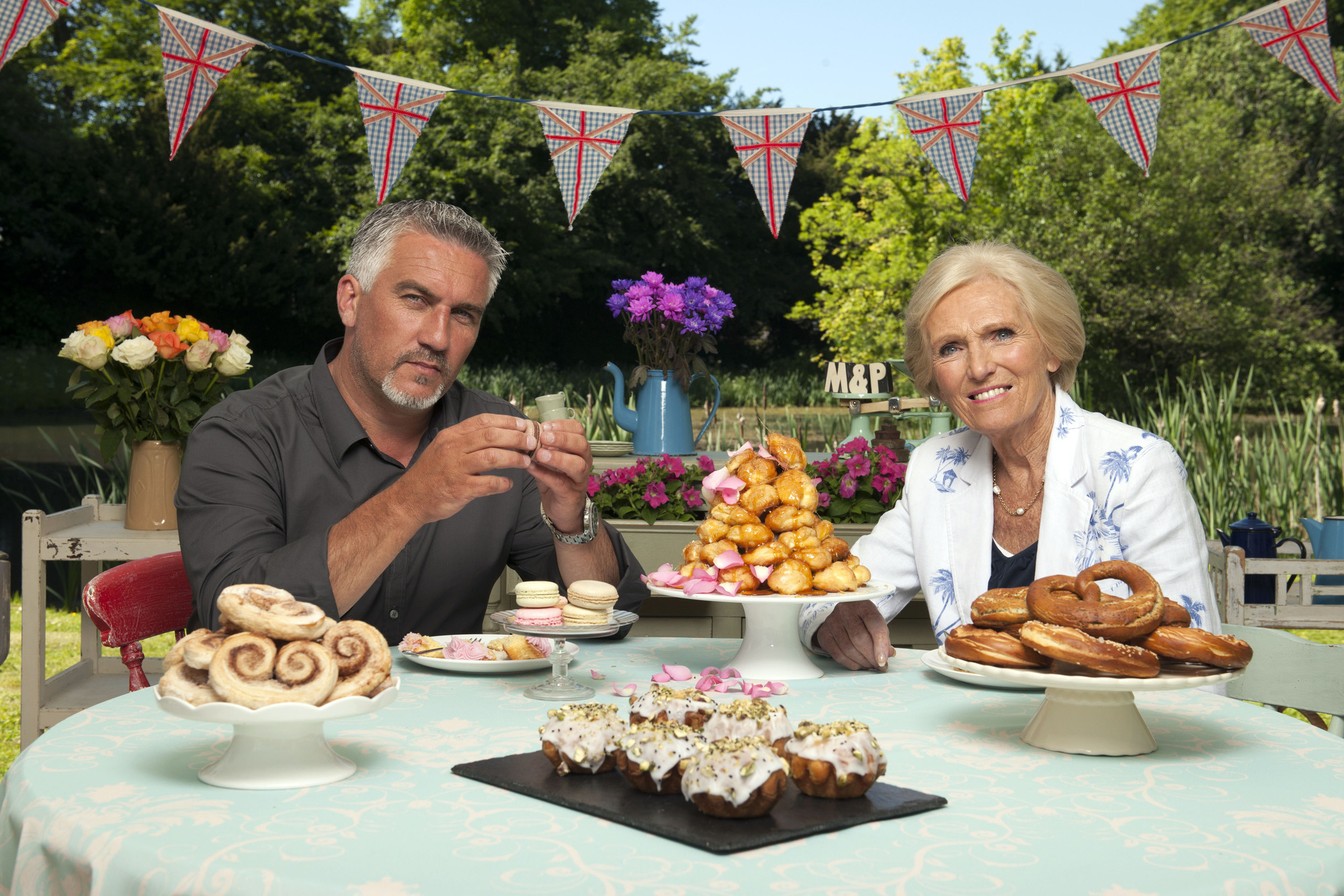
Judging you worthy: Bake Off judges Paul Hollywood and Mary Berry

Absolutely Mad Max

The situation is bleak: humans have all but bled the world dry of fossil fuels. Oil has become exceptionally scarce and a prize over which violent factions will go to war. These factions take the form of vast, sprawling patriarchies built on bizarre cults and rituals. Selfish warlords rule over their subjects with force and violence and send their armies to war to fight for the earth’s dwindling resources.

In one of the kingdoms water, also scarce, has been privatised and is occasionally supplied to the population at the whims of the greedy tyrant. He gives them just enough so they can live and keep on serving him whilst taking extra for himself. Unless you’re the ruler life is one of gruelling servitude as people work at machines all day with little hope of remuneration. People are pale and unhappy due to lack of exposure to the sun. Desperation and SAD are rife.

The highways are dangerous places to be, full of gas chugging automobiles that run people down for sport. Deaths on the road have become so normalised that they’re just a part of everyday life, to be expected. People make a point of ignoring the speed limit. Young men, obsessed with cars, go joy riding and happily die in the pursuit of the ultimate thrill.

But in this world there is hope and that hope is women. Women will fight for their place at the table of power, in fact, women will fight to overthrow the table of power and build a new and better table – one at which all can sit – whatever creed, colour, race, religion, sexuality or gender. For now though things are not so equal. When a woman dares to speak out she will be hunted, ridiculed and oppressed by a twittering mass of overgrown men-children. These men consider women mere property and subject them to humiliating acts of objectification such as wet t-shirt competitions (even in the desert).

So, enough about Conservative led Britain, let’s talk about the exceptionally intense and adrenalin filled movie Mad Max: Fury Road. You can watch the harrowing trailer below…

Corbyn: In The Box To The Left

Corbynmania is exciting stuff. It seems there’s actually debate to be had when it comes to politics. People are discussing things rather than just accepting the Tories’ line of austerity, tax breaks for the rich and cuts, as if these are immutable truths. Jeremy Corbyn, front-runner for the leadership of the Labour Party, is leading the debate and offering an alternative politics – one of hope. But it was Beyoncé who told her ex to put everything he owns in the box to the left and my concern is that Jeremy Corbyn is being resigned to that very same box.

One thing Corbynmania proves is that the Conservative victory at the last general election does not spell the end of politics. We are not consigned to a future of corporate giants crushing communities, endlessly bailing out big banks and the poor getting poorer until climate change melts us all, no, it seems politics could still shift leftwards – back to a bigger state that dares to close tax loopholes, challenge corporatocracy and reduce inequality.

But this isn’t enough (even if it happens). If we really want to change society for the best then we must recognise that some of the big issues we face are so much bigger than left and right-wing politics. For example, to address climate change we cannot just cut carbon emissions and green consumer capitalism because woven into the fabric of our political-economic system is an inherent flaw: it depends on endless economic growth on a planet that offers finite resources. As the name suggests a growth based economy has to keep growing to function but, as we saw with the banks, when things do get too big they can fail, except rather than just a financial system collapsing, rampant globalised capitalism threatens the very earth itself (imagine an impossible hamster getting bigger and bigger until it eats the whole world).

Whether you go rightwards to a smaller state and bigger corporations, or leftwards to a bigger state and smaller corporations, neither approach will tackle this underlying threat because both take capitalism at face value – they just have different ways of dealing with its problems (Labour tend to be nicer to the poor whilst the Tories like to ignore them). Corbyn hints at transcending party politics when he talks of distributing power beyond the state to include communities as well and certainly a push towards peace over arms proliferation could recognise that one of the many reasons we go to war is to ensure our economies can keep growing (the arms industry being a great example of the illogics of growth based economics because so much of the stuff it makes gets destroyed but this is a good thing for the economy because it means more stuff can be built to replace the old).

Corbynmania is exciting stuff. He’s diversifying and opening the debate, putting the demos back in democracy, but that doesn’t mean he’s answering all the questions which is why we’ve still got to keep asking them. We can’t let him get trapped in the box to the left because questioning our tired, destructive political-economic system in its entirety means transcending the left and right debate. Having enjoyed Beyoncé I’ll now leave you with a nice video of that impossible hamster I mentioned earlier…

Quentin Letts And The Right To Bigotry

“I disapprove of what you say, but I will defend to the death your right to say it,” said Evelyn Beatrice Hall, an English writer of the 19th and 20th centuries. It’s a nice summary of the principle of freedom of speech – i.e. we’re all free to say what we like and anything that curbs that freedom is a form of censorship and an abuse of our rights.

Well, I disapprove of what Quentin Letts had to say about the latest series of The Great British Bake Off, and whilst I’m probably not going to risk my life so he can repeat it I do wish to explain exactly why I disapprove in the hope that he’ll be less likely to say it again. To clarify, I am most certainly not advocating censorship, far from it, I think it better that the views of Letts are aired precisely so we can challenge them and in doing so maybe even inspire him to be a little less of a bigot.

He begins by describing the different contestants that have been chosen for the sixth series of Bake Off. He notes that one of them is Muslim and wears a headscarf, one is a house husband, another is a female vegan bodybuilder from Lithuania, one of the men has tattoos and wears a hat, one of them is Afro-Caribbean, there’s one on a gap year, at least one of the contestants lives in the north of England, there’s a British-Asian male and another man originally from the Philippines.

This might sound like an exciting and interesting group of people who we can look forward to getting to know as the series progresses but not for Letts. What he takes umbrage with is the very diversity that the contestants represent. He considers this part of a grand political conspiracy as perpetrated by the BBC, in his own (far too easily parodied) words: “a leaning to modernity, to fashion, to ‘the alternative’, the ‘different’, sometimes for reasons of group-think, sometimes out of a desire to jack up the ratings in the manner of a commercial TV station. It is in keeping with the creed of egalitarianism. It is deeply unconservative.” No doubt it’s political correctness gone mad, something he writes about in his book Bog Standard Britain as crushing “the individualism from our nation of once indignant eccentrics.”

Of course, Letts’ version of individualism (and conservatism) is of a particular hue: namely white. He makes it pretty clear that in his world it’s not Muslims or Lithuanians that bake but homosexual men or older, white, middle-aged women (“mum-next-doorish” types as he describes). As a white, middle class male Letts has the privilege of being one of the most represented groups in mainstream culture (and history in general), so it’s no surprise that he gets a bit uppity when suddenly there are fewer people like him appearing on his favourite television shows. He wants to see more “humdrum, plain-as-white-flour, Middle-English bumblers” (nice to see him appealing to the casual bigotry of equally insecure Middle-Englanders, that infamous squeezed middle beset upon by socialist loons, crafty immigrants and vicious feminists). His privilege is being undermined and whilst this is a good thing because it represents power being more equally distributed and an increase in equality all Letts wants to do is get angry. He expresses his anger (and deep set insecurity) by cracking racist, sexist, homophobic and Islamophobic jokes in his article, no doubt scoffing into his favourite suitably middle class and white supremacist breakfast cereal as he does so. For all his life Letts will have found positive discrimination working in his favour but because it’s so ingrained and commonplace he never will have questioned it, let alone give it a second thought. But now’s it not working in his favour he’s going to kick up a fuss.

“I just wish I didn’t feel, as I looked at the contestants yesterday, that I was being preached at – that the BBC’s social engineers were up to their transparently political tricks again.” Some unintentional comedy gold from Letts here who has just spent a whole article preaching bigotry and narrow-mindedness at us. He accuses the Beeb of having a political agenda whilst clearly forgetting that white, heteronormative, androcentric patriarchy fired at us on a daily basis is itself just drenched in politics. But it doesn’t suit Letts to acknowledge this so instead he’ll deride the “sinister” politics of the BBC, one that favours equality, diversity and representation – you know, those really sinister values. He’s scared these values depart so far from the mainstream “that they often fail to represent adequately that very mainstream” – but Letts doesn’t really care about these people, his article has shown such a lack of compassion that it’s hard to think he cares about anyone, no, he cares about himself and wants more men just like him on TV (he wont’ be happy until Mary Berry’s been replaced by Jeremy Clarkson and Sue Perkins has been ousted for someone overtly heterosexual, such as Katie Hopkins).

So no I don’t approve of what Letts has to say and whilst I won’t risk my life in defence of him saying it I still won’t call for its censorship. His argument is as floppy as a failed souffle and has the soggiest of soggy bottoms. Whilst the BBC’s sinister world of equality and diversity is just brimming with creamy Victoria sponges and rolling Swiss Rolls. He’ll figure it out one day – that a more equal and fair society works out better for everyone, even people like him, but in the meantime we’ll just have to tolerate the bitter aftertaste of his bigotry.

Quentin Letts with spaghetti (interestingly not a baked good)

The But Men

They live amongst us. They are people we know. They are our friends. They are the But Men. Like the rest of us they live in a heteronormative, misogynistic patriarchy. They are witness to daily acts of sexism against woman. They listen to these women talk about their experiences of oppression. They read women’s blogs and facebook posts about the violence society perpetrates against woman. And once they’ve finished listening and reading the first thing they say is “But men…”

“But men are objectified too, but men get called out for having too much sex, but men experience domestic violence, but men are stereotyped, but men…”

Whilst all of these things are true it’s pretty obvious that the But Men are missing the point. Simply put, when we are talking about women’s experience of the patriarchy we are talking about women’s experience of the patriarchy – not men’s. In this situation the best thing many men can do is shut up and listen. I did a But Men the other day and swiftly learnt my lesson. A friend had posted about the objectification of women in mainstream media – the way women’s bodies are so frequently sexualised and scrutinised. I ‘liked’ the post and then innocently/ignorantly commented, ‘Yes, and this happens to men too.’ It didn’t take long for someone else to comment on my comment accusing me of missing the point and trivialising the issue. “Missing the point, trivialising the issue,” I said to myself indignantly, that’s certainly not what I intended. Fortunately, rather than commenting on the comment on my comment I stepped away from the laptop.

I say I commented innocently/ignorantly for a reason: with regards the innocence I was genuinely trying to reach out to a virtual community discussing objectification and share my own experience of objectification – I get bored with the status quo of male beauty and body type and my self-esteem is regularly diminished by it and I really wanted to share my views on this. With regards the ignorance I should have known better than to butt into a conversation about the oppression of women with a comment about the oppression of men. I would not have interrupted a friend’s discussion about their experience of racism as a black person with my comments on the experiences of racism that white people encounter, or a discussion on homophobia with instances of heterophobia, or instances of Islamaphobia with cases of discrimination against atheists etc. Yet for some reason I thought it was OK to completely divert a conversation about women to be about men. There’s a word for this and it’s sexism. It turns out my ignorance perpetuates oppression and that makes me guilty.

For too long conversations have been led by men, for men and about men. And now people are talking about other things men are suddenly finding their male privilege threatened. It was never a good privilege in the first place because it depended on oppression and violence but it sure is uncomfortable to discover a taken-for-granted power being dispersed, even though it’s for the best.

So, But Men, what can we do? We can acknowledge that there are ways in which we all suffer in society and that we all need to be able to talk about this suffering. If we want to discuss the ways in which we suffer as men we can find appropriate groups to do it with. However, it’s important we don’t hijack other groups to talk about ourselves – this is disrespectful and oppressive. We must learn to listen and not to speak over people (aka when to shut up). We must also acknowledge that there are spaces to which we are not invited (e.g. a woman’s circle). In essence, we need to use our imagination. We need to try to empathise with groups we are not part of in order to understand what it’s like to experience the world as they do – a world that has a knack for treating men unfairly well. Then we can set about changing this by redistributing power equally in order to ensure that this world isn’t all a-but men!

Cameron Calls For National Day of Heterophobia

In a surprising act of radicalism David Cameron has called for a National Day of Heterophobia (NDH) in the UK. “For too long the citizens of the UK have been oppressed by a heteronormative, homophobic patriarchy, and I want to be part of the movement that changes that,” said Cameron yesterday on his YouTube channel ‘Camz4Change’.

A Whitehall source claimed that after discussing the recent budget Cameron proposed the idea of the NDH to the Cabinet. The planned date will be 24th September to coincide with the release of Karma Chameleon back in 1983 (“That album was a big part of my youth,” explained Cameron). Reactions were overwhelmingly positive. “I’d put it on a par with invading Iraq,” said Home Secretary Theresa May. Meanwhile Chancellor of the Exchequer George Osborne also gave it his support, “I was once teased at boarding school for kissing a boy, so I think it’s time those nasty straights had a taste of their own medicine.”

Planned activities for the day include:

  • Shouting at straight couples in the street who are holding hands and/or expressing any act of affection.
  • Trolling known heterosexual celebrities and leaving comments on their websites and blogs that attack them for their sexual behaviour.
  • Prefixing all references to known heterosexual people with the word ‘straight’ – e.g. “this is my friend straight Alex”, “they’re a straight couple I know”. Using the term SBF – ‘Straight Best Friend’.
  • Using the term straight as a pejorative adjective – e.g. “that’s so straight.”
  • Using the term “straights” as a collective noun for heterosexual people.
  • Going to straight clubs and shouting heterophobic abuse at the clientele.
  • Regularly reminding heterosexual people that they are defined by their sexuality. “Oh, it’s because you’re straight.”
  • Generally making heterosexual people feel like an oppressed minority.
  • Forcing closeted straights out of the cupboard and shaming them.

Cameron’s suggestion has not gone entirely without criticism. “This is a democracy,” explained Harriet Harman, acting leader of the Labour Party, “An event like this needs to be voted on.” Cameron is yet to comment on whether or not a vote will be held at the Houses of Parliament but our Whitehall source implied that whatever the result of any vote Cameron would go ahead with what he wanted to do anyway.

David Cameron: an unlikely champion of equality.

Boris Johnson Made Me An Angrier Feminist

The Context: at a science conference in South Korea earlier this year Sir Tim Hunt, a famous biochemist, told his audience about his “trouble with girls…Three things happen when they are in the lab: you fall in love with them, they fall in love with you, and when you criticise them they cry.” He claimed he was joking but lots of people didn’t find it funny.

In case you’re struggling to see why his comments are sexist, offensive and crass let me summarise: calling women ‘girls’ is demeaning and disturbingly sexually predatory. Reducing all women to an overly emotional caricature is inciting and purposefully ignoring their brilliance as scientists. If you still don’t get it why not replace ‘girls’ with a different group, e.g. homosexuals, Jews, immigrants, blacks. Being homophobic, racist or xenophobic isn’t OK but why is it alright to make jokes at the expense of women?

The backlash was big and Hunt went on to resign from his position at UCL. However, the backlash faced its own backlash. Many people, especially female scientists, who spoke out against Hunt’s sexism were hounded online and issued with death threats. It seems lots of people are passionate about defending a man’s right to be sexist. But it was when London Mayor Boris Johnson weighed in on the debate that I really got angry.

Enter Stage Left Boris Johnson: in an interview Johnson said Hunt had fallen victim to the “ferocious stinging bees of the Twittersphere” thereby trivialising the views of people who use Twitter. This just shows how desensitised he has become to his own power – he’s the mayor of London, a journalist, an MP – his voice can be easily heard over and over again, yet he doesn’t seem inclined to care about the views of those with less easy access to power. He then said people should take Hunt’s comment “in the spirit in which it was meant”, so basically asking us to enjoy sexist and misogynistic jokes that demean women. Really!?

He went on to write an article in the Telegraph, highlights include: “…the world’s leading expert on crying, Professor Ad Vingerhoets of Tilburg University, has shown that women on average cry 30-64 times a year, while men cry only between six and 17 times a year…Whether you say it is a function of biology or social expectation, it is a fact that – on the whole – men and women express emotion differently. There is, in other words, a gender difference, and it should not be an offence to say that.”

Hunt was categorically not merely stating a “gender difference” – he was making a joke at women’s expense. That Johnson attempts to back this up by referring to some scientist who has analysed how often men and women cry is somewhat comic. Furthermore, the study (withstanding questions of its validity and reliability) actually tells us very little because it doesn’t tell us why women might cry more than men. Perhaps living in a repressive, patriarchal, sexist, misogynistic, body shaming, slut shaming, rape culture as we do does make the victims of oppression cry a lot but Johnson doesn’t seem inclined to explore this context. And that’s just it, neither Johnson nor Hunt care because they’ve never been made to – they haven’t experienced oppression in the way women do and they clearly haven’t exercised their empathetic capacities to try to understand what it might be like to be discriminated against. That’s why Hunt can make such casually sexist remarks and why Johnson will defend him in doing so, they just don’t get it.

Contextualising Johnson: it’s not enough just to lambast Johnson, as fun and easy as it is, we must also try to understand how someone can make comments like his and not realise how offensive they are. So who is Boris Johnson?

He is a heterosexual, cisgendered, white male. He’s also privately educated having gone to Eton boarding school for (predominantly white) boys and he studied at Oxford University, founded around 919 years ago but only letting women in 90 years ago. The political world he navigates is dominated by men just like him making it far easier for him to rise through the ranks as he’s one of the ‘old boys’. In other words, he is exceptionally privileged – his suitability for a job will never have been questioned simply because he is a woman, he will rarely have found himself a minority figure in his chosen profession, he won’t have been cat called on his way to work or judged meriticious for his job based on his appearance or forced to accept a lower salary than a colleague of the opposite gender in the same position or slut shamed or a whole host of other acts of oppression and violence that are perpetrated against women in our society.

But Johnson isn’t only privileged he’s also ignorant. In a society rife with information he’s still managed to ignore the lessons that feminism tries to impart. Combine that ignorance with a lack of empathy – the ability to imagine what another person’s experience is like – and it’s no wonder he can’t fathom why people would be offended at Hunt’s ‘joke’. In the video below he gives his defence of Hunt – he cites his great work in science and his Nobel prize – in fact he defines Hunt’s worth by what he has achieved. But his achievements cannot excuse a terrible attitude that trivialises the continued prejudice women face, within and without of the scientific community.

With regards Hunt’s resignation Johnson says it’s a “bit hard”. Yes, it is a bit hard and it’s going to keep getting harder and harder for out of touch sexists to maintain positions of responsibility whilst they continue making women’s lives more difficult. Anyway, far worse than Hunt’s resignation is the continued prejudice women face within the patriarchy – that’s the real issue here, not Hunt’s job position, and that’s what we need to unite in challenging and changing. Hunt and Johnson will be key figures in this change but first they need some serious re-education and a few basic lessons in compassion because, at the end of the day, the trouble isn’t with “girls” it’s with sexists.

Amy

Every moment of happiness that the documentary Amy portrayed was foreshadowed by the knowledge of her sad and premature death. We watched as a young women who loves singing and writing poetry was transformed into a 21st icon, a global superstar and a figure of hate. Learning of Amy Winehouse’s alcoholism, bulimia and drug addiction I felt ashamed for having judged her in the past – I remember reading about the gigs she cancelled and I remember thinking that she had let her fans down and been selfish. I had no idea of the context. As I watched I also felt complicit in the diabolical system that contributed so heavily to her death. And as the film shows it all began with her ability to sing.

A short clip of Winehouse as a teenager singing Happy Birthday to a friend begins the film and immediately demonstrates her talent. She states on numerous occasions how much she loved singing. Of course, her love of music was what made her and broke her because a voice like Winehouse’s is the perfect voice for commodification. Without ever stating it the film shows what happens to a successful artist in a consumer capitalist society. It began by assigning Winehouse’s voice a price tag. Be it as recorded songs on a CD or as a ticketed performance these were all ways people could make money from her voice. As she became more successful so her voice became worth even more – her album Back To Black sold millions of copies worldwide. Her increased popularity tied in perfectly with the underlying logic of capitalism, namely growth – keep exploiting a resource for profit until it’s depleted.

So Winehouse’s art was continually exploited. The film shows bleak clips of various people close to her using her celebrity status and wealth for their benefit. Her father, ex-husband, managers and production companies (Universal Music Group included) are all shown pushing her to perform more and produce more music. Her rise in monetary value coincided with her increased addiction to drugs and alcohol yet so many of the people around her did not stop to ask too many questions – why would they when they were getting so rich? Meanwhile, the press and her fans treated her as an idol. They garnered her with almost mythic status and placed her on a pedestal that she never deserved to be on. Of course, the paparazzi were all to happy to wrench her down from this plinth when her addictions and suffering meant she could no longer perform as a commodified celebrity is expected to. One moment that sticks out from the film is when she’s onstage at Belgrade and as she stumbles and falls the band look on and laugh. Meanwhile, the audience cheer her and then, when she doesn’t sing, boos her. “Sing or give me my money back” chants some of the crowd.

Commodity, idol, hate-figure, voice, character in a documentary – it seems one of the things Amy Winehouse was rarely treated as was a human.

I contributed to this process. I bought her album Back To Black, thereby adding another figure to her record sales, further assuring her success. I did not look to the woman behind the music – a woman suffering from depression, bulimia, substance abuse and abusive relationships – I heard her only as a beautiful voice. This process continues today. Her death will have significantly boosted her sales figures and the film Amy will make Universal Music Group an awful lot of money. As the credits rolled I saw that even Winehouse’s teenage rendition of Happy Birthday caught on a video camera by her friend is owned by a record label – even that brief song has been commodified. Under capitalism nothing escapes the profit motive and all is governed by a certain form of addiction – the addiction to money.

Amy the film is not the final say – it’s a carefully edited version of events that tries to tell one particular story. It paints her ex-husband and father as simple villains and never really tries to understand their behaviour. It also turns Amy Winehouse’s life into a slick narrative with a clear beginning, middle and end – her life is contextualised by her music and her tragic death. Of course, the one person who had no say in this process was Amy Winehouse – once again she is robbed of a voice and presented as a certain sort of person – the sort of person whose ‘story’ will attract lots of people to cinemas. This is the numbers game of consumer capitalism – a game that can cause climate change, facilitate resource wars, initiate global recessions and, most certainly, relentlessly capitalise on a vulnerable but talented young woman far beyond her death.

This system will change but for now I’ll leave you with one of Amy Winehouse’s brilliant songs:

The Many Mixed Messages of Meghan Trainor

The tube strike last night was the perfect opportunity to acquaint myself with Meghan Trainor’s back catalogue. The walk from Piccadilly to Paddington (the buses were just too full) gave me plenty of time to enjoy both her number one hits and her lesser known numbers. There’s many an inspiring message in Trainor’s songs but the more I listened the more I began to realise that the messages were really rather mixed.

You may know Meghan Trainor from her number hit All About That Bass – a lively piece that contests the mainstream’s obsession with slim woman and instead celebrates a diversity of body shapes. “I see the magazines working that Photoshop,” sings Trainor, “We know that shit ain’t real, come on now, make it stop. If you got beauty booty just raise ’em up, ’cause every inch of you is perfect from the bottom to the top.” This is an inspiring message about celebrating one’s big behind (mine is not inconsiderable in size) until it becomes clear that the point of one’s body is to attract the opposite sex. “My momma told me don’t worry about your size, she says, boys like a little more booty to hold at night.” So it’s not about embracing your body, whatever size it is, it is about trying to find a man. To make it worse Trainor then calls out slimmer women for being “skinny bitches” but quickly covers it up by saying she’s joking. So it certainly is a jumble of mixed messages as it both subverts and conforms to the media it challenges.

Dear Future Husband deserves a whole blog post of its own but for now I’ll just focus on the highlights. On the one hand she calls out her future husband for expecting her to stay at home and cook because, like him, she has a 9 to 5 job. This is great, equality in employment for men and women (of course, this is not to shame women who don’t have jobs and who do enjoy cooking). Then she sings a little about sex: “I’ll be sleeping on the left side of the bed, open doors for me and you might get some…kisses. Don’t have a dirty mind, just be a classy guy, buy me a ring, buy, buy me a ring.” This is somewhat more problematic as she asks her potential partner not to have a dirty mind immediately after leading him on to believe she was going to sing about follatio: she’s set him up for a fall there. Meanwhile, the request for a ring falls somewhere between a demand and a plea  – if people happily consent to marriage then that’s fine by me but it seems as if Trainor seeks matrimony for matrimony’s sake and perhaps to fill a hole in her life, arguably not the best reasons to get hitched. But this is understandable given the pressure young people are put under to find the ‘right mate’ and the way love is presented to us in terrible Hollywood movies. But there’s still a while to go before pop successfully challenges this propaganda.

Somewhat more explicitly in Title she tells her future boyfriend to “treat me like a trophy, put me on the shelf” – so here she is demanding to be objectified. This, I’m sure, would be fine in some sort of consenting sex game but here it does just seem that Trainor craves the validation of men and actively encourages them to reduce her to inanimate object status. This is not a good message to be spreading. Close Your Eyes is a nice song in which she eschews trying to fit in and look good even though she recognises that “everybody wants to be cool, yes they do, and I’m just like them.” Here, Trainor highlights the very mixed messages themselves that pepper her lyrics.

Perhaps, the most bleak of Trainor’s messages comes in her song Never Ever, a ballad about getting over dumb guys and embracing being single. “Never ever ever will I need someone, never ever do I rely on one, ‘cause I’m all grown, I’m all grown, and I’m okay on my own, okay on my own…Well you can try, to say that I am co-dependent, but I depend on me, yes me and only me.” The sentiment is clear and the desire to be independent strong but I worry that these lyrics could only have arisen in an isolated, consumer society such as our own in which the very existence of society has been denied (thanks Margaret Thatcher) and atomisation and isolation are on the rise. As community and social cohesion suffer so we try desperately to find meaning in relationships, normally with just one other person, and this often results in too much stress and expectation being put on a partnernship. It seems that community oriented co-dependence (or perhaps inter-dependence) is off the cards and we may well end up being forced to rely purely on ourselves. Perhaps Trainor’s lyrics are a grim prophecy of things to come and she is a modern day oracle. Perhaps.

Now, enjoy this post modern reworking of a Meghan Trainor classic…