I Think It Is Called Belonging

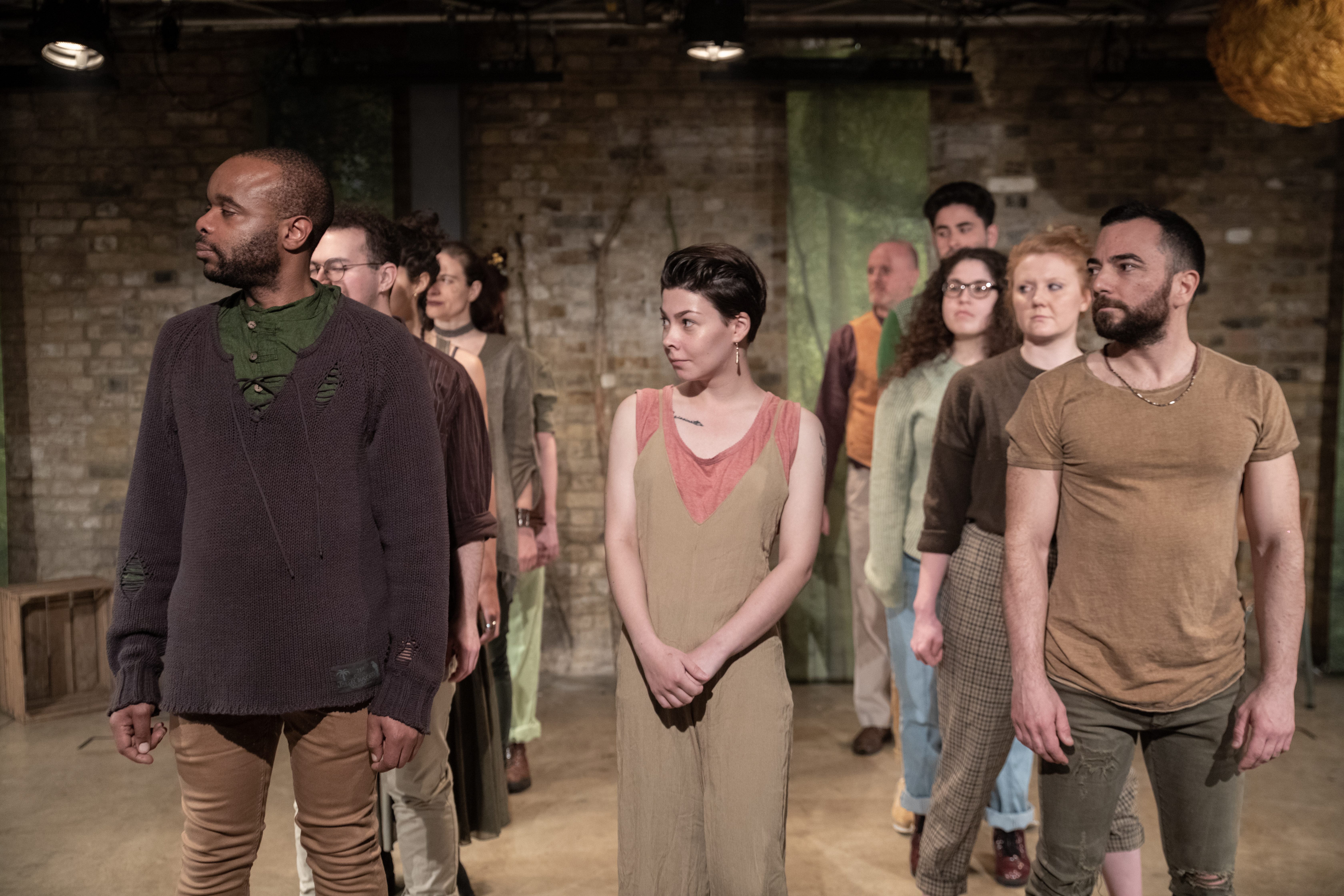
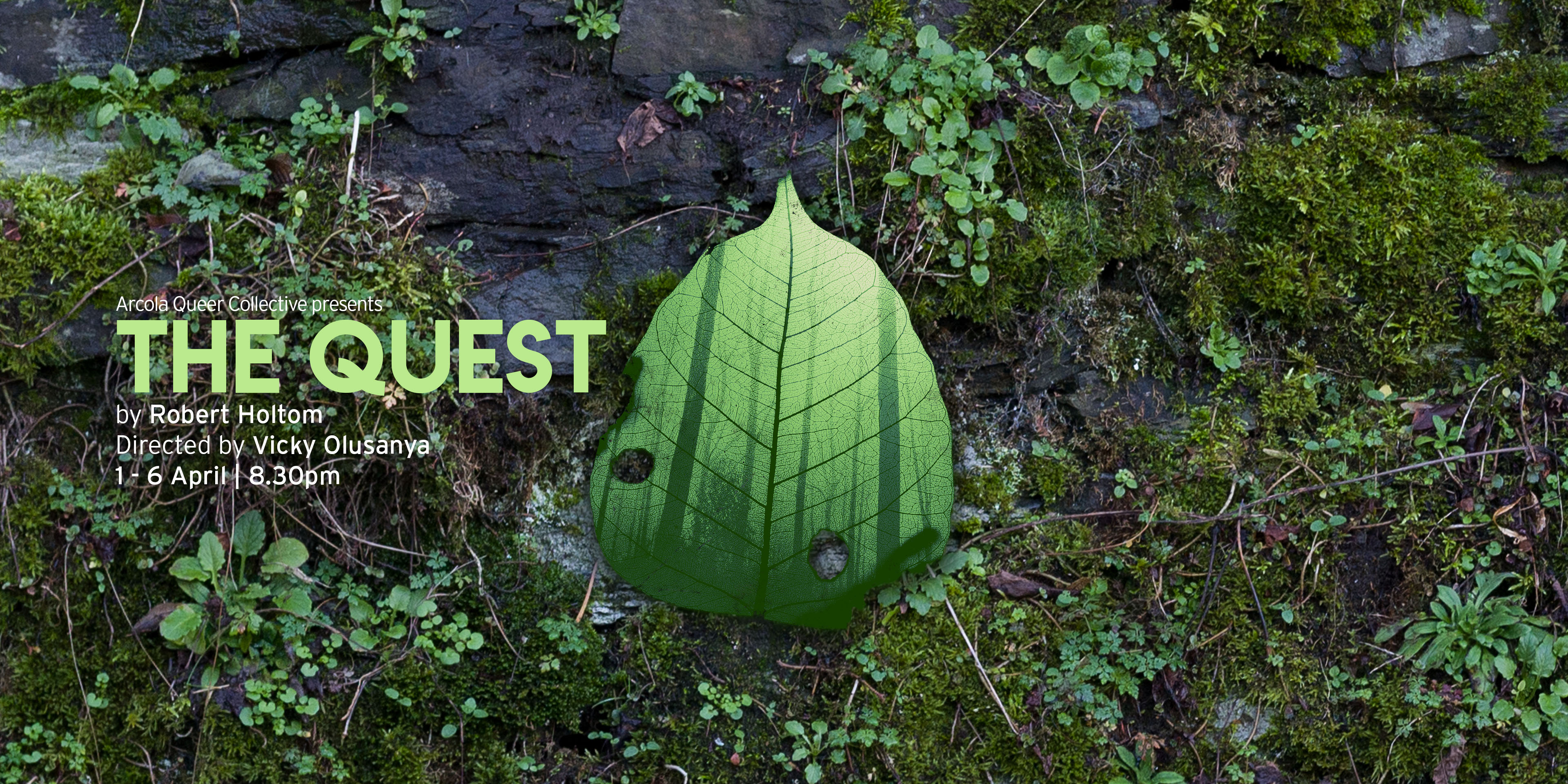
The Quest, think Queer As Folk meets Lord of the Rings, just ran for a week at the Arcola Theatre in East London. For six nights I got to watch a fabulous, queer troupe bring a range of characters and worlds to life. There was Fred, the bisexual teenager on his first Tinder date, whose past catches up with him, and Zemuel, of the mythic Valley of Embers, sent on a quest to banish the monster that haunts them. There were other characters too such as adoptive mothers, gossiping friends, a village Elder, a sarky waiter, a loving dad, teachers, a LOTR-disliking intersectional feminist, a best friend and a waterfall lover. The directing was fantastic and it was amazing to see my words brought to life on stage. And the audiences loved it. There was laughter, tears and many words of congratulations. Many people felt deeply moved by the stories of Fred and Zemuel, and they hit home for a lot of the team as well, as growing up queer in an oft hostile world means we are all faced with monsters. So, really, this was so much more than a play, it was its own quest, one for belonging.

Because that’s what I crave as a member of the queer community. I want to feel like I belong among people who care for me and care for our wider community. People who are spiritually, emotionally and physically nourished, and given a chance to heal the wounds of their past so they can live lives of greater freedom and face the difficulties of today. I want us also to be able to enjoy the many joys of our lives – such as making an ace piece of theatre. There is so much unbelonging in the world, for so many of us, and the queer community is hit by this unbelonging at a number of intersections. As the King of Brunei imposes the death penalty for gay people, so the fight for survival is still very much real. In Britain there will continue to be high rates of LGBT+ suicide, especially among young people, there will be LGBT+ homelessness, and a range of mental health problems exacerbated by societal prejudice and indifference. It’s a tough world to live in and the quest for Queertopia continues. A quest that straight and cisgendered folks need to join, so they can offer their power and allyship to their queer companions who will stand by them in return (and make ace pieces of theatre to boot).

So, thank you to the wondrous cast and crew of The Quest who helped prove that Queertopia can exist here on earth. While the play might be over I know we have all come away with pride and, hopefully, a little more of our soul – a sense that even though many of us might still struggle with belonging in this world, we can at least belong to ourselves more deeply and, hopefully, one another. Now in an act of unforgivable arrogance I will leave the last word to Zemuel, after they have vanquished their monster and returned to the villagers in the Valley of Embers, their new home…

“They are all there. A feeling wells inside of me, one I can barely name, but I think it is called belonging.”

The Valley of Embers – photo courtesy of …

Does The Quest For Queer Happiness Have A Destination?

Only two days now until the premiere of The Quest, a play I’ve written that parts mythic, part modern and follows the stories of Zemuel and Fred, both yearning to find home in an oft hostile world. It’s being put on as part of the Arcola Theatre’s Creative Disruption festival, which celebrates its many community theatre groups, including the Queer Collective, of which I am a part. Since January an ace group of queers have been tirelessly bringing the script to life with movement, voice, body and even sticks. The result is already beautiful and I can’t wait to see it on stage. You can too, get your tickets here!

Inspired originally by Matthew Todd’s great book, Straight Jacket, which outlines a number of problems the gay, male community is suffering from and how to face them. Whilst I was reading it I went off for an adventurous week in a rewilding Welsh valley. It was all very Legend of Zelda and whilst the people there with me were fabulous there was not much space for queerness. So the Queer Warrior character came to life to challenge this as well as the repetitive plot of the Zelda games – a young dude going off to rescue a Princess from a big monster, yawn. I wanted to be able to imagine an inherently queer fantastical world, one in which all LGBT+ folks can experience wholesome rites of passage as they step deeper into their identities. However, while I think it’s very important to be able to imagine these things I also know that I don’t live in such a world. All the problems outlined in Straight Jacket continue to exist, which is why The Quest is also set in London where shit happens and the characters have to deal with it.

So does the quest for queer happiness have a destination? I think so. But I don’t think it’s necessarily a place. I think it’s a state of mind and being that is hugely dependent on the places in which one finds oneself. For me it’s about cultivating self-love, pride and resilience in the face of self-loathing, shame and prejudice. It’s tough and all over the world LGBT+ folk are being persecuted simply for wanting to be themselves. Queertopia remains a distant dream but I still think it’s worth imagining these brilliant places where queer folk are happy and well nurtured whilst recognising the challenges we face in getting there. I do hope you’ll join us on The Quest.

Badly Drawn Gays: Colin Firth & Sex Education’s Eric

There’s a lot to celebrate about increasing diversity in TV shows and movies, particularly with regards the showing of more genders and sexualities. Studio execs know there’s an appetite out there, especially from younger audiences, and studio execs know there are bucks to be made. Sometimes this representation is done well and sometimes it’s done badly. So here’s a post about some badly drawn gays.

Firstly let’s take a look at Colin Firth in the Mamma Mia movies. In the first one it’s not 100% clear his character is actually gay. I mean, he’s one of the possible fathers having slept with Meryl Streep’s character during that fateful summer. Sounds pretty straight to me. But at the end of the movie he comes out…well, by coming out he says that Meryl Streep was the last woman he slept with and then meaningfully looks at another man. Later on when all the cast are dancing in a big fountain and kissing one another Colin’s seen dancing with said man. It’s vague, it’s unclear, it’s all 2008 was going to give us. Moving on to Mamma Mia 2 and now Firth’s a lonely businessman whose only proud achievement in life is his daughter. You’d hope that by the end of the film he’d finally have someone to hook up with like all the other characters including Amanda Seyfried, Dominic Cooper, Christine Baranski, Julie Walters, Stellan Skarsgård, Andy García and Cher. But no, he’s still single. He also seems pretty unimpressed with his younger self played by Harry Bright and what could be a nuanced point about shame and internalised homophobia gets blasted over with the cast’s rendition of Super Trouper. Having said all that, the movies get some great comic mileage out of Firth’s character because, hey, isn’t gay male loneliness and isolation absolutely fucking hilarious.

Meanwhile,  Sex Education’s Eric, played brilliantly by Ncuti Gatwa, is out, proud, and dealing with the shit you get for being gay. He blasts through tokenising plot devices and stereotypes and as this Junkee article makes clear, breaks through a lot of barriers regarding being black, Nigerian-Ghanaian, gay and queer. Furthermore, his plotline shows what happens after someone has come out and, often, has to keep coming out to reinforce and reclaim their identity, so often stolen from them. He also gets a nuanced and, ultimately, heart warming relationship with his Dad. But. It’s the bullying strand I want to pause on. Some douche named Adam spends most of the series threatening and harassing Eric. He even covers his Dad’s car in dog poo (yup, you guessed it, they’re gonna make out). Come the final episode of the series the two are in detention together and they start to argue. Things get physical and they fight with Adam pushing Eric to the floor and mounting him. They then spit in each others’ faces before pausing and then kissing. Adam goes down on Eric and gives him a blowjob. We don’t actually see this happen, instead we just see Eric’s eyes roll in what is presumably pleasure (whereas we have seen full-body sex scenes between straight couples and one female couple). Something not dissimilar happened in an episode of Skins yonks ago and it seems this gay-gets-with-their-bully trope is still going strong or as series creator Laurie Nunn put it, “telling a love story through bullying” (lovely). There are nuanced points here to be made about violence between men, men’s repression of their sexuality and the trauma they inflict on one another but those points don’t get made. Instead, no clear consent is given and we witness Eric be follated by the man who was just attacking him. As someone said to me the other day, “yeah, but it’s hot”, and that’s kinda worrying – that violence between men and sexual assault are being depicted as hot. Nevertheless, Eric is smitten only to see Adam shipped off to military school by his tyrannical father, leaving us with, you guessed it, more lonely gays. There are plenty more examples, in the meantime, here’s Cher.

Make Dumbledore Straight Again

I am all for people of any gender and sexuality creating fictional characters of any gender and sexuality. My only stipulation is that they do it well. A few years back I blogged on the trouble with a gay Dumbledore – namely that making him gay after the fact and most of the books are published and he’s dead anyway (spoilers) isn’t good enough. We get no sense of his struggle as a gay man in the wizarding world or maybe even his lack of a struggle because the wizarding world is so accepting of gay people (but likes to enslave house elves). We get no sense of how he relates to his own sexuality and how that manifests in his life. As I wrote in that previous blog, “ It’s the imaginations of straight people that are the limiting factor here not how people choose to express their sexuality, if they are even give a chance to.” But I’ll tell you something worse than retconning gayness into an otherwise straight character (because unless we’re told otherwise it just isn’t clear) is then robbing that character of their newfound gayness.

Fantastic Beasts 2 wasn’t fantastic and all Dumbledore got by way of a gay plot line was the fact that he and Grindelwald had an intense friendship, a bit like brothers but actually “more than brothers”…ok, so like twin brothers then? Meanwhile, Grindelwald is doing his best to become the Hitler of the wizarding world, so things aren’t so great for LGBT+ “representation” in the Potterverse. As the ace LGBT+ activist and vlogger Rowan Ellis describes this isn’t just queerbaiting (which is bad enough), it’s queercoding, whereby  fans are told about ensuing queerness and queerness is coded into the film but never made explicit – “they want to get the credit for representation without actually having it” (imagine being told Captain Marvel was going to be a black woman…). So for the homophobically inclined gayness is not there and for the queerly passionate it’s there-but-not-there and they have to do all the imaginative work for themselves unlike, say, the writer. The result, both groups buy cinema tickets.

Meanwhile, J.K. goes and reveals Dumbledore and Grindelwald did in fact have an “intense” and “passionate” relationship with sex in it. “But as happens in any relationship, gay or straight or whatever label we want to put on it, one never knows really what the other person is feeling…So I’m less interested in the sexual side—though I believe there is a sexual dimension to this relationship—than I am in the sense of the emotions they felt for each other, which ultimately is the most fascinating thing about all human relationships.” Two things I want to point out here: namely the erasure of sexual relations between men because who really wants to think about Dumbledore giving Grindelwald a good blowjob (turns out, lots of hilarious meme-makers); the swift movement from talking about a gay relationship to “any relationship” with “whatever label” – I can’t wait for the day my relationships with people of my own gender don’t get labelled but that day ain’t anytime soon. Then the director of Average Beasts 2 said: “This is a story about two men who loved each other, and ultimately have to fight each other. It’s a story for the 21st century.” I think the second part of the last sentence is true because the script was written in the 21st century but the rest isn’t – it can’t be a story if it gets no mention or action in the movie. There’s not even enough lip service given for it to constitute even the thinnest of plot points. So make Dumbledore straight again because queer fans deserve so much better and shouldn’t have to read between the lines which were never written, then hastily written after the event, then erased, thrown in the bin and so quietly alluded to no one heard. This isn’t representation and I just find it offensive and very, very sad when you consider this in the face of the persecution and suffering the LGBT+ community has faced and continues to face. Now here’s Rowan Ellis saying it better than I could…

How To Be Less White This Christmas

Really!? What a silly idea, that a white person can be less white, it doesn’t even make sense. I mean, if I’m white, I’m white, it’s just the colour of my skin. But in my 199th post on this blog I want to contend that there is so much more to my whiteness than my skin. Whiteness is power. It’s the ability to avoid everyday microaggressions based on my perceived race, it’s being able to cash in on my white privilege over and over again, and avoid being on the receiving end of systemically racist social structures. It’s the privilege to never have to think about my skin colour. I don’t even have to know I’m white because in the society I live in whiteness is so ‘normal’ that it’s almost invisible.

But I do see race, including my own. I see whiteness in so many of the TV shows and films I watch. I see it in the books I read, the communities I spend time in and the culture in which I live. I see the everyday things I get to take for granted because I am part of the oppressor race. I see the effort, often tacit, that goes into maintaining the normativity of whiteness. The scientific justifications that claim whites are inherently better than any other race. The everyday assumptions that are made about people with different skin colours to my own. The ease with which I can enter spaces that others can’t. The violence I won’t be on the receiving end of because I’m white. I see this and I want it to change because it’s ruining lives and killing people.

So, to be less white I have to first acknowledge that I am white and begin the process of discovering what that really means. Because it’s not just about skin, it’s about history, colonialism, slavery, Empire, racism, eugenics, prisons, schools, culture and so much more. It’s about the power my race has abused and continues to abuse. But seeing and acknowledging this is only the beginning and the true work begins when white people begin to redistribute that power. Of course, how we redistribute that power is vital because there are an awful lot of initiatives that serve only to replicate the colonial mindset and exacerbate the problem. The response must be personal and systemic, as we unpick our whiteness for ourselves and do so for the systems in which we live and work – whether that’s challenging our own prejudices, calling out those around us and trying to build communities that both see and see beyond race. Thus, we begin to remove the power woven into our very skin and, by doing so, become less white.

Fantastic Activists & Where To Find Them

I’m a writer. There’s nothing I find more satisfying than weaving a narrative together with the aim of taking an audience on a well-plotted adventure. I like sharing these skills in workshops and inspiring people’s creativity. In essence, I like using my imagination and encouraging others to do so as well. The fifteen activists recently convicted of “intentional disruption of services at an aerodrome” are also asking us to use our imagination. As their peaceful act of protest has been twisted, by the Crown Prosecution Service, into a would-be act of terror, so the Stanstead 15 call on us to imagine a world without deportation flights, detention centres and borders.

End Deportations is a campaign working to stop the Home Office’s “racist, violent [and] calculatedly cruel” practice of “rounding people up by their perceived nationality, detaining them, and using violent force to transport them to another country in secrecy.” Mass deportations are inhumane and immoral, and that was one of the reasons why the Stanstead 15 put their lives on the line to stop a deportation flight. The phrase “illegal immigrant” is often used by the press to incite all sorts of stereotypes and fears, especially during a time when rising nationalism is used to justify oppression and violence. But the world we are being asked to imagine is one where no human is illegal. A world where everyone is welcome everywhere. A world without borders.

It’s a big ask for our imagination – to picture a world so different to our own. One where nation states don’t go head to head in endless resource and military wars but where peoples of all countries can work together to ensure we all thrive within the ecosystems of earth. Whether we can imagine such a world depends on our imagination. Because it’s highly likely that our mind, like the world, is a heavily bordered realm full of beliefs and prejudices we might never have thought to question. We might hold certain views about groups of people, aka stereotypes, and we might hold certain limiting beliefs of ourselves. A bordered imagination can only yield bordered imaginings. In their act of defiance in the face of an inhumane system of deportation the Stanstead 15 are showing us a different world, one where all are welcome. In turn, we can learn from their actions and apply these lessons to our own lives. We can begin the work of removing the borders of our minds, so our imaginative energy can be given what so many of us crave: freedom.

End Deportations

Does Watching Gilmore Girls Make U Homo?

This website is a WordPress one and as the administrator I get to check out the back end. There, I can look at how many people have (or haven’t) read my latest post, I can edit my draft posts and I can even discover what search terms people have used to find this site. I’m not quite sure how this works but I guess it has something to do with Google. Search terms that have been used include: “anal sex is disgusting”, “anal sex is for the selfish and self absorbed”, “princess fierce faggot”, “hufflepuff rebranding”, “tomato images”, “liam fox utter twat”, “you tube smack me on the bottom with a woman’s weekly” and the title of this post: does watching Gilmore Girls Make U Homo?

It’s an interesting question, not least because of the proposed correlation between sexuality and Gilmore Girls but the idea that watching something can make someone homosexual. For example, at what point would a heterosexual person (and I’m assuming a male or maybe a concerned partner, parent, Priest etc) become homosexual? Would watching one episode be enough or would it have to be a whole season or every single episode ever, including those awful new ones? And how would the process work? Would said heterosexual man suddenly find himself exclusively attracted to men or would it take a bit longer as he gradually starts to find his male mates hotter than his female ones? As you can see, there’s a lot going on in one simple question.

Clearly homophobia is something going on here as the implication is that being homo is bad (unless this straight person yearns to be gay and is trying to figure out a way of changing). There’s shame and repression going on here as men’s sexuality tends to be marked as rigid – straight or gay, with bisexual men either being confused or greedy – and a deviation from that rigidity, rather than being something exciting, is seen as shameful and negative, and regularly violently repressed. There’s misogyny going on here as the assumption is that for a man to watch a show with two female protagonists is so emasculating that it alters his sexuality, which is nearly as bad as being a woman. There’s the assumption that it’s easy to label sexuality, as if one can point at an occurrence, e.g. two men holding hands, and say “gay”. Or two lads drinking beer together and chatting about birds, “straight”. Or a guy watching Gilmore Girls, “homo”. Yet I think these acts of labelling tell us more about the finger pointer and the culture they live in than anyone’s sexuality and I think it’s worth exploring that culture and its labelling further. Now, here’s the closest I could find to a coming out story on Gilmore Girls.

No Homo

“I’m gonna take my shirt off, no homo…I’m gonna take my pants off too, no homo…I’m gonna give you a hand job, no homo.” It’s a little phrase, no homo, that does a lot of work. It’s like a get-out-of-jail-free card in Monopoly – it means you can do the arrestable deed but not get imprisoned for it. It means a straight guy can do a gay thing and still be straight. The list of these things are many and varied, from nudity around other straight men, masturabation, kissing, intercourse and aboslutely loads of things that gay men love doing together. Except the straight men doing it aren’t gay, right?

I’m currently reading the fascinating book Not Gay: Sex Between Straight White Men by Jane Ward, which shines a queer theorist’s light on the bizzare world of heteronormative, racially motivated not-gay gay intimacy and sex. From hazing rituals in Frat Houses to initiation “ceremonies” in the military, all sorts of excuses are given as to why men do these things together – to become part of a fraternity (the gayer the dare, the tougher the bond), because there aren’t any women around, because the women who are around don’t have the sort of sex these guys want, because of childhood trauma, inverted Oedipal complexes, an adolescent phase that will be grown out of, by accident. There are all sorts of reasons but one that never comes up is that these men are gay. Heaven forefend that one of these straight guys might be gay – that’d be awful right, almost as bad as being a woman.

What Ward’s book makes clear is the amount of effort these men, and the people around them, put into maintaining the infrastructure of heteronormativity – that there are two genders (male and female), heterosexuality is the default sexual orientation and sex/marriage should be between people of opposite sex. Biological sex, sexuality, gender identitiy and gender roles are all mixed together to create the doctrine of the heteronorm. So, if you slip from that doctrine, and kiss your mate, you have to justify it somehow – “no homo” is a start or saying it was a dare or you were really drunk. As long as you can justify it within the rules there’s some wiggle room. But come out and say you prefer men to women, then you’re gay, and out you go. The heteronorm is a heavily bifurcated place built on rigid beliefs about the human. Some of these beliefs might stem from the Bible – that God created Eve from Adam’s rib, or biology – that penis = man and vagina = woman. When it comes to sexuality, well, Leviticus said a man should not lie with a man and some scientists say sexuality is in our DNA, so as long as I don’t have the gay gene I’m fine (I can even shag my mates, within reason!). Regardless of the veracity of either of these belief systems what’s clear is that there’s little space for fluidity – of desire, expression, identity and romance. Instead the heteronorm establishes its rigid, violent and patriarchal boundaries, and polices them with force, often by denigrating and abusing the “other” – e.g. gay, female and/or black. Thus, from the queer angle that Ward offers we can see no homo a little differently – instead of an expression of a man’s inherent straightness, he is actually expressing his desire to hold onto the idea that he’s inherently straight. But is he?

Man Down

What if to man up, us men actually had to man down? What if we had to step outside the heavily guarded and barbed wire bordered fortress of manness and take a look at the sites beyond the walls? So far, so vague? Well, let’s start with some definitions. Manness (which is actually a word!) means “the distinctive or differential characteristics of man.” Meanwhile, man has many definitions including a catchall for the entire human race (eye roll) and someone who expresses their brave, courageous manhood. But the one I’m interested in is “adult human male”, which brings me to the definition of male. This means both a male person: man or boy (seems the definitions are getting quite circular) and, crucially, “an individual of the sex that is typically capable of producing small, usually motile gametes (such as sperm or spermatozoa) which fertilize the eggs of a female.” OK! Being a man means being able to make sperm, got it!

It turns out the secret that us men are guarding at the heart of our manly fortresses is a splodge of small motile gametes. The definition doesn’t even have anything to say about willies and balls (but they’re implied), it’s just sperm. Naturally, it follows that a man, capable of issuing fertile ejaculate, should be virile, like his sperm, and strong, because I’m guessing those little gametes are tough? Given this, a man should not emote or display his feelings in public. He should appear tough at all times. He should play manly sports like rugby and football and get manly jobs like building and banking. He should be heterosexual, marry a woman, buy a house and have children, while being the breadwinner and letting his wife undertake the emotional labour for the entire family because folks with sperm don’t do emotions, am I right? He should put sentries at every corner of his castle and blast anyone who questions his manliness. That gay guy who’s just so darn camp: blast him. That woman who calls him weak: blast her. That trans man who calls into question his whole identity: blast ’em. That photograph of a hot male model on the tube: aahh, internal blast. Those feelings of sadness within: another internal blast. Those tears at night: internal blast! And so on and so on until this so-called man snaps.

An article in GQ written by Matt Haig states that 84 British men take their lives every week. It’s a shocking figure but it’s thanks to folks like Haig that male suicide is actually being talked about more. He goes on to say that “we need to change and broaden the idea of being a man.” He lists a few ideas including talking more about and not stigmatising mental health, and undoing the alpha male archetype of manliness. And what if he went further and questioned the very nature of man himself – this organism capable of producing motile spermatoza? What if we just knocked the walls down and let men be people, people capable of all sorts – compassion, strength, love, same-sex attraction, anger, football, creativity, kindness, ballet, sadness, loneliness, anxiety and beyond. What if being a man had nothing to do with sperm or gonads, something which trans men are reminding us of on a regular basis. What if to man up us men actually had to man down? Because a lot of cis men are going down and while there are so many factors to consider I think one of them is the fortress of manness – an empty, lonely sort of place that so often crushes the soul. To clarify, I’m not saying men need to stop being men if they don’t want to – it’s their identity after all – but I do think the man-conditioned is a being so often worth unconditioning.

Some People Are Trans. Celebrate It.

I’ve just filled out the government’s online consultation form regarding the Gender Recognition Act. The reality is saddening but the reform could be inspirational. At heart it’s about the right to one’s identity and the power of self-determination. So many of us get to take our identities for granted. We are assigned male or female at birth and that’s that but for trans, intersex and non-binary folks this is still a struggle that often entails discrimination, humiliation and isolation. We can change this and the epic LGBT+ charity Stonewall has a page on their website which guides you through answering some of the most important questions on the consultation. The deadline is soon, 19th October, and the process only takes about ten minutes.

I learned some pretty shocking things while filling out the form. For a trans person to have their gender legally recognised they have to apply for a Gender Recognition Certificate. Not only is this process long and costly it also requires a diagnosis of gender dysphoria. Yup. Being trans is regarded as a mental illness. But what of the many people who are trans and not suffering from gender dysphoria – how on earth do they have their true identity legally recognised? And what about intersex folk who were assigned the wrong gender at birth and want to change this in law? There’s also the requirement for a trans person to provide evidence of living in their ‘acquired gender’ for two years. What sort of evidence might this entail – wearing enough blue or pink, preferring rugby or cooking, being loud or quiet? And who on earth gets to decide if there is sufficient evidence? We’re talking about people’s identities and their right to self-determination within and without the eyes of the law. It’s as simple and fundamental as that, which is why the intrusive and dehumanising process we currently have in place for applying for a GRC needs to change.

Filling out the form was an educational and empowering process, I feel I’m contributing to the potential for positive change in this country. It got me thinking as well. What if we just stopped assigning gender at birth? What if children are raised as children and there is an opt-in process for gender, with parental/guardian/carer consent prior to the age of 16 and then self-determination from 16+? What if we stopped obsessively gendering children from such a young age and pushing them down pink or blue paths, submission or aggression, compassion or callousness? What if we educated children to be good people – to treat one another with love and respect, to try the things they’re interested in and to never assault or harm? And while we’re doing this of course we can recognise the importance of gonads, hormones and the effect puberty has on different bodies, and maybe the key thing here is to talk about it and to stop shying away from conversations about sex, gender, sexuality, attraction, consent, romance and love. The GRA consultation is about stepping up for trans, intersex and non-binary folks and it’s also an opportunity for everyone else to explore their own genders and identities, emerging from the process with a stronger and more nuanced understanding of themselves. The times are changing and there really is a future in which we all win. Or maybe just a future in which identity and self-determination are no longer competitions rife with discrimination and prejudice but a chance for all of us to be ourselves brilliantly. And here’s the Stonewall link again (it only takes ten minutes!).