Peace On Earth This Christmas? (TLDR, Probably Not)

“…and suddenly there appeared with the angel a great multitude of the heavenly host, praising God and saying: “Glory to God in the highest, and on earth peace to men on whom His favour rests!” When the angels had left them and gone into heaven, the shepherds said to one another, “Let us go to Bethlehem and see this thing that has happened, which the Lord has made known to us…”

Book of Luke, Chapter 2, Verses 13 – 15, Bible

Peace on earth. It’s a lovely idea and something that often appears on Christmas cards. But it seems a very distant dream given the times we live in. Times of escalating war, genocide and aggression. In fact, given how much war there is it seems like peace on earth is never going to happen. Nevertheless, I won’t write a post outlining the violence in the world today – we have the news for that – but I do want to write about how I think we can take a step closer to peace on earth, no matter how distant a destination it may be. And it starts with recognising where peace begins.

Peace on earth sounds like a very broad, ambitious and vague goal. The earth is huge, peace is a big deal and it’s not entirely clear how to acheive it (obviously the Bible, which I quote above, goes into a lot more detail on this). Perhaps I could focus on something smaller than earth, say, home. Peace at home sounds great. But homes can be very fractious and violent places, and many folks are rejected from their homes. And these things can really come to a head at Christmas when people who often spend time apart come together, with mixed consequences. So maybe I need to narrow my focus once again. But what is closer than home?

Ourself. The one thing we are all closest to (both literally and spiritually) is ourself. And given the quirks of evolution most of us have consciousness, self-consciousness, memory and language. We can take action and we can reflect on those actions. We can reflect on our self, meaning we can be in relationship with our self. As a caveat, this might sound simple, but for many of us it’s not and a range of psychological/physical health conditions can affect this. But for those of us able to maintain a stable enough relationship with ourself, the question then becomes, what sort of relationship? One full of judgement, self-loathing and shame, or one full of support, love and compassion? Over the years I have opted for the latter and it has been a long journey – learning how to challenge the abusive voice in my head and turn it into a kind and empowering voice (some of which I have documented on this blog). Just as the shepherds undertook an epic journey across the hills and valleys to meet the baby Jesus, so we can undertake epic quests of the heart.
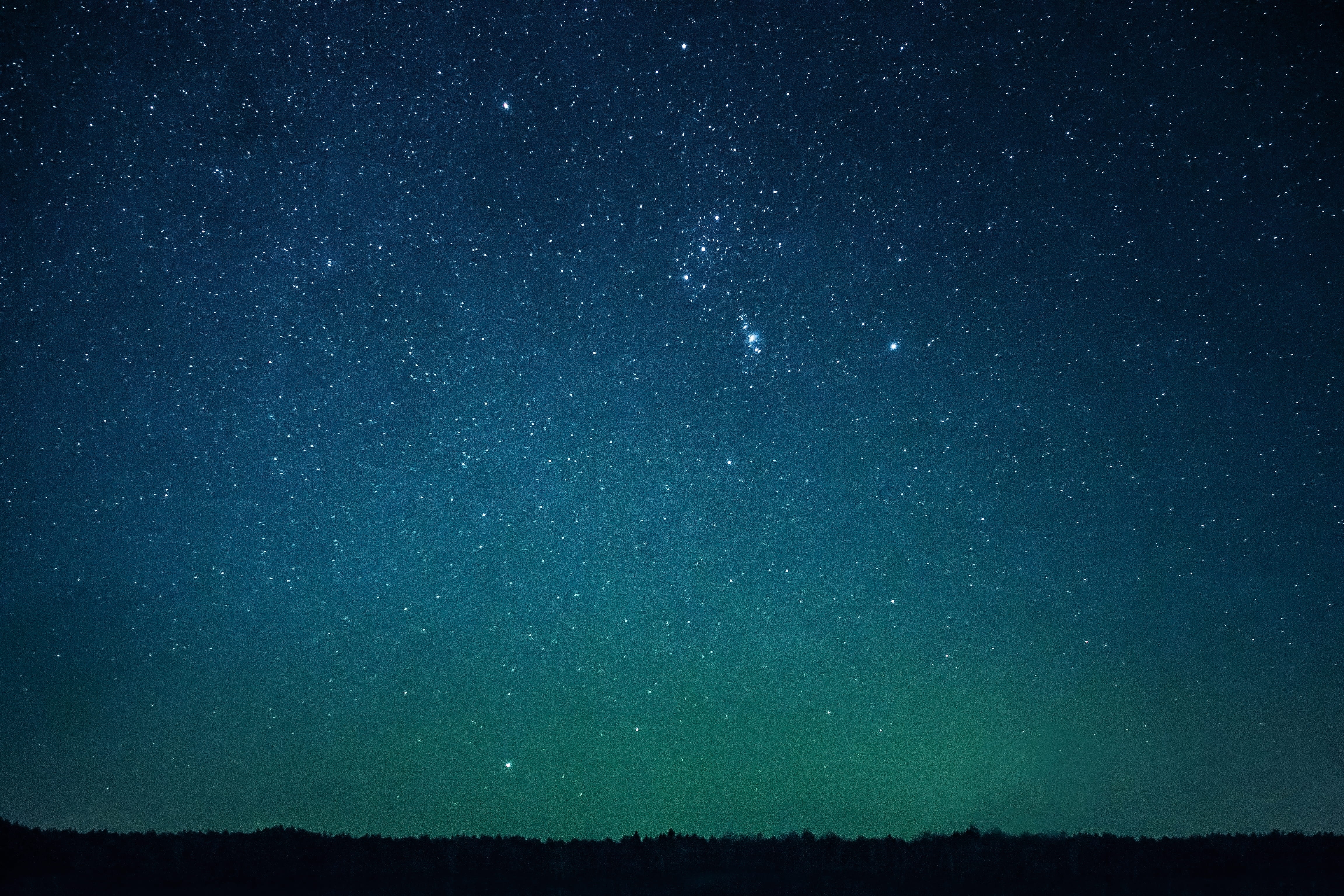
Over time, I have turned my inner landscape into a more peaceful one. But this isn’t an individualistic effort a la the way capitalism loves to individualise repsonsibility – e.g. if we all do our recycling everything will be fine and let’s not challenge corporate greed etc. This isn’t just about peace for me (but sign me up), it’s still about peace on earth. This requires a collective effort. And while I don’t ever like to be too prescriptive, I do believe that if more of us committed to this inner journey of healing and love, then more of us could form larger collectives of people committed to healing and love. Surely that would take us a little bit closer to peace on earth. And even if we never make it, won’t the journey be truly wonderful.

p.s. I haven’t analysed the biblical quote but I would humbly suggest the angels could do with a broader definition of peace – not just for men but women and folks of all genders –  and not just for those on whom God’s favour rests – but on everyone. After all, many believers say God is love, and if that is true then surely that love is universal and boundless.

How Do We Beat Trump?

It’s going to take anarchy to defeat Trump, real anarchy. And that begins with the absolute freedom of the individual. In previous posts I’ve written about how money makes the world go round and whilst it dictates all our financial relationships it also affects our personal lives as we come to view friendships and partnerships as cost benefit calculations. We quantify the unquantifiable and enumerate what others mean to us. We refer to this as social capital and there’s even natural capital when it comes to measuring the use of the environment. Jessie J was right, everything has a price. I’ve also posted on the concept of debt, which is crucial to our monetary system, and how key to any debtor-creditor relationship is the threat of violence. Just as the master can threaten the life of their slave, so the bank can threaten with fines, the boss with unemployment, the government with benefit cuts and so on. Crucial to debt is the nature of ownership – that a boss can own a company or a master can own a slave, that anything can be anyone’s property. It is clear Trump, with his billions, thrives in such a world but there are others. In anarchy, where the principle of absolute freedom of the individual is realised, no one would own and no one would be owned. Can you imagine that?

Given we live in a world ruled by money and private property it’s hard to imagine absolute freedom. It’s the opposite of ownership, a world with no masters and no slaves. We would all be free. And whilst anarchy is often misunderstood as chaos and disorder there is one vital thing it would have in common with the current world ‘order’ of capitalism. Namely, relationships. If the bonds of capitalism are dependent on money, debt, ownership and the threat of violence then, I imagine, the relationships of anarchy would be dependent on trust, choice, freedom and the possibility of ceaseless love. Jessie J said it first – if it’s not about the money then “we’ll pay them with love tonight.” And can you imagine that, an economy of love? It sounds like a utopian dream and it sounds great.

We’d need to agree on some core principles such as equality for all – not just equality for the rich, or the white, or the male, but equality for all. This would mean we’d all be fed, housed and watered, no one would go hungry whilst others gorged. There would be enough for everyone. We would all have access to meaning, work and leisure. Competition would be replaced with collaboration. We wouldn’t hoard, we would share. We would all be loved. And whilst we’d still bicker, fall out, shirk and fight, we’d do it with the goal of absolute freedom in sight and not whatever the goals of today are. We’d do all this in honour of the generations that have gone before, for the sake of the ones to come, in reverence for the world we live as part of and we’d do it for each other and ourselves. And we would do it not because someone was holding a gun to our head or because the rules say we have to or because our masters forced us to, no, we would do it out of choice. Can you imagine that, such choice, such responsibility, such freedom.

I will leave you with the words of a character in The Dispossessed, one of Ursula Le Guin’s award winning sci-fi classics that compares the planets of Urras and Anarres, the former a mix of capitalist and communist states and the latter a world of anarchism (I’ve slightly edited the quote so it is suitable to all genders, not just men). It is an amazing book that asks us to imagine a world without earning and deserving yet a world in which all are free. It’s hard to get your head around it but I have a sneaking suspicion so many of our hearts are already there. Because to beat Trump and the system of which he is a puppet, figurehead and ruthless profiteer, we must at least be able to imagine an alternative. I dare you.

A thin, small, middle-aged man beside Trepil began speaking, at first softly, in a voice hoarsened by the dust-cough, so that few of them heard him. He was a visiting delegate from a Southwest miners’ syndicate, not expected to speak on this matter. “…what [people] deserve,” he was saying. “For we each of us deserve everything, every luxury that was ever pulled in the tombs of the dead Kings, and we each of us deserve nothing, not a mouthful of bread in hunger. Have we not eaten while another starved? Will you punish us for that? Will you reward us for the virtue of starving whiles others ate? No [one] earns punishment, no [one] earns reward. Free your mind of the ideas of deserving, the idea of earning, and you will begin to be able to think.” They were of course Odo’s words from the Prison Letters, but spoken in the weak, hoarse voice they made a strange effect, as if the man were working them out word by word himself, as if they came from his one heart, slowly, with difficulty, as the water wells up slowly, slowly, from the desert sand.

Welcome To World War 3

“It’ll probably start on a Friday. What will seem like an attack on America by terrorists or Russia, driven by a well-oiled, well-armed and multi-national group of elites using alien technology that governments have been hiding for seventy years…” Art often reflects reality and this is an excerpt from the trailer for the latest series of The X-Files (my thoughts on this series here). Save for the bit about alien technology it’s a prescient observation of the rapidly escalating violence the world is witnessing right now. And, as ever, the news is bleak.

Terrorist attacks in Belgium, Yemen, Iraq and France. A war in the Middle East that has killed and displaced thousands. Pakistan’s entry into the nuclear arms race. China and Japan’s conflict over the southern islands. An economic cold war between the US and China, the former struggling to maintain its status as world emperor, the latter vying to take that title. The implosion of the EU with a worsening refugee crisis and the rise of the extreme right, including the Nazis. Russia and Ukraine. Islamic State. It almost seems as if the world has never been at peace.

Now, I’m not writing this blog to depress people (although the news is depressing) and nor am I saying we should stop striving for peace. Of course not, if anything, the violence we see in the world is yet another rallying call for the peace movement. However, perhaps what I’m saying is that this isn’t as simple as war and peace anymore – two seemingly time bound and delineated events. World War 2, for example, had a beginning and an end, whilst the Cold War was a far more uncertain series of events it has nevertheless ceased. Yet the legacies of both conflicts live on, so perhaps we could say neither have ended. Likewise, new forms of technology make different sorts of war possible – drones and terrorists navigate borders differently to ground troops and armies. Meanwhile, diplomatic and economic threat can also function as tools in campaigns of imperialism. Often war need not be declared for it to be happening. So maybe it’s not about war ending and peace beginning, maybe it’s about navigating the grey territory in between.

It is not that now more than ever do we need to call on the better angels of our nature because this has always been true – we have always needed the better angels of our nature. Our compassion, care, altruism, love and joy – possessed and enacted by all. Even these angels might not prove to be enough but I’d question the notion of enough anyway – is enough when all fighting ever has ended, is enough when climate change has been abated, or is enough just doing the best we can in the time we have? I’d love to see world peace enacted and global warming avoided but the reality I’m living through is very far from that. And yes, that makes me despair, but no I won’t stop blogging! And to conclude here’s The X-Files trailer in full. However, I’d like to categorically remind everyone that the world’s problems will not be solved by one FBI agent called Fox Mulder – instead we all need to channel our inner Fox Mulders to step up to the challenge. Or just avoid X-Files metaphors entirely as it’s a pretty ludicrous programme.

https://www.youtube.com/watch?v=_1SmJUBT5q0