The Song of the Sea is a new animated film for children and adults. It tells the tale of Ben and his younger sister Saoirse. It’s beautifully animated and based on folkloric Irish tales of Selkies – mythological creatures that are seals in water and shed their skins to become humans on land. Unbeknownst to Ben his mother was a Selkie and so is his little sister. It is a stunning story about grief, growing up and family. However, the more I watched it the more I realised that I had seen this story many, many times before and it’s one that has been told over and over again – it’s the one all about men.
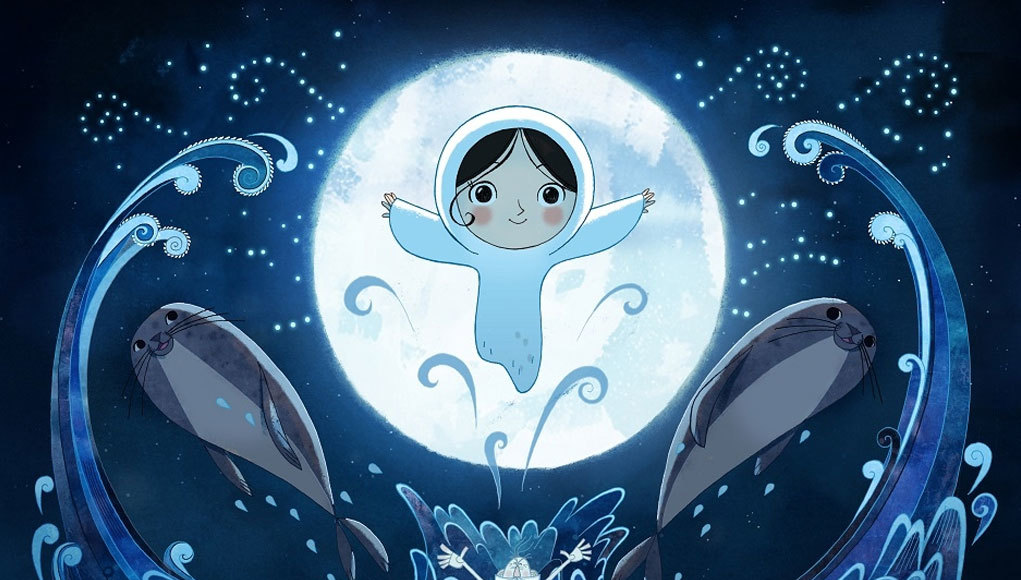
I’ll start with a brief plot synopsis (spoilers): Ben lives in a lighthouse with his pregnant mum and dad. The mum gives Ben a magic shell and then goes missing into the sea leaving behind Saoirse, his little sister. Six years later and the dad’s still pretty unhappy and Saoirse still hasn’t said a word. Meanwhile, Saoirse discovers a magic coat left behind by her mum which lets her transform into a seal. She goes swimming for a bit and that’s when we learn she’s a Selkie. Unfortunately, nasty granny arrives to take Ben and Saoirse back to the city. Ben doesn’t really like Saoirse and is annoyed when she follows him as he escapes from his granny’s house. Some magical fairies inform the siblings that Saoirse’s a Selkie and must sing the Song of the Sea to free all the trapped spirits – it’s a shame she doesn’t speak. Unfortunately she gets kidnapped by a witch, Macha, who bottles up people’s feelings (literally) thereby turning them to stone. Her reason is that she couldn’t handle her son (a giant) being so sad when his wife died so she bottled up his grief and turned him into a giant cliff (the dad is basically the giant and the gran is Macha). Ben rescues his sister who starts playing the magic shell which causes all the bottles to break. Macha, part stone, is overwhelmed by her feelings but relents and helps transport Ben and Saoirse back home. There, Saoirse finally speaks and she sings a magic Selkie song that frees all the ancient spirits so they can finally return to their magical land far away. The mum reappears to take Saoirse away with her but instead Saoirse relinquishes her Selkie abilities so she can stay with her dad and brother. Everyone lives happily ever after, even the nasty gran who shacks up with the old ferry driver.
It’s a nice story full of metaphors, folklore and fantasy but there are some all too familiar and all too sexist tropes. To start with there aren’t many female characters – there’s the mum who vanishes within minutes; the gran who is the typical crone character – old, haggard and someone no one would ever want to grow up to become and Macha – the evil villain who is basically an even worse version of the gran. The main female character is Saoirse.
Firstly, she is voiceless, she literally has no voice for most of the film, which means Ben gets to do all the talking. Whilst she is often portrayed as more intelligent than her wilful, older brother, who drags her around on a dog’s lead for quite a bit of the film, she is still forced to follow him, even when she knows he’s going in the wrong direction. He becomes less ambivalent towards her once he’s learnt she’s a Selkie. As the film progresses she becomes weaker and weaker and ends up getting kidnapped. This inspires Ben to take even more action and battle the film’s antagonist. It seems a little bit as if Saoirse only has worth as a character once her brother has realised she’s useful – i.e. has magic singing abilities. He’s the one that puts the magic shell to her lips so she can play it and break all of Macha’s magic bottles. It’s almost as if little girls are being told to tolerate the whims and bullying behaviours of their elder brothers until their brothers realise they have voice and worth, and only then can they become somewhat empowered.
After her rescue Saoirse is even weaker meaning it is Ben that must overcome his fear of swimming and dive deep to uncover Saoirse’s thrown away Selkie suit. So despite the fact that the sea is Saorise’s element and true home it still ends up being all about Ben and his newfound abilities. Meanwhile, Saoirse’s singing and shell playing skills appear somewhat arbitrary given that she just inherited them and they’re basically magical. Saoirse’s voicelessness also means that apart from one brief chat with her mum right at the end the film categorically fails the Bechdel test. FInally, when Saoirse does eventually speak her first word isn’t hello or help or patriarchy, no, it’s Ben.
There are some nice messages in the film – namely that stories are very important, be they ones that run in the family or older more mythical stories that came long before the stories of the Bible. The film reminds us that our culture suffers when we lose our stories but it’s just a shame that the film’s own story tells us that men are the active ones whilst women sit around either trying to muck everything up (the gran and Macha) or are basically just there to sing at men’s command. The film also has something to say about men’s inability to emote, namely because the father remains confused and grief-stricken long after the disappearance of his wife but even this is implicitly traced back to his overprotective mother (the nasty gran) who constantly tells him she knows what’s best and lives a repressed, devout Christian life. This story is reflected in the mythical one with Macha literally turning her giant son to stone so he would no longer have to suffer the grief of the loss of his wife – if only women would stop meddling seems to be the point here. Other male characters include the comic ferry driver, the faeries (we see a few female faeries in the background at the end but none are given a voice) and the Great Seanachai – a mythical storyteller who remembers all the old stories and is thus a font of cultural knowledge and wisdom, oh, and he’s a man.
So, fifteen years into the 21st century and what do we get – another mythic adventure about boys and men saving the day. It’s nice that Saoirse sings her special song at the end and frees all the spirits but this is basically the same as Pepper Potts donning Iron Man’s suit at the end of Iron Man 3 in order to blast the main baddy to smithereens – it’s great a woman saves the day but it’s all a bit last-minute and tokenistic. Why not a whole film about an interesting and three-dimensional female character doing awesome and exciting things?
But that’s just it, it’s not that this film is a sexist travesty and should be banned, no, it’s just that this film follows in a long, long line of films and stories just like it – ones that portray men as the active and characterful heroes whilst women are painted as passive and regularly in need of rescue. The Song of the Sea slots so easily into this pervasive cultural narrative when it had so much scope to start rewriting it – why couldn’t it be Benjamina running off in search of her fey little Selkie brother? Why couldn’t the father have vanished right at the start? And why are there no characters of colour, or trans and queer characters partaking in the action, surely ancient Irish folklore isn’t just for white, heterosexual cisgendered people? The film has been described as a “timeless delight for all ages”- it’s only timeless because this masculinist and sexist narrative is so seemingly unkillable. It’s great to be inspired by old stories but it’s time we started telling some new ones, fit for the 21st century.
Update on 11th December 2024: I wrote this post over nine years ago and I’m grateful that so many people are still reading it. I’m also grateful to the folks who take the time to write comments. However, I’m not grateful when people try to insult me in their comments. For the time being I’m approving people’s comments but this may well change if/when I get tired of being insulted. You are welcome to disagree with my post and you are welcome to comment thoughtfully and respectfully. There are other comments which contain prejudice – these immediately get deleted. I’m sure I’ll write a post about this whole experience soon.
 humanconditioned
Can’t describe how much I loved this film. It’s so beautiful to look at, as are the relationships between the characters, the scary lonely part when the children are sent away is very intense and I just cried buckets at the end. It’s just magical that children’s entertainment can be so good 🙂
LikeLiked by 1 person
I think the film is animated beautifully and the music adds even more to that dreamlike quality it has. And it’s certainly very cool that they drew on mythology and folklore as a basis for the story 🙂
LikeLiked by 1 person
Sheesh, if you push that narrative any harder it’s going to roll off a cliff.
There is nothing sexist about this movie the 3 moat important characters in the story are all women.
LikeLike
It’s about the death of the mom (and later the little sister), the film shows the grief, how the boy and his father have to face with that and how they try to avoid the loss of the little girl. The grandmother intends to defend his son (and his family), she can’t bear his pain and therefore tries to deny their mourn. When finally the girl dies as well, they let their feelings come along and it’s the first step of the recover. The film operates with the simplest metaphores, the meaning is not hidden at all, but probably for a warrior feminist it’s difficult to imagine herself in the place of a little boy, who has to deal with the death of his loving ones.
LikeLiked by 1 person
I feel like you’re reaching, just a…just a lot yeah
LikeLike
what a ridiculous read… I am at abloss for words… did you even watch the movie without interjecting your own narrative? No, ‘Benjamina’ would not have worked in this story to find her ‘little silkie brother’. If you researched the history you would know that only girls and women can be born as Silkies, not men or boys.
I could go on and on about various points i disagreed with you on but will leave it as stop looking for women to be the victim. It sounds like you were so busy checking boxes off a list you didnt truly appreciate the work in front of you. You dont have to inquire a chef about where their ingredients come from and form an opinion on the taste without actually eating the meal. The same thing goes here, buddy
LikeLike
You have to be a very sad person if of all things in such a beautiful film you see… sexism? Switch the genders, make it about male selkies and female sibling and parent and you’d probably be saying that it’s sexist cause the women are doing all the work of raising the children (as the male selkies parent abandons them), the sister does all the work of rescuing her male brother, and then in the end it’s the men that save everybody with their magic powers while the women just sit back and watch.
If you really want to find sexism somewhere, you will. So if you, dear author, ever feel like everything around you is sexist… Maybe you should consider that it might be just you trying really hard to find it
LikeLike
Upon only one watch, I didn’t think Saoirse was being helplessly dragged along. Yes, she was being literally tugged by Ben, but she made several decisions of her own. She also communicates very much in her own way despite not having a voice. Her first word being “Ben” I believe is a wonderful way of showing how much they look out for each other.
Another point you made was about Ben only seeing Saoirse as valuable after they learned about her selkie “powers.” I would like to point out that Ben risked his life to protect her, not because of her special powers, but it became clear to both of them that Saoirse was in danger. He protects his little sister because she is being hunted by owls. The only “reward” Ben gets out of this is getting to see his mother one last time, which can’t even be a motivation because he had no idea that would happen. The real reward to him is that Saoirse is safe.
The last point I’d like to address is that this story has no people of color. Historically, Irish were treated like all other immigrants (at least in the US), which is to say they were treated very poorly. The Irish were very poor for a long time. They may not look like people of color, but they have similar backgrounds, historically speaking. This is also a film from an Irish studio, so it only makes sense that they would share their culture with the world. Maybe people of color should make their own movies about their culture. I don’t mean this in a condescending way, I legitimately love this studio and would like to see more movies from foreign studios.
LikeLike
hello,
We’re 10 years later and I can explain to you exactly why this film is NOT sexist.
Yes ben is more proeminent because he can speak. That’s due to our own bias. But really, most of the film we see things through saoirse point of view.
going through ben’s point of view is vital. Why? Because he’s the one disconnected from himself! He teaches us how to connect throught his story.
saoirse is THE character that is connected to life and nature as her mother. Women are portrayed as sacred in a powerful way! That’s the kind of portrayal we want our girls to see.
Having saoirse being forced to follow her brother show that ben is not listening to his surrounding (sister and himself plus other significations). This movie teach boys and men to listen to their girls and women around them because they are the key to understand what they can’t!
That is far from sexist.
Does a man save the day? No! He helps the real hero to save the day and that’s perfect! Because that’s what we want to teach our boys.
So this film works on two dimensions: Boys: Listen to women and be open when you don’t understand + trust yourself + your can add value by supporting, listening and protecting.
Girls: You are SPECIAL! You deserve to be listened to, don’t let people walk all over you, you are the main character and you should trust your instinct. You don’t have to over communicate, make your own decisions and listen to your inner voice.
The grandma is still a powerful womanly presence but she’s more here to incarnate some inter-generational problems to manage feelings and cope with them. So yeah she’s bad, as are people her age because they never learned how to feel their emotions! (As to why she turns people into stones). She’s the strong stubborn irish woman that took the wrong old path.
In conclusion I would say in a psychological point of view this films teaches how to be great role models and how to love. (Putting aside everything else otherwise I will write a book haha)
So, you can read this in a patriarchal point of view but you would miss all the beautiful messages from it and the crucial role of women in it. If you will, your reading of this film shows more about your patriarchal thinking than the film itself. Men’s role are not always dominant even when they are ‘main characters’. Their role in films is crucial too as it sets expectations and the way younger generations will view men.
Having an only girlsboss type of thing is not bad but it’s not complete either. As men films are not complete without proper women models in it. (Well I think)
Technically you can’t take one side and not the other. You must have both. That’s what makes a film a good film. (And I can garantee you they are a FEW).
I would agree that in our society, men films with only men being ‘manly’ and logical without any good feminine characters are deemed complete. More scary is that films about torturing women and scaring them are deemed good and complete too. (An aberration for me)
But I do not think women’s films with only women are complete too. They are necessary because the protrayal and women suffering is a politically engaged way of reminding everyone that nothing shall be taken for granted as we are still an oppressed population (People will fight me on this and I don’t care. We are. That’s a fact). It promotes sharing our lifes and feelings to everyone. But they are not films intended for children! They do not intent to show and sets new role models for men and women. The song of the sea is showing the old ways and the new ways in a children friendly way. That’s their goals. That’s why I would defend it body and soul. They touch adult and children at their own levels. That’s his beauty!
My morale? Always try to think of all the perspectives and be careful to take everything into account otherwise we can be fooled by our own biases!
Hope my looong book will be interesting!
LikeLike
Wow, these comments are butthurt. You’re completely right about the sexist narratives even if you push a little too far than I think is necessary for this particular film. I do understand that that also comes from the frustration at the trend in general not specifically Song of the Sea. I don’t think these comments know what sexism is. Insightful commentary, light criticism is needed more for generally progressive films.
LikeLike
Thank you for this. I watched this when it came out and now, years later I realise how it is about the emotional labour expected of women and girls the ‘please she is all we got’ line. The man and son also have each other, that little girl heard that and it probably impacted her decision when she was too young to know herself or what she wanted.
LikeLike
The main character is a girl, Song of the Sea is the story of a girl. Girls have a lot to deal with from their family and society. Especially autistic ones – Saoirse feels to me like an allegory for autism, if not just being autistic, but it doesn’t affect what I’m saying. Just because a film includes sexism, includes hurt, betrayal, any other kind of pain, does not mean the filmmaker is advocating for that. It’s a very reductive, simplistic, shallow perspective to see it this way. Stories don’t exist to be a complete escape from reality with no pain or suffering, because hardly anyone would be interested in that. Stories exist to help us process reality in a safer way (among many other things). Saoirse is silent, wise, childlike, imaginative, curious. All things I would aspire to be. Her family (besides her mother) is generally rude and callous, ignoring her or not recognizing her worth. Does that mean the filmmaker thinks she’s worthless? Or that he wants us to think she’s worthless? Of course not! What we see is shown to us that we might empathize with her, whether we as audience members see ourselves in Saoirse or in her family members. It’s not as if the male characters are shown as ‘good’ and the female characters are shown as ‘bad’. Instead, the male characters are shown as masculine and the female characters are shown as feminine, and many of the characters irrespective of gender have flaws, because it’s a story so of course they do.
The trouble is here: you see a masculine person with a loud presence and think it’s sexist that the feminine person doesn’t have a loud presence. This is actually sexist in a way, and I don’t say that to anger you. It’s a problem of society that the liberation of women has been twisted and reframed into ‘being more masculine’, which is completely backwards. There is absolutely nothing wrong with women being masculine or men being feminine. But femininity should be celebrated in a healthy and authentic way, just as masculinity. Unfortunately, neither happens in our society. The same force that makes men masculine in unhealthy ways is the same force that would push women to be masculine to be ‘equal’. It’s not equality because it says women can only be ‘equal’ on men’s terms. See how women’s rights have been reframed to uphold the male status quo? In reality it’s men that should learn to be more like women in order to start meeting in the middle. Masculinity is not inherently good or bad. Femininity is not inherently good or bad. They are two forces that need balance, both within a person and within a society. A society like ours which is lopsided towards masculinity may end up with the extinction of humanity. A more centered society more that welcomes healthy femininity from all people would flourish and restore life. It would embody many of the beautiful traits of Saoirse and her mother.
Here is how I see the Song of the Sea: Saoirse is an intelligent girl connected to the fantastical world around her, a world no one else sees. She is ignored, hurt, misunderstood, and alone, but she has a beautiful, hopeful light within her. She is treated unfairly, but she remains brave, resilient, and true to herself. She doesn’t accept abuse in the sense that she believes it’s okay or goes along with it, but she accepts the world as it is because she is wise. In fact, I would say Saoirse embodies the Tao (which is a very empowering feminine view of the world). In this way, it is not about her. Because she is innocent, she has no pretense, she doesn’t strive, she just is fully herself. So her story is not just Saoirse’s story, it becomes the story of her entire universe. Her brother may be loud, but he’s just a silly human. He is hurt and he hurts others because of it. Saoirse is far, far above that. And by being herself, without even ‘trying’, she brings balance to her world, bridges divides, heals hearts, and turns darkness into light.
There are likely influences you could label as sexist. I mean, the story is based in Ireland which is very Catholic and the Catholics I’ve met (having been raised Catholic) don’t at all tend to have a balanced view of gender. It is somewhat of a stereotype but not uncalled, in fact it’s even shown in the grandma (who is clearly meant to be disliked). The series is based on folklore which, by definition, draws from very very old stories and beliefs. Are there going to be sexist beliefs embedded in folklore? Of course. All sorts of beliefs are. But it’s not black and white. We can still appreciate great beauty found in these stories. So while there may be things like this you can point to, I think it’s very unfair to label the film itself or the filmmaker as sexist. I think that’s just kind of insane, honestly. Even if there was something that was concretely sexist, that wouldn’t automatically equate to the film being sexist. Context is everything. But again, I don’t think there is such a thing in this movie, I think that’s just a feeling you are projecting onto the movie which is deciding your entire perspective. I know these kind of anxieties are more and more abundant in our modern society, but I wish you would look deeper and not try to tear down such a beautiful and heartfelt children’s movie by what seems like a really sweet guy. He sees the world through the eyes of a child, something our society could use much more of and something many men could look up to.
Sorry for the essay-length comment, this movie means so much to me. Of course I would want to know if it was sexist, but I think this view is just unfair for the movie. I tried not to be reactive or anything.
LikeLike