Script Leak: The New James Bond

Apparently the script for the new James Bond, Spectre, has been leaked and I can now reveal what happens…more or less. Contains spoilers (of a kind).

James Bond has gone to Mexico to take a much deserved break from heartlessly killing people. He gets a bit bored though so does stop to heartlessly kill a few people. Meanwhile, back at M16 HQ things aren’t looking good – not only did the office recently undergo some disastrous refurbishing but the new boss, M2 (the new M that is, rather than the motorway – played by Voldemort), is assassinated (the all-too familiar scene in which M2 remonstrates with Bond is actually a dream, it’s a comic, post-modern nod to the fact that this scene happens so much in Bond it’s become a cliché, but not this time).

Uh-oh. With James Bond away and Q tangled up in his latest cardigan there’s only one man who can step up to the challenge of sorting things out, one woman actually, Eve Moneypenny. She gave up her licence to kill after the dictates of plot forced her to be a terrible field agent but she’s still got an intellect to die for. She might have broken heels but, boy, can she do it better than the rest of ’em.

Bond’s holiday continues apace and he stops by a funeral in some generically beautiful city to hit on a widow (Monica Belluci). Comic capers ensue as he tries to reinvigorate his licence to thrill. Belluci is unimpressed and opts to be shot by a firing squad rather than persist living in a grimly misogynistic and violent world. Whilst looking into the death of M2 Moneypenny is threatened by Max Denbigh, a member of the British government. “Ugh,” she thinks, “Another thinly characterised posh white guy telling me what to do – gotta love the patriarchy.” She’s then told to shut up and get back to her desk.

Bond drops by an old friend, Mr White (named to help distinguish him from the other white, male characters in the film), who gave up his job as arch-criminal to become a poet. His latest ones include “Kites In A Hurricane” and “The Many Faces of Death”, Bond thinks they’re quite beautiful but then again his favourite poem is Humpty Dumpty. Mr White has also turned to God. “Tell me where he is?” asks Bond. “He’s everywhere,” shouts Mr White in a fit of ardent faith. Mr W then accidentally drops a photo of his family and Bond notes that his daughter is pretty hot. Using M16 satellite technology he tracks down the daughter, blows up her suitors and asks her out on a date. She’s not that impressed but is more of a trope than a character so says yes. They go on a high speed train date (as part of a new ITV2 extreme dating series) to get to know each other but the deal breaker for her is discovering that Bond’s into fox-hunting.

Moneypenny discovers links between Denbigh and SPECTRE, a top-secret organisation that is involved in the financing of crime all over the world (also known as the City of London). She calls up Bond, who wants to have sex with her in the bath (she politely but firmly declines, again), and asks him to infiltrate SPECTRE’s top-secret London HQ – she’d do it herself because she’s a mistress of disguise but realises she’d need some serious prosthetics to get into the all white boys club. She wonders if David Cameron is a member, she googles it and discovers that he is. Turns out the British government is involved in global criminal activity, “No surprise there then” she says wittily, offering a quick wink to the camera.

Bond does his infiltration thing but gets spotted at once (“Dammit James,” curses Moneypenny from afar) and the big boss, Blofeld Rip-Off, introduces himself. Like Mr White he’s also a writer, having recently written the hit thriller “All Your Pain” (the new Jo Nesbo apparently). Turns out he was mates with Bond as a kid and both of their dads were key members of the club. Even more surprisingly is that Bond’s family fortune has been bankrolling SPECTRE for yonks. So, in a shock twist, it turns out that the Bonds have been instrumental in funding the very criminality that M16 have been paying James to stop. Turns out everyone already knew this, even M16, and found Bond’s ignorance comically ironic. “We’ve got to pay you to do something,” explains Denbigh to Bond, who is also a member (a gold member actually which gives him  access to the underground swimming pool).

The film ends, thankfully. Bond decides to tackle his midlife crisis a little differently than usual and opts not to kill lots of people. Instead he drops by Q, complements him on his new knitwear, and asks him to make him disappear. Exit stage right Bond. Q then reveals he’s married to a man (actually no he doesn’t because vaguely homosexual characters in Bond can only be psychopathic villains). Moneypenny takes over at M16 and ushers in a new era of transparency and zero-tolerance on corruption. She has to fire quite a lot of people and is gobsmacked at the sheer volume of corruption the British government has been involved in and covered up over the years (Operation Ajax being one such example). “Oh patriarchy and Empire,” she sighs as she settles into M2’s old desk chair and pours herself a big drink.
Ex-Spectre-ing Some More Sexism

Spectre, the new James Bond film will soon be imposed upon us. On 6th November we’ll be subjected to yet another shaken and stirred mess of misogyny and sexism. But before that cinematic delight let’s recap James Bond in the time of Daniel Craig, a time of strong female protagonists, normalised diversity and astute political observation – actually no, none of that.

Things got off to a goodish start (bearing in mind this is James Bond) with Casino Royale – Bond lost the silly gadgets and the objecitfying intro credits but unfortunately kept everything else, namely the sexism. Eva Green plays Vesper Lynd – a female character who is simultaneously seductress and victim (the two going roles for most women in Bond films). Bond falls in love with her (y’know to show his human side) but soon finds out she’s been double-crossing him from the start, naturally she dies (she drowned in a lift). Meanwhile, Caterina Murino does her duty as ‘second Bond woman’ – she sleeps with him, reveals some useful info and then gets strangled in a hammock. Meanwhile, there’s a load of tedious stuff to do with “high stakes” poker games, defibrillators and wicker chairs.

Onto Quantum of Solace and things were looking up. Olga Kurylenko plays Camille Mentes, a strong female character able to match Bond in terms of sleuthing and fighting ability. Furthermore, her romance with Bond consists only of a goodbye kiss. Of course, all the fighting at the end gets too much for her and she needs some rescuing. Things are much worse for Gemma Arterton’s character Strawberry Fields (reminiscent of Pussy Galore and Titty Bonanza) who goes all the way with Bond and gets drowned in crude oil as a consequence. Judi Dench does her usual bossy, mother type thing as Bond’s boss M. In terms of plot there’s some progress: it’s curiously politically relevant – the main baddy is instigating land grabs in Bolivia in order to monopolise a scarce natural resource, fresh water, whilst funding political instability in the country. This actually happens in real life. Oh, but the ridiculous opening credits make a reappearance – this time naked women in sand dunes.

Then Skyfall. It saw where the franchise could be going – slightly better roles for women and politically relevant plots – and then enforced a U-turn, taking Bond back to the 70s. With regards the portrayal of women – firstly, it’s questionable whether the female lead played by Bérénice Marlohe actually consents to the sex she has with Bond in the ‘shower scene’. Of course, that doesn’t bother Bond and minutes later she’s bound and gagged and shot in the head by the arch-villain. Naomie Harris’ character, who accidentally shot Bond off a bridge in the opening sequence, ends the film by quitting her job as a field agent and settling down to become the secretary aka Moneypenny. Judi Dench’s M gets shot in the back and replaced by Volderment…Ralph Fiennes. Oh and Ben Whishaw’s Q provides a whole load of pointless gadgets. This whole film was basically Sam Mendes giving the finger to equality because he’s a rich, white man in power who can.

What now for Spectre? Not a lot really. There’s some excitement that Monica Belluci is in it, the oldest Bond woman at 50! But she plays the widow of a spy James Bond kills, so it’s likely that Bond will sleep with her and then kill her, or she’ll get killed by one of the baddies. Léa Seydoux plays the other Bond woman. She’s 30, so will probably survive until the end. Meanwhile, Bond’s up to some mischief in Mexico City at the start of the film telling the all new, white, male M that he was “taking some overdue holiday” – well, I think it’s high time James Bond take some overdue holiday from our cinema screens…forever. Here’s the trailer – guess which plot device hasn’t already been used in a Bond film? Oh, none of them.

“Luke, Use The Patriarchy…”

Light sabres, Tie Fighters and Jabba the Hutt – it’s all a bit phallocentric (willy orientated). Yup, the Star Wars films are just one of many Hollywood franchises that promote patriarchy and under-represent women. And the reason for this isn’t just that Hollywood is full of sexist men with limited imaginations but it’s also because George Lucas based the plot of the original trilogy on one of the most enduringly sexist story structures – the Hero’s Quest.

This story structure was explored and popularised by the mythologist Joseph Campbell in the mid 1900s. In brief, the quest is as follows: a young, male hero is called to action, he leaves home, learns new skills from (usually male) mentors, begins his quest, faces trials, proves his heroism, overcomes the dark father figure and eventually triumphs. Women tend to be tokenised as nasty seductresses in need of vanquishing or pretty trophies in need of saving. Campbell examined cultures around the world and throughout history and argued that this structure kept repeating itself hence the title of his book The Hero With A Thousand Faces – yup, 1000s of male heroes doing their phallocentric thing (probably with swords or giant laser sticks). Campbell adds in a bit of Jung, Freud and fairytale analysis – suggesting that these characters are manifestations of our psyche (as if we all have lots of little libidinous armed men running around our heads). He deigned the Hero’s Quest an archetypal story structure and called it a monomyth – a monolithic mythic structure because he’s it’s such a big deal.

George Lucas, good friends with Joseph Campbell, based the first three Star Wars films on this structure – Luke is the hero, Yoda is his mentor, his call to action is the death of his foster parents, he rescues a princess, he fights a lot and there’s even the dark father figure who is both vanquished and made peace with. Of course, the twist was that the princess turned out to be the hero’s sister, so instead of the girl Luke got a bit of fame (and a metallic right hand).

However, one thing both Lucas and Campbell appear to forget to do is contextualise the Hero’s Quest. Rather than just assume it is some universal manifestation of the human subconscious in story form what if it’s such a pervasive story because it’s constantly used to justify the patriarchal conventions that many societies depend on. So many societies are run by and for men and it seems quite natural that this phallocentric (it’s a great word) bent appears in their stories, novels, movies and TV programmes. As is ever the case if we want to understand the human condition – and in this case it’s the recurrence of masculinist story structures – we need to contextualise it.

But there may be hope. Watching the trailer for the next Star Wars film, The Force Awakens, reveals characters of colour and female characters having lead roles (as well as being able to use The Force). Maybe the all-white boys club is finally coming to an end and the patriarchy is going the way of Darth Vader and the Old Republic. Of course, there will always be those who want to grab their phalli light sabres and defend oppressive traditions but it’s time the next generation taught them a lesson. The lesson being that it’s not the princess who needs saving it’s the hero – saving from the clutches of an oppressive, violent and creatively dull (so dull it rewrites the same story over and over again, 1000 faces…more like 1000 yawns) patriarchal system.

The Slightly Sexist Song Of The Sea

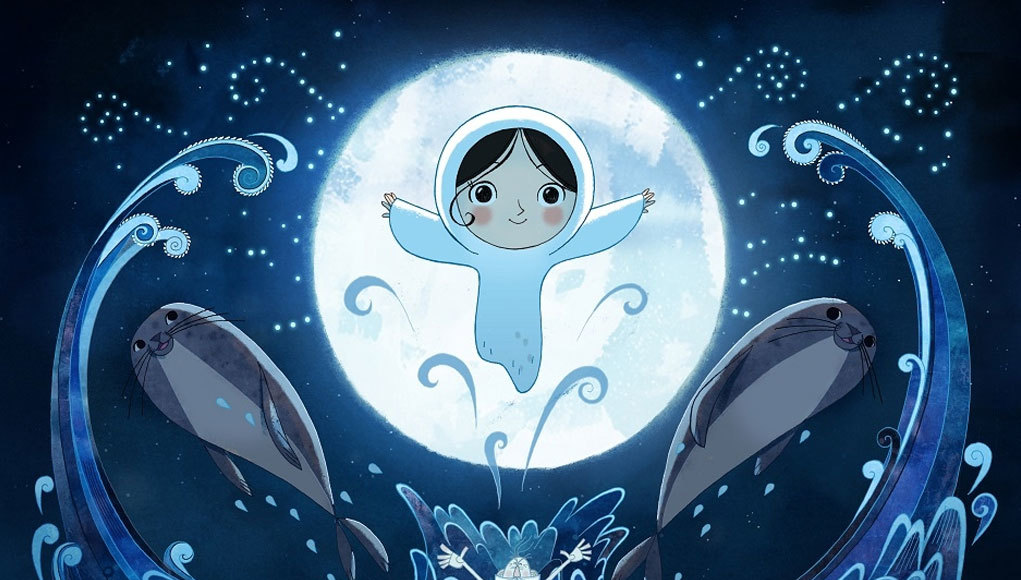
The Song of the Sea is a new animated film for children and adults. It tells the tale of Ben and his younger sister Saoirse. It’s beautifully animated and based on folkloric Irish tales of Selkies – mythological creatures that are seals in water and shed their skins to become humans on land. Unbeknownst to Ben his mother was a Selkie and so is his little sister. It is a stunning story about grief, growing up and family. However, the more I watched it the more I realised that I had seen this story many, many times before and it’s one that has been told over and over again – it’s the one all about men.

Song of the Sea

I’ll start with a brief plot synopsis (spoilers): Ben lives in a lighthouse with his pregnant mum and dad. The mum gives Ben a magic shell and then goes missing into the sea leaving behind Saoirse, his little sister. Six years later and the dad’s still pretty unhappy and Saoirse still hasn’t said a word. Meanwhile, Saoirse discovers a magic coat left behind by her mum which lets her transform into a seal. She goes swimming for a bit and that’s when we learn she’s a Selkie. Unfortunately, nasty granny arrives to take Ben and Saoirse back to the city. Ben doesn’t really like Saoirse and is annoyed when she follows him as he escapes from his granny’s house. Some magical fairies inform the siblings that Saoirse’s a Selkie and must sing the Song of the Sea to free all the trapped spirits – it’s a shame she doesn’t speak. Unfortunately she gets kidnapped by a witch, Macha, who bottles up people’s feelings (literally) thereby turning them to stone. Her reason is that she couldn’t handle her son (a giant) being so sad when his wife died so she bottled up his grief and turned him into a giant cliff (the dad is basically the giant and the gran is Macha). Ben rescues his sister who starts playing the magic shell which causes all the bottles to break. Macha, part stone, is overwhelmed by her feelings but relents and helps transport Ben and Saoirse back home. There, Saoirse finally speaks and she sings a magic Selkie song that frees all the ancient spirits so they can finally return to their magical land far away. The mum reappears to take Saoirse away with her but instead Saoirse relinquishes her Selkie abilities so she can stay with her dad and brother. Everyone lives happily ever after, even the nasty gran who shacks up with the old ferry driver.

It’s a nice story full of metaphors, folklore and fantasy but there are some all too familiar and all too sexist tropes. To start with there aren’t many female characters – there’s the mum who vanishes within minutes; the gran who is the typical crone character – old, haggard and someone no one would ever want to grow up to become and Macha – the evil villain who is basically an even worse version of the gran. The main female character is Saoirse.

Firstly, she is voiceless, she literally has no voice for most of the film, which means Ben gets to do all the talking. Whilst she is often portrayed as more intelligent than her wilful, older brother, who drags her around on a dog’s lead for quite a bit of the film, she is still forced to follow him, even when she knows he’s going in the wrong direction. He becomes less ambivalent towards her once he’s learnt she’s a Selkie. As the film progresses she becomes weaker and weaker and ends up getting kidnapped. This inspires Ben to take even more action and battle the film’s antagonist. It seems a little bit as if Saoirse only has worth as a character once her brother has realised she’s useful – i.e. has magic singing abilities.  He’s the one that puts the magic shell to her lips so she can play it and break all of Macha’s magic bottles. It’s almost as if little girls are being told to tolerate the whims and bullying behaviours of their elder brothers until their brothers realise they have voice and worth, and only then can they become somewhat empowered.

After her rescue Saoirse is even weaker meaning it is Ben  that must overcome his fear of swimming and dive deep to uncover Saoirse’s thrown away Selkie suit. So despite the fact that the sea is Saorise’s element and true home it still ends up being all about Ben and his newfound abilities. Meanwhile, Saoirse’s singing and shell playing skills appear somewhat arbitrary given that she just inherited them and they’re basically magical.  Saoirse’s voicelessness also means that apart from one brief chat with her mum right at the end the film categorically fails the Bechdel test. FInally, when Saoirse does eventually speak her first word isn’t hello or help or patriarchy, no, it’s Ben.

There are some nice messages in the film – namely that stories are very important, be they ones that run in the family or older more mythical stories that came long before the stories of the Bible. The film reminds us that our culture suffers when we lose our stories but it’s just a shame that the film’s own story tells us that men are the active ones whilst women sit around either trying to muck everything up (the gran and Macha) or are basically just there to sing at men’s command. The film also has something to say about men’s inability to emote, namely because the father remains confused and grief-stricken long after the disappearance of his wife but even this is implicitly traced back to his overprotective mother (the nasty gran) who constantly tells him she knows what’s best and lives a repressed, devout Christian life. This story is reflected in the mythical one with Macha literally turning her giant son to stone so he would no longer have to suffer the grief of the loss of his wife – if only women would stop meddling seems to be the point here. Other male characters include the comic ferry driver, the faeries (we see a few female faeries in the background at the end but none are given a voice) and the Great Seanachai – a mythical storyteller who remembers all the old stories and is thus a font of cultural knowledge and wisdom, oh, and he’s a man.

So, fifteen years into the 21st century and what do we get – another mythic adventure about boys and men saving the day. It’s nice that Saoirse sings her special song at the end and frees all the spirits but this is basically the same as Pepper Potts donning Iron Man’s suit at the end of Iron Man 3 in order to blast the main baddy to smithereens – it’s great a woman saves the day but it’s all a bit last-minute and tokenistic. Why not a whole film about an interesting and three-dimensional female character doing awesome and exciting things?

But that’s just it, it’s not that this film is a sexist travesty and should be banned, no, it’s just that this film follows in a long, long line of films and stories just like it – ones that portray men as the active and characterful heroes whilst women are painted as passive and regularly in need of rescue. The Song of the Sea slots so easily into this pervasive cultural narrative when it had so much scope to start rewriting it – why couldn’t it be Benjamina running off in search of her fey little Selkie brother? Why couldn’t the father have vanished right at the start? And why are there no characters of colour, or trans and queer characters partaking in the action, surely ancient Irish folklore isn’t just for white, heterosexual cisgendered people? The film has been described as a “timeless delight for all ages”- it’s only timeless because this masculinist and sexist narrative is so seemingly unkillable. It’s great to be inspired by old stories but it’s time we started telling some new ones, fit for the 21st century.

Update on 11th December 2024: I wrote this post over nine years ago and I’m grateful that so many people are still reading it. I’m also grateful to the folks who take the time to write comments. However, I’m not grateful when people try to insult me in their comments. For the time being I’m approving people’s comments but this may well change if/when I get tired of being insulted. You are welcome to disagree with my post and you are welcome to comment thoughtfully and respectfully. There are other comments which contain prejudice – these immediately get deleted. I’m sure I’ll write a post about this whole experience soon.

Amy

Every moment of happiness that the documentary Amy portrayed was foreshadowed by the knowledge of her sad and premature death. We watched as a young women who loves singing and writing poetry was transformed into a 21st icon, a global superstar and a figure of hate. Learning of Amy Winehouse’s alcoholism, bulimia and drug addiction I felt ashamed for having judged her in the past – I remember reading about the gigs she cancelled and I remember thinking that she had let her fans down and been selfish. I had no idea of the context. As I watched I also felt complicit in the diabolical system that contributed so heavily to her death. And as the film shows it all began with her ability to sing.

A short clip of Winehouse as a teenager singing Happy Birthday to a friend begins the film and immediately demonstrates her talent. She states on numerous occasions how much she loved singing. Of course, her love of music was what made her and broke her because a voice like Winehouse’s is the perfect voice for commodification. Without ever stating it the film shows what happens to a successful artist in a consumer capitalist society. It began by assigning Winehouse’s voice a price tag. Be it as recorded songs on a CD or as a ticketed performance these were all ways people could make money from her voice. As she became more successful so her voice became worth even more – her album Back To Black sold millions of copies worldwide. Her increased popularity tied in perfectly with the underlying logic of capitalism, namely growth – keep exploiting a resource for profit until it’s depleted.

So Winehouse’s art was continually exploited. The film shows bleak clips of various people close to her using her celebrity status and wealth for their benefit. Her father, ex-husband, managers and production companies (Universal Music Group included) are all shown pushing her to perform more and produce more music. Her rise in monetary value coincided with her increased addiction to drugs and alcohol yet so many of the people around her did not stop to ask too many questions – why would they when they were getting so rich? Meanwhile, the press and her fans treated her as an idol. They garnered her with almost mythic status and placed her on a pedestal that she never deserved to be on. Of course, the paparazzi were all to happy to wrench her down from this plinth when her addictions and suffering meant she could no longer perform as a commodified celebrity is expected to. One moment that sticks out from the film is when she’s onstage at Belgrade and as she stumbles and falls the band look on and laugh. Meanwhile, the audience cheer her and then, when she doesn’t sing, boos her. “Sing or give me my money back” chants some of the crowd.

Commodity, idol, hate-figure, voice, character in a documentary – it seems one of the things Amy Winehouse was rarely treated as was a human.

I contributed to this process. I bought her album Back To Black, thereby adding another figure to her record sales, further assuring her success. I did not look to the woman behind the music – a woman suffering from depression, bulimia, substance abuse and abusive relationships – I heard her only as a beautiful voice. This process continues today. Her death will have significantly boosted her sales figures and the film Amy will make Universal Music Group an awful lot of money. As the credits rolled I saw that even Winehouse’s teenage rendition of Happy Birthday caught on a video camera by her friend is owned by a record label – even that brief song has been commodified. Under capitalism nothing escapes the profit motive and all is governed by a certain form of addiction – the addiction to money.

Amy the film is not the final say – it’s a carefully edited version of events that tries to tell one particular story. It paints her ex-husband and father as simple villains and never really tries to understand their behaviour. It also turns Amy Winehouse’s life into a slick narrative with a clear beginning, middle and end – her life is contextualised by her music and her tragic death. Of course, the one person who had no say in this process was Amy Winehouse – once again she is robbed of a voice and presented as a certain sort of person – the sort of person whose ‘story’ will attract lots of people to cinemas. This is the numbers game of consumer capitalism – a game that can cause climate change, facilitate resource wars, initiate global recessions and, most certainly, relentlessly capitalise on a vulnerable but talented young woman far beyond her death.

This system will change but for now I’ll leave you with one of Amy Winehouse’s brilliant songs: