You Don’t Own Me

Grace, the Australian singer, recently covered Lesley Gore’s ace 1963 single You Don’t Own Me and it sure gets the feminist feet stomping. Each inspiring verse is interspersed with some sexist thoughts from rapper G-Eazy (Sl-Eazy more like it) as he tries to assert his male dominance over the woman he “would love to flaunt” as she’s not one of your average “basic bitches”. Indeed, she’s the “baddest ever…Never borrow, she ain’t ever loan, That’s when she told me she ain’t ever ever ever gonna be owned.” Then Grace blasts back with a booming chorus and puts Mr Misogynist back in his place. But all this singing of possession makes me wonder exactly what ownership actually is?

Why is it that Grace needs to assert that someone else does not own her? How could the scenario even have arisen in which people come to think that they actually own others? Part of the answer (and I reckon quite a big part) is, unsurprisingly, to do with money. As a brief scan of anthropologist David Graeber’s 500+ page book called Debt reveals, money has played an integral part of human society for hundreds of years. Economists tend to tell us that money came into being when barter systems got too confusing – if I give you ten oranges, three pigeons and a mug in return for a pair of shoes, two bananas and a kitten…but instead of all that faffing about with oranges and bananas a different system of exchange was introduced whereby something came to act as a store of value. It could be a coin, a rod of iron or a piece of paper, as long as everyone agreed that the values remained consistent and commensurate over time.

But, argues Graeber, that fictional land of peaceful and friendly barter didn’t exist, as least not on a large-scale. Instead, he argues that money grew out of debt. Take the Roman Empire for example – when they invaded a new territory they would often turn their captives into slaves. Slavery is the ultimate form of ownership as it rips someone from their social context and ties them to someone else. The alternative to being enslaved was basically death or slowly, slowly buying back one’s freedom by working long and hard enough. A slave owed their life to their master but only because the master had the power. Money itself is also debt. On a £10 note it says: “I promise to pay the bearer on demand the some of ten pounds.” The actual piece of paper is worthless but it’s what it stands for – i.e. that these items or services are all worth £10. Money is one giant system of IOUs. However, it’s clearly not an arbitrary system because there’s a whole system of banking, policing and law-making  to ensure that people pay their debts.

So, concludes Graeber, behind money is debt and behind debt is power, and the history accords with this – the economic power of the Roman Empire depended on its military strength because it had to have a way of enforcing its debts, having a giant army helped with this. And something similar is true today, only those with power can call in their debts and this power usually involves violence or the threat of it. G-Eazy says that Grace is an independent woman “All because she got her own dough, Boss bossed if you don’t know, She could never ever be a broke ho”. And that certainly is one way of getting out of slavery, by making lots of money, but humans existed long before money and whilst we do put a price on freedom and maintain that price with force it’s still just a system of belief, albeit a very powerful and tragic one. But maybe there’s a different way. More ideas to come, in the meantime here’s the original, without G-Eazy offering us his sexist thoughts in between the good bits.

Star Wars Episode 8: Rey Retires Early (Spoilers)

The beginning of Star Wars Episode 8 is going to surprise quite a few fans. It goes like this: having arrived at the secret island where Luke Skywalker has been hiding, Rey, the hero of Episode 7, will give Luke his lightsaber back. After that they’ll have tea, chat about Midi-Chlorians for a bit and then Rey will say her goodbyes and leave. Yup, she will exit the plot and go off with Chewie to fly around the galaxy in a cool spaceship. But why do something as drastic as this, just when Star Wars was slowly catching up with the 21st century by casting a woman as one of the heroes of the film? Because Rey knows nothing could be more boring than having to go through the motions of becoming a hero – we all saw Luke Skywalker do it and given that Episode 7 was basically Episode 4, they might as well not bother making 8 & 9 and just copy/paste the new characters on top of the old ones in 5 & 6. It’ll save us all the cinema ticket price.

In Episodes 4 – 6 we saw Luke Skywalker go through the motions/plot devices of the Hero’s Quest, a supposedly “archetypal” story structure that 20th century mythologist Jospeh Campbell came up with. Campbell argued that this “fundamental” story has existed in cultures around the world for millenia. He thought it was the story of all time. In brief it is the story of a character who is called to do something great – drop a magic ring in a volcano, kill Voldemort, kill Darth Vader etc. Firstly they get some mentoring so they can learn the tricks of the trade (often killing), then they’re given a talisman to help them on their quest (often a weapon), then they leave the safety of their home and trek off into the unknown. There they will be tested by a range of foes and challenges (usually fights) until eventually they have to face the big baddy in order to triumph (usually an even bigger fight). Meanwhile, they’ll rescue a damsel in distress, resolve their father issues, and return home victorious. Luke Skywalker went through this exact process because George Lucas was good mates with Joseph Campbell and so based Episodes 4 – 6 off of Campbell’s research.

A few other hallmarks of the Hero’s Quest include the fact that heroes are basically always men – women are either trophies to be won or seductresses to be conquered (or a bit of both). However, with the introduction of Rey in Episode 7 the masculinist/sexist bent of the Hero’s Quest has been challenged (as it has in other films such as Mad Max). This is progress: Rey has been given the chance to play a role that was previously reserved for men. She’ll now get to fight with giant lasers and move things without touching them. This is awesome and as Laurie Penny makes clear it’s ace that new, diverse characters are finally being invited to the hero’s table – this represents a big cultural change in the stories of our times.

But the Hero’s Quest is still the Hero’s Quest – an overly-simplistic, totalising monomyth concocted by Campbell and retroactively applied to hundreds of older stories. It’s easy to claim something conforms to the Hero’s Quest as the structure is so broad and vague – someone gets asked to do something, they’re challenged, things happen and then more things happen (these things usually always involve violence). But it’s blind to cultural sensitivities and nuances, and up until only recently it was reserved for cis, white men. And Rey knows this. Rey knows she hasn’t spent years living by herself on a desert planet just so she can endure an unimaginative, oft-repeated plot structure – one where she finds a mentor, gets trained, fights foes, resolves her mother issues, and returns home the hero (yawn). She doesn’t want  a story that’s so historically mired in sexism, patriarchy, appropriation and the values of capitalism (especially ruthless individualism). “Sod that for a packet of biscuits” thinks Rey, she wants a story that transcends these tired clichés and prejudices. So you can have your lightsaber back Luke, Rey’s got a different narrative to live.

https://www.youtube.com/watch?v=yZxs_jGN7Pg

The Hero’s Quest in brief!

Trolls Just Wanna Have Friends

In response to my previous post on angry men a friend had this question: “I wonder what the best ways are to redirect mass anger towards positive change rather than destruction?” I kind of feel it’s the million dollar question and in the context of angry men, who have a habit of trolling online, I think it is about trying to redirect that anger away from women and feminism towards actually oppressive and dangerous political elites and economic systems. But the political is personal too and on an emotional level anger is often the flip side of sadness, loneliness and insecurity. So, like the rest of us I think trolls just wanna have friends.

This clip contains explicit and offensive content as it uses the language of trolling in order to parody it.

Imagine I’m an angry man troll: I’m sat in my room at my computer watching one of Anita Sarkeesian’s vlogs calling out sexism in the gaming industry. I am not OK with this – I enjoy video games just as they are and don’t want some random feminist dissing my favourite games and dissing my gender. I sign into my anonymous Youtube account and issue Sarkeesian a death threat, I describe in graphic detail the way in which I’ll kill her and then I go off to make baked beans on toast. Why am I doing this? Perhaps it’s because in a world where people like me are relatively powerless (I’m struggling to find a job, the rent’s too high, no one ever spoke to me about feminism when I was younger, James Bond and Iron Man are my role models, I may be suffering from mental health issues and unsure how to seek support) this is finally a chance to exert some power. Quite a lot of power actually: from my computer I can threaten to kill people and I’ll be able to get away with it.

The above might be what goes through the head of an angry guy and it might not. But the point I want to make is that in the mind of the angry guy his response is perfectly normal – given the world he lives in his reaction makes sense (to him). To change this we’ve got to be able to show him why this response might not actually make sense. Firstly, his anonymous death threats have real world consequences – the psychological suffering caused is immense (Mary Beard, a professor at Cambridge University, befriended one of her trolls, told him about the effects of his trolling and even wrote him a job reference!). Secondly, living as we do in a consumer, capitalist society why does the troll waste so much energy attacking those calling for greater justice rather than those who cynically profit from consumerist capitalism – the loaded elites who are quite happy for the ‘masses’ to squabble amongst themselves as it lets them off the hook? Perhaps it’s easier to attack closer-at-hand feminists rather than distant, exceptionally powerful elites who have a knack for staying in power. But surely one things gamers know is that it’s way more fun to take on the big bad guy rather than the scapegoat – Luke Skywalker didn’t diss Princess Leia for having opinions, no, he teamed up with her and took on the entire Empire!

It’s also worth bearing in mind that the ‘angry man troll’ doesn’t actually exist because it’s a trope and a stereotype commonly used to essentialise people and explain them away. People are far more complex than any box we might wish to put them in. It’s important to remember this as we seek to get to know people beyond our usual social circles and before we go off on one complaining about angry men trolls…woops!

They say it takes a whole village to raise a child and I guess it takes a whole society to create an angry man troll. There’s no one person to blame, not the individual himself, because there are just so many factors that contribute to how someone grows up and lives – media, education, entertainment, economics, politics, etc. Our challenge is to make sure all these pillars of our society act in a way that promotes equality and well-being (not exactly a small challenge). And guys, even if they do get angry, are an exceptionally important part of this movement. Indeed, there’s a lot in it for them too – more friends, a greater diversity of video games to choose from, free lessons in emotional intelligence and how to relate to people, more confidence, self-esteem, job opportunities, and even more chances to have great, consenting sex with other adults (because they’ll have the guts to ask for it (in a mature, respectful way) and the decency to not ask again when someone says no). But this equal and just utopia, surely it’s just a pipe dream, a waste of time, why bother? Well, before I get onto that here’s Lily Allen poking a little fun at trolls aka URL Badmen. To be continued…

The Song Of Angry Men

There’s quite a lot of anger on the internet these days. It’s often perpetuated by men and anonymous trolls. I’m guilty too as some of my blog posts veer from ‘witty social commentary’ into ‘angry rant’. Thinking of anger and men reminds me of the song Do you hear the people sing? from the hit West End show Les Miserables. It’s sung by a bunch of young, male students in 1830s revolutionary France who want to overthrow the corrupt political regime and make a better world. “Do you hear the people sing, singing the song of angry men?” they ask and, yeah, they’re all pretty angry. Unfortunately, things don’t go to plan and all the revolutionaries are killed whilst the regime stays in power. But the question remains: what’s the deal with all these angry men?

A contemporary (non-musical) example would be the many responses to Anita Sarkeesian’s vlogs on sexism in the gaming industry and online. So many guys are furious that Sarkeesian would call out the sexism so rampant in the industry. They’re so angry they even issue death threats. Now, I could write an angry blog post about these guys’ angry blog posts but I’m more interested in exploring the anger itself.

Anger is a strong emotion that tends to be used as a defence mechanism to very aggressively maintain one’s security and comfort zone. If you’re a male gamer who likes the gaming world and its portrayal of women it’s understandable that you’d feel threatened when someone criticises it. Furthermore, given that guys are often not well educated in emotional intelligence and expression then it’s not surprising that their upset manifests as anger. Contextualising this further we can note other issues men face in the 21st century. For starters the gold standard of masculinity is still the James Bond style, breadwinning, tough guy. Most guys won’t achieve this and will be belittled by the ones that think they do. And of that latter group they’ll spend most of their time competing with one another to be alpha male and will hardly get a chance to just chill out and be nice. Of course, this gold standard is really just an outdated, redundant stereotype that only ever makes sense in shoddy Hollywood films and abysmal advertising campaigns – it’s a fiction but many guys labour under the belief that it’s an ascertainable and desirable goal. Add to this the problems of economic recession and dwindling job markets that many countries face and it’s even harder for men to find meaning ‘being men’.

Unfortunately, these larger economic and political issues tend to get ignored as guys look elsewhere to vent their anger – usually at women and feminism who they perceive to be threats. Case in point with Anita Sarkeesian – rather than guys acknowledging that greater equality for the sexes is a good thing and greater diversity in video games is also good (think about it, there will be more games to choose from) they think it’s the feminists who are the problem rather than the cynical gaming companies who want to make money peddling damaging, uninspired stereotypes.

But what should angry men do with all this anger? Should they just ignore it, bottle it up and hope it goes away…until the next blog rant. Well, this is a big question and one for another blog post. In the meantime here’s some Les Miserables awesomeness…

Ex-Spectre-ing Some More Sexism

Spectre, the new James Bond film will soon be imposed upon us. On 6th November we’ll be subjected to yet another shaken and stirred mess of misogyny and sexism. But before that cinematic delight let’s recap James Bond in the time of Daniel Craig, a time of strong female protagonists, normalised diversity and astute political observation – actually no, none of that.

Things got off to a goodish start (bearing in mind this is James Bond) with Casino Royale – Bond lost the silly gadgets and the objecitfying intro credits but unfortunately kept everything else, namely the sexism. Eva Green plays Vesper Lynd – a female character who is simultaneously seductress and victim (the two going roles for most women in Bond films). Bond falls in love with her (y’know to show his human side) but soon finds out she’s been double-crossing him from the start, naturally she dies (she drowned in a lift). Meanwhile, Caterina Murino does her duty as ‘second Bond woman’ – she sleeps with him, reveals some useful info and then gets strangled in a hammock. Meanwhile, there’s a load of tedious stuff to do with “high stakes” poker games, defibrillators and wicker chairs.

Onto Quantum of Solace and things were looking up. Olga Kurylenko plays Camille Mentes, a strong female character able to match Bond in terms of sleuthing and fighting ability. Furthermore, her romance with Bond consists only of a goodbye kiss. Of course, all the fighting at the end gets too much for her and she needs some rescuing. Things are much worse for Gemma Arterton’s character Strawberry Fields (reminiscent of Pussy Galore and Titty Bonanza) who goes all the way with Bond and gets drowned in crude oil as a consequence. Judi Dench does her usual bossy, mother type thing as Bond’s boss M. In terms of plot there’s some progress: it’s curiously politically relevant – the main baddy is instigating land grabs in Bolivia in order to monopolise a scarce natural resource, fresh water, whilst funding political instability in the country. This actually happens in real life. Oh, but the ridiculous opening credits make a reappearance – this time naked women in sand dunes.

Then Skyfall. It saw where the franchise could be going – slightly better roles for women and politically relevant plots – and then enforced a U-turn, taking Bond back to the 70s. With regards the portrayal of women – firstly, it’s questionable whether the female lead played by Bérénice Marlohe actually consents to the sex she has with Bond in the ‘shower scene’. Of course, that doesn’t bother Bond and minutes later she’s bound and gagged and shot in the head by the arch-villain. Naomie Harris’ character, who accidentally shot Bond off a bridge in the opening sequence, ends the film by quitting her job as a field agent and settling down to become the secretary aka Moneypenny. Judi Dench’s M gets shot in the back and replaced by Volderment…Ralph Fiennes. Oh and Ben Whishaw’s Q provides a whole load of pointless gadgets. This whole film was basically Sam Mendes giving the finger to equality because he’s a rich, white man in power who can.

What now for Spectre? Not a lot really. There’s some excitement that Monica Belluci is in it, the oldest Bond woman at 50! But she plays the widow of a spy James Bond kills, so it’s likely that Bond will sleep with her and then kill her, or she’ll get killed by one of the baddies. Léa Seydoux plays the other Bond woman. She’s 30, so will probably survive until the end. Meanwhile, Bond’s up to some mischief in Mexico City at the start of the film telling the all new, white, male M that he was “taking some overdue holiday” – well, I think it’s high time James Bond take some overdue holiday from our cinema screens…forever. Here’s the trailer – guess which plot device hasn’t already been used in a Bond film? Oh, none of them.

“Luke, Use The Patriarchy…”

Light sabres, Tie Fighters and Jabba the Hutt – it’s all a bit phallocentric (willy orientated). Yup, the Star Wars films are just one of many Hollywood franchises that promote patriarchy and under-represent women. And the reason for this isn’t just that Hollywood is full of sexist men with limited imaginations but it’s also because George Lucas based the plot of the original trilogy on one of the most enduringly sexist story structures – the Hero’s Quest.

This story structure was explored and popularised by the mythologist Joseph Campbell in the mid 1900s. In brief, the quest is as follows: a young, male hero is called to action, he leaves home, learns new skills from (usually male) mentors, begins his quest, faces trials, proves his heroism, overcomes the dark father figure and eventually triumphs. Women tend to be tokenised as nasty seductresses in need of vanquishing or pretty trophies in need of saving. Campbell examined cultures around the world and throughout history and argued that this structure kept repeating itself hence the title of his book The Hero With A Thousand Faces – yup, 1000s of male heroes doing their phallocentric thing (probably with swords or giant laser sticks). Campbell adds in a bit of Jung, Freud and fairytale analysis – suggesting that these characters are manifestations of our psyche (as if we all have lots of little libidinous armed men running around our heads). He deigned the Hero’s Quest an archetypal story structure and called it a monomyth – a monolithic mythic structure because he’s it’s such a big deal.

George Lucas, good friends with Joseph Campbell, based the first three Star Wars films on this structure – Luke is the hero, Yoda is his mentor, his call to action is the death of his foster parents, he rescues a princess, he fights a lot and there’s even the dark father figure who is both vanquished and made peace with. Of course, the twist was that the princess turned out to be the hero’s sister, so instead of the girl Luke got a bit of fame (and a metallic right hand).

However, one thing both Lucas and Campbell appear to forget to do is contextualise the Hero’s Quest. Rather than just assume it is some universal manifestation of the human subconscious in story form what if it’s such a pervasive story because it’s constantly used to justify the patriarchal conventions that many societies depend on. So many societies are run by and for men and it seems quite natural that this phallocentric (it’s a great word) bent appears in their stories, novels, movies and TV programmes. As is ever the case if we want to understand the human condition – and in this case it’s the recurrence of masculinist story structures – we need to contextualise it.

But there may be hope. Watching the trailer for the next Star Wars film, The Force Awakens, reveals characters of colour and female characters having lead roles (as well as being able to use The Force). Maybe the all-white boys club is finally coming to an end and the patriarchy is going the way of Darth Vader and the Old Republic. Of course, there will always be those who want to grab their phalli light sabres and defend oppressive traditions but it’s time the next generation taught them a lesson. The lesson being that it’s not the princess who needs saving it’s the hero – saving from the clutches of an oppressive, violent and creatively dull (so dull it rewrites the same story over and over again, 1000 faces…more like 1000 yawns) patriarchal system.

Equally Objectified

The video to Sigma’s latest long ft. Ella Henderson, Glitterball (see below), consists of a group of people going swimming in the sea. This isn’t your usual Brighton family holiday, no, it’s a group of conventionally good-looking and toned young people larking about. The women wear bikinis, squeeze each other’s bums, hug frequently, and show a lot of cleavage, whilst the guys, well the guys tend to be wearing quite a lot of clothes with perhaps the odd flash of six-pack in the background. So why, given that there are a plethora of semi-naked bodies and a roughly even gender split in the video, couldn’t they have objectified the men as much as the women?

We’ve been conditioned to view women’s bodies in a certain way on-screen whilst men’s bodies are often treated very differently. Blurred Lines, the infamous Robin Thicke song, epitomised this attitude with a terribly misogynistic and sexist video (and that’s saying nothing about the lyrics). However, it’s interesting to watch a parody version of the video (see below) in which the female models are replaced by men in g-strings and tiny underwear. It seems there’s something a little ridiculous about men having little stop signs stuck to their bottoms and dancing so provocatively, whilst it was presented as almost ‘normal’ for women to be treated and viewed in this way in the original video. At least that’s what I think we’re being made to believe – that treating women like this is OK and when it’s guys it’s just quite silly and comic.

The feminist film critique Laura Mulvey calls this phenomenon the male gaze – the way in which visual arts are structured around a masculine viewer. A guy (usually white, cisgendered and heterosexual) isn’t going to want to see a video of a man rubbing sun tan lotion into his six-pack or bending over to pick up his beach towel, no, he wants women to do that, or at least that is what the relentlessly objectifying world of music videos and advertising tells us. Equality is a long way off and sexism towards women is just part of the culture.

So there’s a long way to go until men and women are equally objectified in music videos (come on guys, time we stripped off and started massaging ourselves provocatively) and even further still until people aren’t objectified at all (because people are people, not just bodies). Until then here’s Marina and The Diamonds evening the scales a little…

The Slightly Sexist Song Of The Sea

The Song of the Sea is a new animated film for children and adults. It tells the tale of Ben and his younger sister Saoirse. It’s beautifully animated and based on folkloric Irish tales of Selkies – mythological creatures that are seals in water and shed their skins to become humans on land. Unbeknownst to Ben his mother was a Selkie and so is his little sister. It is a stunning story about grief, growing up and family. However, the more I watched it the more I realised that I had seen this story many, many times before and it’s one that has been told over and over again – it’s the one all about men.
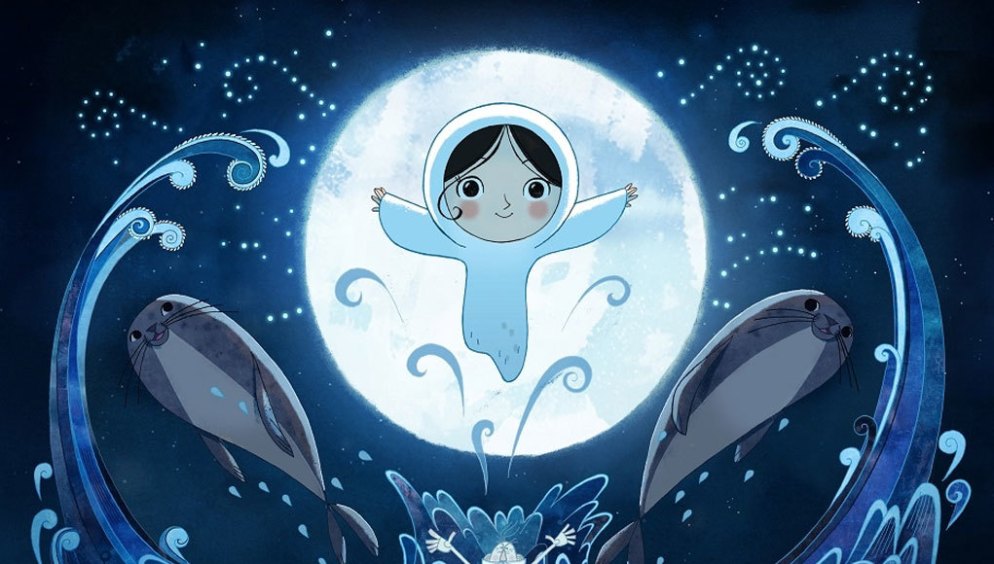
Song of the Sea

I’ll start with a brief plot synopsis (spoilers): Ben lives in a lighthouse with his pregnant mum and dad. The mum gives Ben a magic shell and then goes missing into the sea leaving behind Saoirse, his little sister. Six years later and the dad’s still pretty unhappy and Saoirse still hasn’t said a word. Meanwhile, Saoirse discovers a magic coat left behind by her mum which lets her transform into a seal. She goes swimming for a bit and that’s when we learn she’s a Selkie. Unfortunately, nasty granny arrives to take Ben and Saoirse back to the city. Ben doesn’t really like Saoirse and is annoyed when she follows him as he escapes from his granny’s house. Some magical fairies inform the siblings that Saoirse’s a Selkie and must sing the Song of the Sea to free all the trapped spirits – it’s a shame she doesn’t speak. Unfortunately she gets kidnapped by a witch, Macha, who bottles up people’s feelings (literally) thereby turning them to stone. Her reason is that she couldn’t handle her son (a giant) being so sad when his wife died so she bottled up his grief and turned him into a giant cliff (the dad is basically the giant and the gran is Macha). Ben rescues his sister who starts playing the magic shell which causes all the bottles to break. Macha, part stone, is overwhelmed by her feelings but relents and helps transport Ben and Saoirse back home. There, Saoirse finally speaks and she sings a magic Selkie song that frees all the ancient spirits so they can finally return to their magical land far away. The mum reappears to take Saoirse away with her but instead Saoirse relinquishes her Selkie abilities so she can stay with her dad and brother. Everyone lives happily ever after, even the nasty gran who shacks up with the old ferry driver.

It’s a nice story full of metaphors, folklore and fantasy but there are some all too familiar and all too sexist tropes. To start with there aren’t many female characters – there’s the mum who vanishes within minutes; the gran who is the typical crone character – old, haggard and someone no one would ever want to grow up to become and Macha – the evil villain who is basically an even worse version of the gran. The main female character is Saoirse.

Firstly, she is voiceless, she literally has no voice for most of the film, which means Ben gets to do all the talking. Whilst she is often portrayed as more intelligent than her wilful, older brother, who drags her around on a dog’s lead for quite a bit of the film, she is still forced to follow him, even when she knows he’s going in the wrong direction. He becomes less ambivalent towards her once he’s learnt she’s a Selkie. As the film progresses she becomes weaker and weaker and ends up getting kidnapped. This inspires Ben to take even more action and battle the film’s antagonist. It seems a little bit as if Saoirse only has worth as a character once her brother has realised she’s useful – i.e. has magic singing abilities.  He’s the one that puts the magic shell to her lips so she can play it and break all of Macha’s magic bottles. It’s almost as if little girls are being told to tolerate the whims and bullying behaviours of their elder brothers until their brothers realise they have voice and worth, and only then can they become somewhat empowered.

After her rescue Saoirse is even weaker meaning it is Ben  that must overcome his fear of swimming and dive deep to uncover Saoirse’s thrown away Selkie suit. So despite the fact that the sea is Saorise’s element and true home it still ends up being all about Ben and his newfound abilities. Meanwhile, Saoirse’s singing and shell playing skills appear somewhat arbitrary given that she just inherited them and they’re basically magical.  Saoirse’s voicelessness also means that apart from one brief chat with her mum right at the end the film categorically fails the Bechdel test. FInally, when Saoirse does eventually speak her first word isn’t hello or help or patriarchy, no, it’s Ben.

There are some nice messages in the film – namely that stories are very important, be they ones that run in the family or older more mythical stories that came long before the stories of the Bible. The film reminds us that our culture suffers when we lose our stories but it’s just a shame that the film’s own story tells us that men are the active ones whilst women sit around either trying to muck everything up (the gran and Macha) or are basically just there to sing at men’s command. The film also has something to say about men’s inability to emote, namely because the father remains confused and grief-stricken long after the disappearance of his wife but even this is implicitly traced back to his overprotective mother (the nasty gran) who constantly tells him she knows what’s best and lives a repressed, devout Christian life. This story is reflected in the mythical one with Macha literally turning her giant son to stone so he would no longer have to suffer the grief of the loss of his wife – if only women would stop meddling seems to be the point here. Other male characters include the comic ferry driver, the faeries (we see a few female faeries in the background at the end but none are given a voice) and the Great Seanachai – a mythical storyteller who remembers all the old stories and is thus a font of cultural knowledge and wisdom, oh, and he’s a man.

So, fifteen years into the 21st century and what do we get – another mythic adventure about boys and men saving the day. It’s nice that Saoirse sings her special song at the end and frees all the spirits but this is basically the same as Pepper Potts donning Iron Man’s suit at the end of Iron Man 3 in order to blast the main baddy to smithereens – it’s great a woman saves the day but it’s all a bit last-minute and tokenistic. Why not a whole film about an interesting and three-dimensional female character doing awesome and exciting things?

But that’s just it, it’s not that this film is a sexist travesty and should be banned, no, it’s just that this film follows in a long, long line of films and stories just like it – ones that portray men as the active and characterful heroes whilst women are painted as passive and regularly in need of rescue. The Song of the Sea slots so easily into this pervasive cultural narrative when it had so much scope to start rewriting it – why couldn’t it be Benjamina running off in search of her fey little Selkie brother? Why couldn’t the father have vanished right at the start? And why are there no characters of colour, or trans and queer characters partaking in the action, surely ancient Irish folklore isn’t just for white, heterosexual cisgendered people? The film has been described as a “timeless delight for all ages”- it’s only timeless because this masculinist and sexist narrative is so seemingly unkillable. It’s great to be inspired by old stories but it’s time we started telling some new ones, fit for the 21st century.

Update on 11th December 2024: I wrote this post over nine years ago and I’m grateful that so many people are still reading it. I’m also grateful to the folks who take the time to write comments. However, I’m not grateful when people try to insult me in their comments. For the time being I’m approving people’s comments but this may well change if/when I get tired of being insulted. You are welcome to disagree with my post and you are welcome to comment thoughtfully and respectfully. There are other comments which contain prejudice – these immediately get deleted. I’m sure I’ll write a post about this whole experience soon.
No More Mr Nice Guy

You probably know one of the really Nice Guys – he’ll be male (obviously), white, heterosexual and, y’know, he’ll be really nice. He’s probably passably attractive (by patriarchal standards) and knows how to compliment a woman in a way that doesn’t completely objectify her. He’ll know just enough about feminism to know that it’s about treating women well, to a point. He’s probably quite popular, with lots of straight, white, men friends, who like competitive sports and were most likely privately educated. He’ll be charming, polite and a gentlemen. In essence he’s a really Nice Guy. The trouble is…he’s not…and here’s why.

There are many Nice Guys out there who think they get feminism, they’ll say nice things to women that aren’t too objectionable, they’ll offer a helping hand (if appropriate) and they’ll listen to their female friends emote. But they have ulterior motives – they’re nice because they want to sleep with the women they think they are being nice to. They realise it’s not OK to be the Manly Man stereotype anymore (i.e. overlty sexist and aggressive, James Bond for example) so they resort to more underhand tactics instead. They get annoyed when women don’t choose them and pick someone else (who might be way less ‘nice’) as if women have some sort of obligation to sleep with them simply because they haven’t treated them badly. They use Tinder to get laid but won’t admit that’s what they’re using it for (“yeah, I, like, er, really want a relationship…(for 30 minutes)” – more like 30 seconds). Basically they don’t just don’t have the guts to ask women to engage in adult, consenting, responsible sex – precisely because they stereotype all women as needy, insecure and in need of being lied to about the possibility of a family, and because they themselves are incapable of having adult, consenting, responsible sex (for them it’s some sort of competition or game).

Nice Guys don’t like self-professed female feminists because they’re too shouty and angry, and they don’t shave their legs and aren’t ‘conventionally’ attractive. They’ll casually undermine and mock their girlfriend when she tries to make a feminist point, as if we’ve reached a post-feminist age where we’re all equal and women should stop whining. They might even go so far as to deny the existence of the patriarchy. They’ll also be somewhat homophobic, transphobic and racist. And why are they all these things? Because white, straight men are the most overly represented group in society. A Nice Guy will never have had to question their existence or worth because they are regularly made to feel entitled and worthy based on their arbitrary skin colour, possession of a penis and sexual inclination towards the opposite gender. Basically they’ve never had to learn how to empathise and think they’re the dogs bollocks (the sort of phrase a Nice Guy might use).

The litmus test for a Nice Guy is the fact they think they’re a Nice Guy – it’s like the Cool Kids, anyone who refers to themselves as one of the Cool Kids just isn’t (partly for using the phrase Cool Kids) – and any self-professed Nice Guy just isn’t one because they’re clearly insecure about all the nasty thoughts they have and things they do. They basically think they’re owed something because they’re not abusive, aggressive and overtly sexist. They’re deluded. The protagonist of that awful film 500 Days of Summer is the classic example of a Nice Guy or what should really be referred to as an ANNG – Actually-Nasty-Nice-Guy.

So, Nice Guys, what to do? Read up on feminism, start respecting people as people – not as things you could have sex with at some point soon – and practice the act of empathy (keep practising, you can get better in time). In the meantime know that you are not really a Nice Guy you are actually what Lily Allen calls a Wanker, you can listen to her song below (TW: homophobia – she equates Actually-Nasty-Nice-Guys with being closeted homosexuals. Sexism – towards Nice Guys, obviously). Oh, and here’s a great BuzzFeed article on Nice Guys.

Absolutely Mad Max

The situation is bleak: humans have all but bled the world dry of fossil fuels. Oil has become exceptionally scarce and a prize over which violent factions will go to war. These factions take the form of vast, sprawling patriarchies built on bizarre cults and rituals. Selfish warlords rule over their subjects with force and violence and send their armies to war to fight for the earth’s dwindling resources.

In one of the kingdoms water, also scarce, has been privatised and is occasionally supplied to the population at the whims of the greedy tyrant. He gives them just enough so they can live and keep on serving him whilst taking extra for himself. Unless you’re the ruler life is one of gruelling servitude as people work at machines all day with little hope of remuneration. People are pale and unhappy due to lack of exposure to the sun. Desperation and SAD are rife.

The highways are dangerous places to be, full of gas chugging automobiles that run people down for sport. Deaths on the road have become so normalised that they’re just a part of everyday life, to be expected. People make a point of ignoring the speed limit. Young men, obsessed with cars, go joy riding and happily die in the pursuit of the ultimate thrill.

But in this world there is hope and that hope is women. Women will fight for their place at the table of power, in fact, women will fight to overthrow the table of power and build a new and better table – one at which all can sit – whatever creed, colour, race, religion, sexuality or gender. For now though things are not so equal. When a woman dares to speak out she will be hunted, ridiculed and oppressed by a twittering mass of overgrown men-children. These men consider women mere property and subject them to humiliating acts of objectification such as wet t-shirt competitions (even in the desert).

So, enough about Conservative led Britain, let’s talk about the exceptionally intense and adrenalin filled movie Mad Max: Fury Road. You can watch the harrowing trailer below…