The HIV Monologues

On 24th May 1988 the authorities decreed that any local authority in the UK “shall not intentionally promote homosexuality or publish material with the intention of promoting homsexuality…or promote the teaching in any maintained school of the acceptability of homosexuality as a pretended family relationship.” This was Section 28 of the Local Government Act and so a generation of children, myself included, were subjected to yet more homophobia and a complete lack of education in how to live a happy, flourishing and safe LGBTQIA life. On 21st June 2000 Scotland repealed this abysmal amendment and the rest of the UK caught up by 18th November 2003. But we haven’t really caught up because there is still so far to go and that’s where The HIV Monologues come in (a few spoilers ahead).

This was never going to be an easy play to watch and it wasn’t but not because it was terribly acted, far from it, but because it’s about HIV. It’s a seemingly simple story about Alex and Nick who are out on a Tinder date. It’s going really well until Nick says that he is HIV positive. Moments later and Alex gets stuck in a window trying to escape and Nick is pretty pissed off. Denholm Spurr makes a great Alex – insecure, selfish but irritatingly cute. He’s one of those likable unlikable characters, a bit like Fleabag from the hit BBC show, and as the story unfolds we do come to care about him. Meanwhile, Sean Hart portrays Nick’s despair, resolve and power brilliantly as he comes to terms with the new normal of his life. The monologues do occasionally become dialogues and when Spurr and Hart are on stage together the chemistry works (more on that in the next paragraph). I also absolutely loved Irene the Irish nurse played by Charly Flyte, who was treating AIDS in the 1980s. A presumably straight woman, she befriends one of her gay, male patients and takes up the cause. A scene in which she tells a bunch of salivating journalists what shame really is was just fantastic and I felt it a shame her character was only met once as she clearly had a life and story of her own that I wanted to know more about. Then there was Barney played by Jonathan Blake who had me crying before he’d even said anything. Blake (not Barney) was one of the first people to be diagnosed with HIV in the UK (and he was played by Dominic West in Pride) and his depiction of Barney was spot on as the partner to one of Irene’s patients. Warm, funny and quietly powerful Barney/Blake is someone I’d like to go for a drink with.

For me the most powerful scene was when Nick aPicturend Alex are on stage together, hiding in the toilets of G-A-Y about to have sex. Alex has just finished performing in an important play about HIV funded by the Elton John AIDS Foundation (hint, hint, come on Elton, get your wallet out). But neither of them have any condoms. Instead, Alex says he’s got a pill and Nick’s confused because he’s already taken his anti-HIV pill (of which there are many different types that reduce the viral load of HIV and allow the immune system to repair itself, start here to find out more) but Alex is taking PrEP: Pre-exposure prophylaxis, which prevents HIV infection. I’ll repeat that, it prevents HIV infection. And what ensues is a beautifully described moment in which Alex and Nick enjoy having sex together for the first time. Of course, in the world of the play and the real world PrEP is still not accessible on the NHS and people who don’t have access to the medication nor the appropriate education are still needlessly contracting the virus. As I said, even with the repeal of Section 28 we still haven’t caught up.
.
The HIV Monologues are on this Thursday & Friday, get your tickets here. Asides being brilliantly acted the monologues are well crafted and poignant pieces of writing by Patrick Cash and director Luke Davies evokes a whole rainbow of emotions from his cast. The stage and lights are also fab. So, no excuse, go, go, go. Be entertained, get educated and then go do what you can: help ACT UP in the fight to get PrEP mainstreamed, support your friends who might be at risk of getting HIV or who have it and educate everyone else, straight or gay, who has missed out on years of vital education. And then one day we’ll all meet at that epic G-A-Y after party funded by Elton John!

The Problem With Couples

Now, don’t get me wrong, I love couples. There are some great couples out there like Paul & Mary, Ben & Jerry, Brad & Angelina…oh. But sometimes couples can be problematic and here’s one of the ways I think that’s true. So, picture this: six nice people sat around a table at a restaurant having lunch. They’re all catching up about their lives, eating lettuce and sipping smoothies, something like that. They each take it in turn to talk about their lives and it turns out the first four are all straight and in relationships. They’re waxing lyrical about their partner, s/he is just fantastic, s/he just swam the Channel, s/he just invented a cure for cancer, etc. Wonderful. Isn’t that nice. However, person number five is straight and single and when it’s their turn things get a little awkward, they’re not in a relationship after all. As for person number six, they’re single and queer, so that awkward silence just got awkwarder. You get the gist right, let’s take a closer look.

Our society is just rammed with narratives that pressure us into believing in and aspiring to certain things. A big one concerns relationships. Rom coms, billboards, novels, magazines etc all encourage us to find that perfect partner. Alongside getting a job, getting enough money and finding meaning, finding ‘the one’ is just another box we need to tick on that all important list of ‘things you need to do to not be a total failure’. And it’s a huge relief when we finally find someone to settle down with (or endure for a year or so). It’s like a big weight is off our shoulders and we’ve just avoided a grim, sex-free future of loneliness and isolation, not to mention no grandkids. Phew. It’s understandable that if we believe in this narrative we will be relieved once we’ve found a partner and we’ll be happy as well, it’s fun having someone to share your life with, do stuff with and alleviate your insecurities. Ideally a best friend we can sleep with. Naturally, we want to tell our friends all about our new lover (finally, something interesting has happened in our lives).

Unfortunately, the flip side of this narrative is that it doesn’t work so well for ‘singletons’. Even the idea of being single implies we’re just a placeholder half-person until we gain meaning as a couple. We’re just biding our time and doing our best to ride out loneliness. Our lives must be grim. Which is why when lunchtime conversation shifts to us it gets awkward: if we’re single and unhappy then we affirm the narrative but also don’t really have a chance to talk about it because everyone else is coupled and happy. We’re often forced to pretend ‘everything’s fine’ even if on the inside we’re screaming. We do this because we want to fit in, because (coupled) people struggle hearing about others’ suffering and because we might believe that narrative too and think we’re failures. Next is the single but happy person, naturally, we’re considered slightly deluded because no one can be happy and unpartnered right, that sounds like far too much of a threat to this precious narrative. Then there’s the single, happy person who has lots of sex, also known as a ‘slut’ who just can’t settle down and hasn’t found the one. And then there’s the queer and single one, it’s highly likely we won’t even be asked about our relationship status because queer people don’t really exist right, we’re just some ‘exotic’ addition to a social group whose way of life is so different and alien to heteronormativity that it’s too hard for straights to get their heads around.

So, people in relationships, it’s time to step up. Yup, it’s great if you’re happy and in a relationship, well done, but please create space for people who aren’t in relationships be they happy or not. And please, if you believe that pressuring, deceitful narrative that life only means something if you’re partnered, please do not project that onto others. Basically, just do not become one of those smug and judgemental couples who will probably break up anyway because no decent long-term relationship can thrive off the mutual avoidance of fear (or maybe it can, I’ve never tried). Why not help out your single friends who want a partner by introducing them to other people (so they can enjoy the happiness of coupled life that you profess to) or offering some emotional support. And single folks, queer and straight, don’t single, be independent, and own it if you have the resources and the resilience. Also, if you need help, ask for it, even if you’re asking help from smug coupled people (they’re not that bad, well, most of them aren’t). Don’t give a toss about what they think because the priority is you getting the support you need and not pretending ‘everything’s fine’ if it isn’t. Anyway, I’m not single, I’m independent and if you find this blog challenges a narrative you hold dear then good. Here’s P!nk.

Why Do Fairy Tales End In Weddings?

And it all ends happily ever after – the dragon slain, the terrible King overthrown, the witch thwarted, the wolf outrun, the villagers saved, the damsel rescued and…wedding bells. In old folktales, in Disney cartoons, in far too many movies and, of course, all over real life. Many people spend a lot of time, pain and money trying to craft that perfect day – the white dress, the giant cake, the big guest list. Sometimes they’re lucky and the only problem is the slightly leery uncle and other times it’s a disaster of catering, drained alcohol supplies and family feuds. Either way it seems we’ve taken the concept of a fairy tale wedding very seriously and tried to recreate it in real life. But I think we’ve slightly missed the point.

I do love a good fairy tale but I get pretty bored when it’s all about cisgendered, white, straight guys rescuing helpless damsels and marrying them, yawn. But the tradition was somewhat reclaimed for me when someone explained why fairy tales have a habit of ending in weddings. It’s not because the tale is literally a how-to manual for planning the big day, no, it’s a little more subtle than that. One way to interpret a traditional fairy tale is to see the characters in the story as facets of our personality (or psyche). We all have a questing hero in us and sometimes we can be a bit of a tyrant as well. There’s a wild wolf in us too, a wise sage, a jokey trickster, a helpless victim, a cunning witch and even a terrifying dragon (metaphorically speaking). We’re not just supposed to identify with the hero (y’know, that dull straight, white guy), instead all the characters represent different aspects of who we are. Many of us might play the part of the fool more often than the wise one, or the tyrant than the victim, but the point is the potential is there and our psyche is multi-faceted (whatever those dull personality tests tell us, give me dragons and witches over ENTJ any time). Basically, folktales are a form of psychology and therapy developed hundreds of years ago, pretty cool huh.

So why the wedding? Well, it’s not just some random straight folks tying the knot, it’s the marriage of your psyche. Say what? It’s when all of you, all of you, is invited back home to one giant party – it’s when you finally come to terms with being you. In many traditional tales the wedding won’t just include the in-laws but the tyrant king will be there (and he may well ceremoniously die as metaphor for you conquering your inner b*stard), the annoying brother, the sage, the mentor, the dragon’s head maybe, the witch (providing she survived and promised to be a little less wicked) and even the wild wolf might be seen flitting around in the garden. The guest list is vast and the catering cost astronomical but the point is all of you has been welcomed back home. It’s not about white dresses and multi-tiered cakes, it’s about inner healing and empowerment. So, as symbolism for inner transformation goes I think fairy tales are pretty ace. However, if like me you’re not such a fan of heteronormative ceremonies traditionally based on the buying and selling of woman, you’ll agree that the tales need a bit of a 21st century makeover. No more weddings for me, just one giant queer house party. All welcome.

Anal Sex(ism)

I posted a while back on the anus and I am going to do it again because anal sexism is rife. It hides in plain sight in our everyday language and we don’t even know it’s there. Once upon time ‘gay’ was just a pejorative adjective we casually used, not thinking that it undermined and tokenised a whole community, permitted violence to be perpetrated against said community whilst also undermining our own lives and the freedoms we could enjoy. We now know better. Unfortunately, that’s not the case when it comes to anal sex.

“He’s such a brown noser.” You know, that terrible person who’s always trying to impress the boss or sidle into each social clique. The idea that putting your nose near someone’s anus is disgusting and befit only of sycophants and losers. “Just go shove it up your arse.” Yeah, you, that person with terrible views and an irritatingly loud voice. Go on, “stick it where the sun don’t shine” because only people we don’t like do things like that, nothing worse than putting something in your anus, amirite. “Ugh, their head is so far up their own arse.” They’re just so arrogant, so self-obsessed, so selfish, so self-absorbed, and naturally all those states of being need to link to the anus, that grim place where terrible things happen and with which we should only associate the bad.

Many of us use these common phrases without a second thought but what we might not realise is that they denigrate a whole host of people who enjoy anal sex. They denigrate the men who like men who like bum sex. They denigrate the women who enjoy anal and are probably already getting enough flack for it. They scare the questioning and the curious who are tempted but worried exploring the anus will make them ‘look gay’ or land them a whole host of ridicule and bullying. And they affect you too, the sayer of such seemingly simple phrases because they belie your fear, your ignorance and your prejudice. That’s not to say you’re a nasty person, of course not, I bet you’re really nice, but you live in this society after all which is so interwoven with prejudice and phobia. It’s probably woven into you as well and you hadn’t even noticed.

And finally, perhaps most obviously yet insidiously, there’s the most famous phrase of all: “Stop being so anal.” It’s blunt, isn’t it. It’s not circumnavigating the issue, it’s a direct order to stop being deviant because deviance is bad and deviance gets persecuted, bullied and beaten. Don’t do that, just be normal and stop being so anal. Stick to conventional sex, recondition yourself and we’ll let you fit in. No, I don’t like the sound of that one bit, I’ll be anal if I want to be. So next time, catch yourself as you say it or stop yourself in advance. Say something else, use the vast vocabulary of the English language and stop permitting persecution and prejudice. And, yeah, I get it, you’re not a bigot and you are a good person but that doesn’t give you carte blanche with your language. Freedom of speech isn’t just a right, it’s a responsibility. Use it well and leave the bum well alone (unless you’re going to sing its praises).

Bums
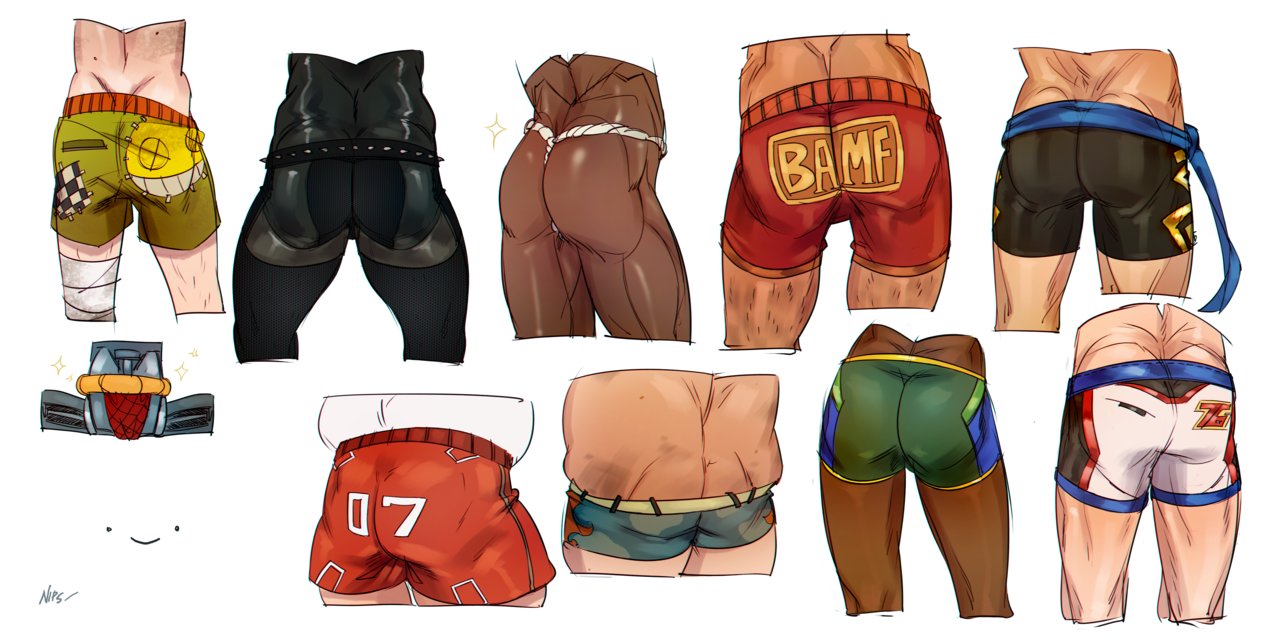
A great gallery of male bums from ohnips – http://ohnips.deviantart.com

The Chemsex Monologues

Chemsex kinda does what it says on the tin, mixes chemicals and sex. The drugs used can include mephedrone, crystal meth, cocaine and ketamine. Naturally, a whole load of stereotypes get flung at the people and groups who engage in these activities which is why The Chemsex Monologues are so important because they reveal the all too human side behind the prejudiced slurs and sensationalised stories. But before you read my review go book your tickets, it’s on tonight until Saturday at 9.45pm at the King’s Head Theatre in London.

Directed by Luke Davies, written by Patrick Cash and designed by Richard Desmond this was an intense hour-and-a-bit. Through a series of monologues we were introduced to various characters: the narrator, played by Richard Watkins, who falls for that hot boy on the scene with the great abs and the endless energy. Then Denholm Spurr brings that boy to life as Nameless, who gets to live his dream and meet a porn star. Meanwhile, Charly Flyte plays Cath, the ever faithful fag hag who’s getting a little fed up of her so-called fag. And Daniel, the wonderfully upbeat sexual health worker who loves handing out condoms and lube at saunas and brings red wine to a chemsex party rather than chems. All the cast were fantastic, they found the nuances of character and the expressive range to ensure each monologue was delivered as the multi-layered story it was written as. It wasn’t just someone stood up and talking for fifteen minutes instead we were drawn into worlds of sweaty bodies, M&S ready meals and chemically fuelled orgies. That all the monologues wove together to tell a larger, interlinked story and showed the same characters from different angles proved very satisfying but I shan’t spoil anything (but what I will say is that I’m very glad how things turned out with Swallows).

What also worked so well in this production as in Queers (also produced by Dragonflies Theatre), was that thread of emotion that meant the stories told were more than just anecdotes but had real heart. That Cath was so much more than a fag hag but also a loyal friend, a hardworking single mum and an amazing source of positivity. That Nameless was more than the boy in short shorts (and nothing else) but had so much love to give and poetry to share. That both the narrator and Daniel could see the cracks in the facade of this seemingly glamorous world and still be there to offer a hand. I’d also like to add that I sincerely hope Matthew Hodson is as nice in person as the characters he plays are – Daniel was a legend as was the character Hodson played in Queers (no pressure Matthew). However, the niceness of these characters just exacerbates the tragedy that runs throughout the play. There’s a moment when Daniel’s wondering to himself why so many people do mix chems and sex. He thinks back to a GCSE classics class and remembers that the word ecstasy comes from the Greek extasis: a displacement or removal from the proper place. “Why do so many gay men want to be outside themselves?” he wonders and I thought that was a very good question. Is it just for fun or is it that this so-called real world can be so endlessly hostile and unwelcoming, so shaming of minorities yet so quick to tokenise and ridicule them whilst remaining indifferent to their suffering. If this is one of the messages woven into The Chemsex Monologues then it’s a wake up call for so many of us to stop being so indifferent and unfriendly because people like Nameless, Daniel, Cath and whatever-the-narrator’s-actually-called are priceless and should be made to feel at home. Anyways, enough of that, go book your ticket.

ChemSexMs
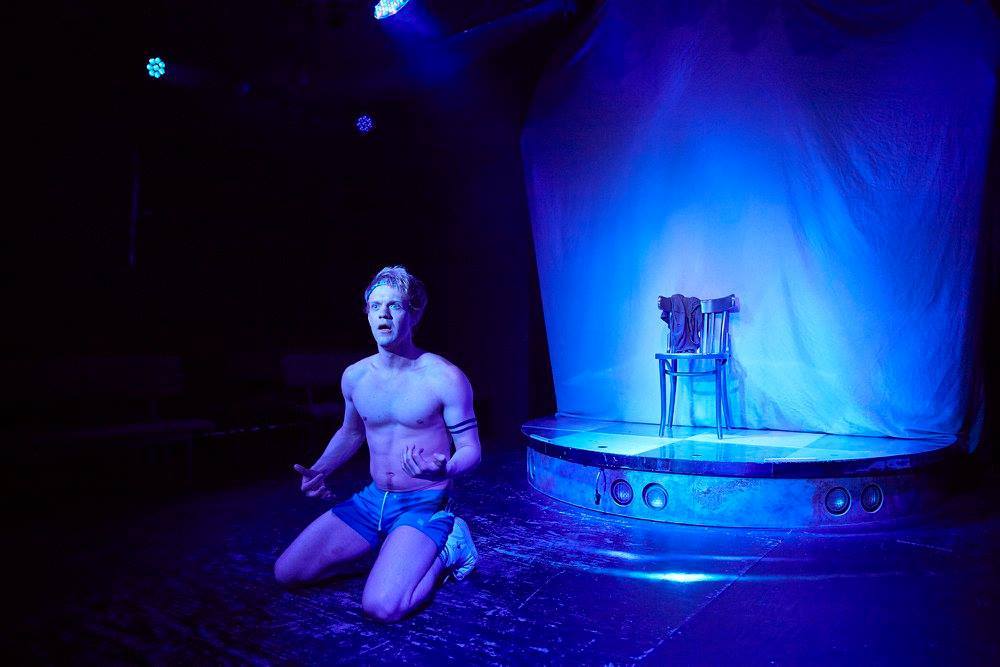
Denholm Spurr as Nameless in The Chemsex Monologues


Does The Thought Of Anal Sex Disgust You?

Not wanting to write about the Referendum again and inspired by fellow blogger Freakypeach’s great post on anal sex, I thought I’d put my head above the parapet and put a good word in for the bum. I want to write this because I know a lot of very nice people who do lots of nice things, however, when the topic of anal intercourse is breached their niceness slightly slips. Some make faces of disgust, some shudder, some don’t want to talk about it, some imply it’s just a little too deviant, whilst others brush it off as ‘unhygienic’ and then start talking about the weather. So consider this post my attempt to counter the stigma attached to anal sex and if, at the end of it, you’re still not convinced then please just remain quiet on the matter and support those friends of yours who want to engage in whatever consenting forms of sex they wish.

https://i0.wp.com/www.travelphotolenses.com/wp-content/uploads/2016/01/DavidBum_WM.png

“But it’s the bum!” I have heard many anti-anal-sex folk cry. “We poo out of it.” And their knowledge of human anatomy is spot on as, I imagine, is that of those who’ve had anal sex. And yes, whilst we do poo out our bums like many other things the bum can be cleaned. Douches, flannels, bidets, showerheads…there are an awful lot of ways to keep one’s back passage clean, advisable for all of us, not just those wishing to use our bottoms for sexual gratification. So yes, like the penis, vagina and any other part of the body, the bum can be dirty but it can also be clean. “But it’s poo, I mean, poo!” Yes, I heard you the first time and maybe this is just about your own lack of anal hygiene that you’re assuming everyone else suffers from. If you really can’t get over this hurdle then please just skip to the last paragraph.

So, with a nice and clean bum (or not, whatever works for you) we can now engage in some anal intercourse and guess what, it can be extremely pleasurable. People of all genders enjoy it and many folk even have prostate glands up their back passages and that can enhance the pleasure. To be quite honest there’s a world of experiences to be had up there whether you’re doing it with your fingers, a dildo, butt plug, vibrator or someone else (or a number of people for that matter). Of course, if you don’t want to have anal sex that’s absolutely fine and I hope no one ever makes you feel bad for not doing it but this post is about the people who do want to do it. Please don’t negate, trivialise, ridicule and/or discriminate against their desire to do whatever they like with their bottoms.

In essence, this boils down to stigma. As a male member of the queer community (although these facts don’t tell you whether I’ve had anal sex, want to or even fancy people of my own gender, that’s still none of your business) I’ve witnessed and experienced a certain sort of prejudice: if I got a quid every time I’ve had to watch ‘straight lads’ faux bumming each other because that’s the height of humour (and they’re too repressed and insecure about their sexualities to actually get down to it and shag their mates) I would be rich. Or every time people I like have warned me against the dangers and the lack of hygiene as if I haven’t considered these things for myself. Or people proclaiming “but we poo out the bum” as if that ends the debate. Or been told that what queer men do to each other is deviant. Or read about queer people being beaten up and killed for liking anal sex. The list goes on. If you have nothing positive to say about the joy that is anal sex then please say nothing. Please just support your friends in their adult decisions to have sex however they like. Here’s to the bum!

Oxford’s Vigil For Orlando

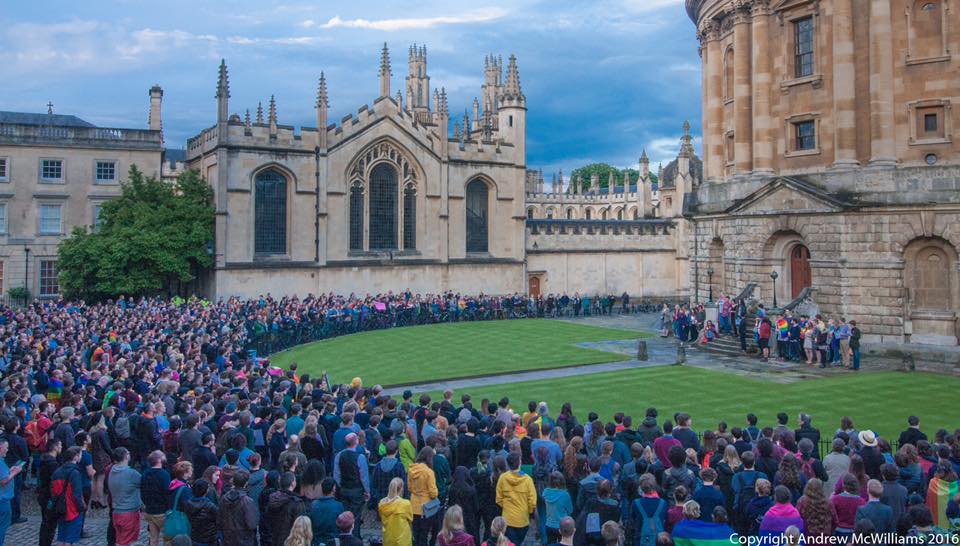
Oxford, England. Thunder boomed, lightning flashed and the rain came tumbling down. The English summer is never one for predictably and climate change just makes that all worse. A brief cycle home and I was drenched, my second shower for the day. It was five o’ clock in the afternoon and there was going to be a vigil in Radcliffe Square for the victims of the homophobic terrorist attack in Orlando. More thunder, more lightning, more rain. The Orlando attack was deeply distressing. It is sad to see people robbed of their lives by atrocious acts of violence and it is sad to see the queer community targeted simply because people want to be free to love whoever they wish. However, I’d seen photos of the vigil in Soho, London, and there had been thousands of people standing in silence, in tears and in solidarity, and this gave me hope.

A few hours later I put my waterproof jacket on, jumped back on my bike and head into town. But the jacket was unnecessary because the clouds were breaking and beyond, even at half past seven, the sun was shining. The view of the changing sky was staggering punctured by the sandstone spires of Oxford University. I arrived at Radcliffe Square where hundreds of people had gathered outside the Radcliffe Camera (the only building in Oxford’s skyline that looks more like a booby than a penis). So many people. Like any community, the queer one can be both brilliant and difficult. Great friendships can be forged but so can cliques. Certain groups come to identify themselves apart from others and ‘politics’ can arise. However, that evening we were gathered for something so much greater than ourselves, we were gathered in solidarity for the victims of Orlando and for queer people all over the world.

Vigil for OrlandoA quote from the facebook event reads as this: “LGBTQ people have long been and continue to be the victims of violence and hatred in the places where we try to seek safety. The fact that this attack happened on Latinx night, and that so many of the victims were Latinx reminds us that queer people of colour are disproportionately at risk of violent hate crimes. On Wednesday evening we will come together outside the Radcliffe Camera to remember the lives of the victims of this attack; we will mourn the violence that seeks to destroy our communities. There is no space at this vigil for Islamophobia or racism. We will not be silent in the face of hatred, we will stand together and support one another as we have always done in times of crisis.”

People gave speeches, the names of the victims were read out and a two-minute silence was held. Someone in front of me began to cry and someone next to them gave them a hug – I don’t think they knew each other. There were families there too and heterosexual people, distressed at the attack and supporting their queer friends. Then a beautifully voiced choir sang Seasons of Love from the musical Rent and Somewhere Over The Rainbow. What ace songs. It’s such a shame that it sometimes takes tragedy to bring us together but those moments of unity are exceptionally powerful, and even though I went by myself to the vigil I did not feel alone. Humans have always lived in difficult times and this remains true today. My hope is that the sentiment of belonging to something so much bigger than ourselves – a community of fighters, lovers, queers and allies that runs back throughout history and will run always into the future – will continue to bring us closer together in a time when division is not an option.

Queer People Need You!

Do you have to be Lesbian, Gay, Bi-Sexual, Transgender, Queer, Intersex or Asexual to care about LGBTQIA issues?

Answer: No!

Now here’s a blog on how to be a queer ally, however straight you are.

But first the word ‘queer’. Why am I using it? Many might know it as a term of offense used to denigrate LGBTQIA people and this is certainly true. As a word it simply means ‘strange, peculiar or eccentric’ from the Old High German twerh ‘oblique’ itself coming from the Proto-Indo-European root *terkw ‘to turn, twist, wind’. By the late 19th century it was being used to describe homosexual people in a pejorative fashion. Fortunately, by the 1980s the word was being reclaimed by queer activists and scholars. And now queer is used as an umbrella term for people who don’t identify as heterosexual and are not cisgender (i.e. do not identify with the sex they were designated at birth). Interestingly, if I tell you I’m queer I’m not actually telling you that I fancy people of the same gender, or of both genders, or identify as the opposite sex. No, those exceptionally personal issues (what I do in my bedroom and how I relate to my own body is my business, not yours!) are not revealed instead I am saying I challenge the binary nature of gender (i.e. male or female) and any essentialisation of people for their sexuality. Of course, the queer community is a large and diverse one and even though I use the term to refer to the LGBTQIA community in general many might not. Many will prefer LGBTQIA and many will use queer to mean something else. However, for the sake of this blog I am using it as the umbrella term described above.

Anyways, in case you missed it, that was lesson one on being a queer ally – understanding the lingo, very important. Lesson two is about using it and this will vary from person to person. I’ll use myself as an example. I’ve often had people try to define my sexuality for me – people would label me with terms I never used to describe myself sometimes because they wanted to understand me, pigeonhole me and/or bully me. When it comes to politics I consider myself queer – I challenge gender and sexuality norms and I advocate for the equality and rights of the LGBTQIA community  – but when it comes to my personal life, am I gay, bi-sexual, queer or something else? None of your business! So please don’t assume you know what my sexuality is because you don’t and don’t ask me either unless you feel it’s appropriate to. If you’re straight the likelihood is you won’t be asked to defend your sexual preferences on a regular basis or even reveal them so please stop asking me what I like to do with my sexual organs! Just be happy with the knowledge that I am Robert and I’m a queer activist. However, I’m just one example, and many people are bisexual, transgender, gay etc and want to be recognised as such – it’s your job to find out what that means to them and to use the appropriate terminology.

Lesson three is about stereotypes. We’ve all got a bunch of them in our heads be they the mincing queen, the butch lesbian, the greedy bisexual, the weird old gay guy etc, and without even thinking about it we project them at other people. One I often get is when I ask to be introduced to other queer men and people immediately assume it’s for sex, I must be one of those “promiscuous gays.” Unfortunately, much of the time I’m just wanting to meet more people from a community I consider myself part of, yet people are still quick to pigeonhole me. Even worse is that if I do ask to be introduced to a man because I’m attracted to him I then conform to the “promiscuous gay” stereotype and just confirm everyone’s prejudices. So I’m screwed either way (although, ironically, maybe not screwed in the way I might want to be!). So those stereotypes you’ve got, whatever they are, just drop them. Even if you think you see someone conforming to a stereotype, they really aren’t because they’re a human and they come with a rich and varied story of their own. It won’t help you or them if you reduce them to a few tokenistic gestures and even if they do like to gesture in that way that doesn’t make them the stereotype. And remember, the more we stereotype minority groups the easier it is to pigeonhole them, to margininalise them, to dehumanise them, to ignore them and to hurt them. So it’s hashtag time, #humansnotstereotypes.

There are so many more lessons to be learned, for all of us, but for now I’ll sign off this post with an ace song from gay twins Tegan and Sara because, surely, even if it’s for sex or just friendship we all would benefit from getting a little closer. And just in case you find the concept of learning lessons about queer people a little patronising then please just see this as a chance to learn more about an awesome bunch of people who can make awesome friends and allies, and who throw pretty epic house parties (oh, and one other thing, never use ‘gay’ as a pejorative adjective. Nope. Don’t want to hear it. Just never. Thanks).

It’s Called X-Men For A Reason

Can’t wait for X-Men Apocalypse? I can. And the reason’s in the name. Sure, X-People or X-Humans might not have the same ring to it but we’d get used to it after a while. So, in anticipation of the next Latif and Bechdel test failing reboot of this endless franchise I thought I’d re-cap why the previous two films were such let downs.

X-Men: First Class pretty much starts as it means to go on with Rose Byrne’s character, CIA agent Moira MacTaggert, stripping off to some black lingerie to join a throng of female strippers as they ululate for various men in suits. Was this film made by teenage boy stereotypes? January Jones plays Emma Frost who can turn into diamond, a fairly typical result of minor DNA mutation and also a great excuse to have her in underwear and virtually naked most of the time. And if that wasn’t enough female semi-nudity Jennifer Lawrence plays Mystique, who spends most of her time being naked and blue. So, yup, this is one of those superhero movies for the “lads” – the sort of lads who choke if they eat their popcorn too quickly and fantasise about being Magneto. Talking of whom, Michael Fassbender and James McAvoy seem to enjoy getting all the best lines but also playing two right twerps – seriously, young Xavier is such a sleezeball who seems to fail to understand when ‘no means no’ even though he can read minds (a skill he uses to hit on women with, which is just wrong).

The younger mutants don’t fare too well either. There’s a whole bunch of them but they’re mainly white and hetero. The one black mutant, Darwin, played by Edi Gathegi, has a life span of around five minutes before Kevin Bacon’s villian fills him with strange, red energy causing him to implode and shatter into many pieces as his mate Havoc watches through white crocodile tears. Of course, this happens after the only other mutant of colour, Angel, decides to defect and join the baddies’ team (she survives this film but dies off-screen before the next one). So what’s the moral here? That the goodies are white and heteronormative and if you deviate from this trope you’ll end up dead one way or the other.

It’s a similar story for Days of Future Past – McAvoy and Fassender hog all the screen time as they fight over Mystique whose DNA, it turns out, was used to build giant, mutant-killing robots called Sentinels. Yup, a woman is to blame for why all the mutants face extinction. Ellen Page appears but spends most of her time holding onto Wolverine’s head as he gets to do all the fighting. Although you do see his bum for a few seconds in a half-hearted attempt to get some objectification of the male body in the film. It doesn’t last long because all those “lads” are probably too busy snorting on their fizzy drinks and trying desperately to affirm their heterosexuality. The only good thing this film does is to eradicate X-Men: The Last Stand – yup, history literally gets rewritten and one of the worst X-Men movies vanishes. And this means the brilliant Jean Grey is back and no doubt she’ll leave Xavier’s ridiculous school for mutant brats to join a team of awesome queer, female and diversely coloured mutants. So maybe things are looking up for Apocalypse especially with Mystique asking us to “forget everything you think you know.” Does this include the white, cisgendered, heteronormative patriarchy?

Little Mix: Holding Hands Is A Political Act

Little Mix are at it again – using catchy pop songs to relay important political messages and this time it’s all about holding hands.

For some holding hands is a simple act done on a regular basis. A guy and a gal just holding hands as they reveal their love to the world and walk to Sainsbury’s to get some snacks. Inside the shop he might put his hand around her waist and even tap her bum. Outside, snacks now bought and waiting in their bag-for-life, they might hug and briefly lock lips. Do you do this? Are you in an opposite-sex relationship where you both feel comfortable to express your affection in public? Well, if so, count your fricking blessings, because for many people holding hands, let alone snogging, could land them with a punch in the face, at the very least.

It’s different for same-sex couples. The Sexual Offences Act of 1967 decriminalised homosexual acts in private between two men, both above the age of 21. That was only fifty years ago and it applied only to men. It was in 2000 that the age of consent for homosexual couples was reduced to 16 years, so only sixteen years ago that gay couples achieved parity with straights. And in the Sexual Offences Act of 2003 was sexual activity between more than two men no longer a criminal offence across the entirety of the UK – yup, fourteen years ago and a threesome+ would have been illegal. What this brief political history demonstrates is that the law can be absolutely ridiculous, focussed often not on upholding justice and equality but enforcing prejudice and discrimination. That’s nothing new but it’s worth repeating.

Of course, it’s one thing for laws to change, quite another for culture. And for this reason same-sex couples holding hands in public is still a political act. There’s still so much hostility and discrimination out there that it makes hand holding dangerous. And even if the passersby aren’t homophobes they may still offer a good stare just because it ‘fascinates’ them to see these exotic queer people demonstrating affection. Whereas, straight couples usually don’t get stared at or if they do it’s because they are swapping way too much saliva. So thank god for this song by the wonderful Little Mix, which speaks directly to this issue. The video below is for Secret Love Song Part 2 as Jason Derulo was involved in Part 1 and he (or his producers) ensured it was decidedly straighter than originally intended. So here’s the better more political version. Thanks for singing out Little Mix!