Calling All Queer Warriors

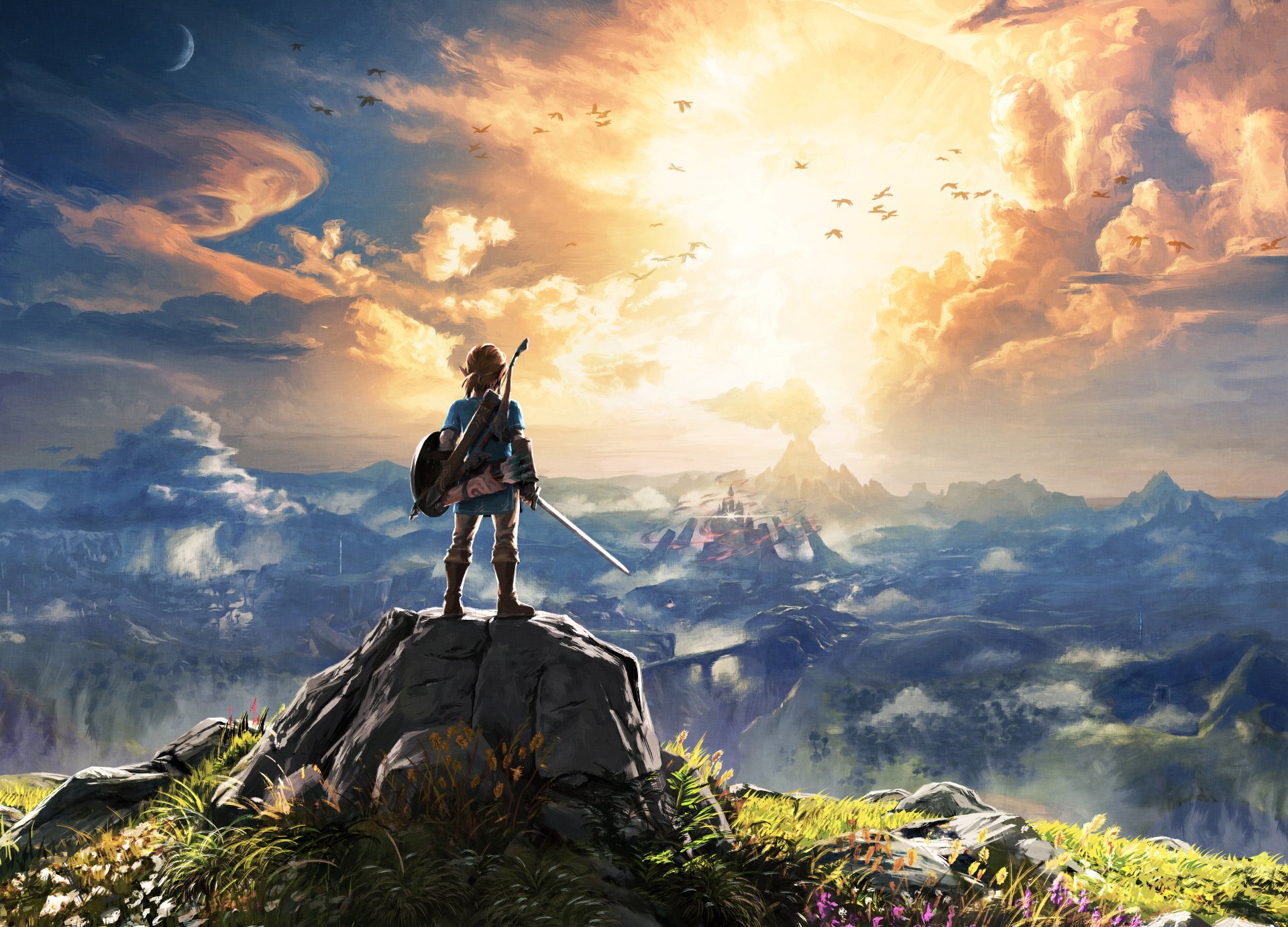
Last summer I spent a week in the Welsh countryside. I slept in a big yurt and under a tarp, I did some fasting and I met a bunch of great people. The landscape was beautiful – we were staying in a rewilding valley, meaning that nature was slowly reclaiming the space that would previously have been farmed (although some pesky sheep did manage to break in to do some casual grazing). The land was fantastical and it reminded me of Tolkien’s Middle-earth and also the world of the Legend of Zelda (an ace computer game I loved playing when I was younger). However, as I thought about these stories I realised they are often about straight men fighting orcs and/or rescuing Princesses. So, there, deep in the Welsh wilderness a new character was born: the Queer Warrior.

Skip forward to yesterday and I just ran my first ever Queer Warriors workshop at ActivateLDN – a whole day event to equip young people with the skills and resources to make social change. The subtitle for my session was Resourcing and Supporting the LGBTQIA+ Community and for 90 minutes that is what I and eleven others got up to. We unpacked the acronym and explored what the different letters mean. We also spoke about our own experiences of gender and sexuality. We then got a bit fictional and invented our own characters, giving them names, appearances, genders, sexualities, fears and much more. We confronted our characters with their fears and had them overcome them in novel ways. In essence, we honed our storytelling and communication skills which I think are vital for the queer community because we have so many stories to tell, whether we consider ourselves a member of the community or an ally of it. We also need to be able to combat the stereotyping and prejudice that tries to sideline the queer community, often inciting and resulting in violence. Our stories matter and the more empowered we feel to tell them then, hopefully, the more others will listen.

Another metaphor of the Queer Warrior workshop is the idea that the queer community offers a huge umbrella of protection to those underneath. Furthermore, all are invited to shelter from the storm whether you are lesbian, gay, bisexual, straight, asexual, queer, trans, cis, intersex, questioning, genderqueer, non-binary or curious. It is also an intersectional umbrella that recognises prejudice and discrimination affect different people in different ways including along lines of race, ability, mental health, class and religion. In essence, the one thing I would hate for the queer community to be is a clique. There are enough cliques out there (and, trust me, I’ve got a post or two on this for later) but in the world of the Queer Warrior all are invited – you don’t have to be x enough or more y or less z, you can just be you, whoever that is and you’ll be welcome. You don’t even have to be a Queer Warrior, that’s just a name I like!

If you’re interested in a Queer Warriors workshop please get in touch at hello@robertholtom.co.uk. And you can find out more about my work in storytelling and narrative skills here – www.robertholtom.co.uk

Video Game - The Legend Of Zelda: Breath Of The Wild Link Wallpaper
The Queer Warrior surveys their domain (actually it’s Link from the next Legend of Zelda game!)

Grieving With Regina Spektor

The Light, it’s an incredibly simple song by Regina Spektor. The lyrics are not complex, they tell of someone falling asleep into familiar dreams and then waking up to the light of morning. They talk of sunlight, stars, memories and the wisdom of the morning. Yet I find this song incredibly sad and whilst I do not know quite how to interpret the lyrics they wake in me a grief for things lost. “So many things I know,” sings Spektor, “But they don’t help me. Each day I open up my eyes and start again.” And there is something in that – the notion of waking up to another day and starting again. For that is something the aggrieved must do, wake up and live on, despite their loss.

My last surviving grandparent, my gran, died a few years ago. I remember getting a call in which I was told that she was close to dying. So I got on a train, headed north and stood at the side of her nursing home bed whilst she slipped away into death. It was a surreal moment especially as the woman I stood next to looked nothing like the woman I’d known as a kid, who would chase me up stairs, put plasters on my cuts and generally be as silly as I was. I remember the train journey home after the funeral, I was looking out the window with tears streaming down my face trying not to freak out the passenger next to me. I just didn’t get it, I just didn’t get why I was crying so much. That was until someone close to me said this: “when someone you love dies, it’s just sad.”

And it’s as simple as that. When you love someone they are wound around your heart, embedded in the fabric of your being. You might see them lots or only occasionally or not have seen them for years but memories persist, especially the ones that are born of love. When that person passes away the part of you that is them suddenly aches. All those memories you shared, as taken for granted as they may be, suddenly reverberate with loss and the knowledge that no new memories can be forged is heart breaking. And it breaks my heart that it took my gran passing away for me to remember quite how important she was in my life. Still, I am grateful for all those memories and the fantastic woman that was my gran. I don’t know how to interpret The Light by Regina Spektor but it awakes a sense of grief in me and for that I am glad. And like Regina those who have lost must wake up every morning over and over again until, perhaps, normality is returned to. But not the normality of old but a new normal in which love and loss are now intertwined. It’s often a very sad world we live in and to pretend otherwise I think is to deceive ourselves. I consider this song an honouring of grief, as devastating a process as it is I think it an important one. I speak only for myself and do not wish to make glib comments about ‘moving on’ or to dictate to anyone how they should experience their grief. Yet maybe something in what I say rings true and you recognise some of your own experiences in mine and maybe the song evokes something for you too. As I often do I’ll give Regina Spektor the last word.

How Do We Beat Trump?

It’s going to take anarchy to defeat Trump, real anarchy. And that begins with the absolute freedom of the individual. In previous posts I’ve written about how money makes the world go round and whilst it dictates all our financial relationships it also affects our personal lives as we come to view friendships and partnerships as cost benefit calculations. We quantify the unquantifiable and enumerate what others mean to us. We refer to this as social capital and there’s even natural capital when it comes to measuring the use of the environment. Jessie J was right, everything has a price. I’ve also posted on the concept of debt, which is crucial to our monetary system, and how key to any debtor-creditor relationship is the threat of violence. Just as the master can threaten the life of their slave, so the bank can threaten with fines, the boss with unemployment, the government with benefit cuts and so on. Crucial to debt is the nature of ownership – that a boss can own a company or a master can own a slave, that anything can be anyone’s property. It is clear Trump, with his billions, thrives in such a world but there are others. In anarchy, where the principle of absolute freedom of the individual is realised, no one would own and no one would be owned. Can you imagine that?

Given we live in a world ruled by money and private property it’s hard to imagine absolute freedom. It’s the opposite of ownership, a world with no masters and no slaves. We would all be free. And whilst anarchy is often misunderstood as chaos and disorder there is one vital thing it would have in common with the current world ‘order’ of capitalism. Namely, relationships. If the bonds of capitalism are dependent on money, debt, ownership and the threat of violence then, I imagine, the relationships of anarchy would be dependent on trust, choice, freedom and the possibility of ceaseless love. Jessie J said it first – if it’s not about the money then “we’ll pay them with love tonight.” And can you imagine that, an economy of love? It sounds like a utopian dream and it sounds great.

We’d need to agree on some core principles such as equality for all – not just equality for the rich, or the white, or the male, but equality for all. This would mean we’d all be fed, housed and watered, no one would go hungry whilst others gorged. There would be enough for everyone. We would all have access to meaning, work and leisure. Competition would be replaced with collaboration. We wouldn’t hoard, we would share. We would all be loved. And whilst we’d still bicker, fall out, shirk and fight, we’d do it with the goal of absolute freedom in sight and not whatever the goals of today are. We’d do all this in honour of the generations that have gone before, for the sake of the ones to come, in reverence for the world we live as part of and we’d do it for each other and ourselves. And we would do it not because someone was holding a gun to our head or because the rules say we have to or because our masters forced us to, no, we would do it out of choice. Can you imagine that, such choice, such responsibility, such freedom.

I will leave you with the words of a character in The Dispossessed, one of Ursula Le Guin’s award winning sci-fi classics that compares the planets of Urras and Anarres, the former a mix of capitalist and communist states and the latter a world of anarchism (I’ve slightly edited the quote so it is suitable to all genders, not just men). It is an amazing book that asks us to imagine a world without earning and deserving yet a world in which all are free. It’s hard to get your head around it but I have a sneaking suspicion so many of our hearts are already there. Because to beat Trump and the system of which he is a puppet, figurehead and ruthless profiteer, we must at least be able to imagine an alternative. I dare you.

A thin, small, middle-aged man beside Trepil began speaking, at first softly, in a voice hoarsened by the dust-cough, so that few of them heard him. He was a visiting delegate from a Southwest miners’ syndicate, not expected to speak on this matter. “…what [people] deserve,” he was saying. “For we each of us deserve everything, every luxury that was ever pulled in the tombs of the dead Kings, and we each of us deserve nothing, not a mouthful of bread in hunger. Have we not eaten while another starved? Will you punish us for that? Will you reward us for the virtue of starving whiles others ate? No [one] earns punishment, no [one] earns reward. Free your mind of the ideas of deserving, the idea of earning, and you will begin to be able to think.” They were of course Odo’s words from the Prison Letters, but spoken in the weak, hoarse voice they made a strange effect, as if the man were working them out word by word himself, as if they came from his one heart, slowly, with difficulty, as the water wells up slowly, slowly, from the desert sand.

The Trouble With Trans People, Is Cis People

The BBC’s recent documentary Transgender Kids: Who Knows Best? makes one thing abundantly clear – that the BBC does not know best when it comes to how trans kids should live their lives. Before I go on I want you to pause and reflect on how much you know about the experience of being transgender. Nope. Don’t read on, take a moment. I’ll put a paragraph break here to facilitate that process…

Ok, before you get irritated with me for being patronising that exercise was intended more for the people who know very little. Because I’ve had far too many conversations with people who are largely ignorant of trans experiences yet often attempt to speak for and over them. I believe the BBC’s documentary adds to this problem, which is why I want to challenge it. Yup, in essence, it’s another post in which I call bullshit.

“Here’s one of the things that’s lovely about being transgender, we mess with everyone’s theories of gender,” says Hershall Russell, a psychotherapist and activist, with a huge smile on his face. And it’s true. It was only in 2014 that I realised I was cisgendered: that I had always identified with the gender I was assigned at birth. I had never spent particularly long exploring my gender for myself and had always accepted that because a doctor assigned me male at birth, because they saw a penis between my legs, then I must be male. It’s 2017 now and I no longer consider myself cisgender and without going into the details the point I am making is that I have now taken the time to explore my gender for myself. This is something many of us will not do as we remain cisgendered and unquestioningly slot into the readymade binary of masculine and feminine that mainstream society offers us. Of course, as Russell says, everything gets messed with as soon as we realise it’s far less simple than the binary would have us believe and no one makes this more abundantly clear than transgender folk.

So, it’s tough to watch a BBC documentary in which much air time is given to Ken Zucker who, yes, was allegedly the world expert on gender dysphoria as the voiceover keeps reminding us but also an advocate of gender-reparative therapy, which encourages gender non-conforming kids to stop behaving in non-conforming manners. To put it bluntly (and somewhat crudely) this might involve stopping a boy from playing with Barbies or a girl wearing camo (and, once upon a time, may have involved electroshock therapy). There are a few problems here. Firstly, these are issues of gender expression and not gender identity, which the majority of trans activists would acknowledge are different, and don’t necessarily have anything to do with the experience of being transgender. Secondly, this is clearly a value-laden process that encourages/forces kids to conform so they can ‘fit-in’ because Zucker and the like think that will make them happier. However, the documentary gets even lighter on nuance at this point and given the lack of trans education available to the general public, can anyone really be expected to form a balanced opinion when the documentary isn’t even focussing on what’s in the title?

We need better documentaries than this and one reason for that is because I am bored of having the same conversations with ignorant cis folk. We have access to google, Ecosia and wikipedia – please use them. Everyone’s experience of gender is different including every transgender person – it is not up to anyone to make crass, reductive statements on behalf of anyone else. If you just can’t imagine what it might be like to be a different gender to the one you were assigned at birth, or if the thought of sex reassignment therapy ‘weirds’ you out, or if you do think we should all conform to the genders we were assigned at birth, then you’ve got lots of work to do. But I am afraid watching the latest BBC documentary isn’t going to be much help. The best place to start would be seeking out the lived experiences of trans folk by watching interviews or reading blogs. Begin to figure out how to empathise with lives that might be very different to your own and when it comes to gender, why not explore your own rather than dictating to others how they should explore and experience theirs. You could also watch the ace TV series Transparent.

F*cking Men And Passengers

One a play at the Vaults Theatre in London about the lives of ten gay men, the other a Hollywood romance about a decidedly straight couple falling in love as they zoom through outer space. The former is a great piece of writing accompanied by some wonderful acting and the latter is actually surprisingly good given that it’s a romance at zero gravity. However, as I watched these productions I felt I had seen them before albeit in different locations: men f*cking in Manchester for example and straight couples falling in love, well, pretty much everywhere. And it was the way the scripts unfolded that disturbed me the most (spoilers).

F*king Men introduced us to a world of brief encounters between men in dark parks, closeted professionals worried their careers would collapse if they out themselves, put upon sex workers and porn stars, HIV stigma and homophobia. It was also a world full of laughter, love and heart as different individuals and couples tried to make it work in a world where guys just seem to want to f*ck all the time. Meanwhile, in Passengers there’s only room for two straight people as Chris Pratt and J-Law discover they’ve woken up ninety years before the spaceship has reached its destination. As it turns out Pratt woke up first, then, a year later, woke up J-Law. Obviously, when she finds out she’s pretty mad but she ends up forgiving him and (straight) love conquers all, it even fixes a hole in the spaceship caused by a tiny asteroid.

And it’s funny isn’t it that the scripts of gay men’s stories don’t always end quite so happily as those of straight lovers. Now, I know I’m comparing an Off-West End show with a Hollywood blockbuster, it’s hardly like with like, but I’m concerned that so many of the shows I see about gay men are bittersweet or sometimes just bitter. It’s like each time we have to go through all the homophobia, shame, prejudice and self-loathing before we can get to asking what might happen next. Whereas there are so many scripts for straight folk that they can do as they please and often get happy endings to boot. Passengers ends in engagement after all (which, I appreciate, doesn’t necessarily guarantee happiness) whereas F*cking Men ends with a young sex worker being given extra pay with which he might just be able to afford the mortgage on a flat with a kitchen – but, unlike the hole in the ship, the shame, stigma and self-loathing haven’t gone away. So, dear LGBTQIA+ allies, it’s another call for help – please help us queer folk get happier endings (and not just of the orgasm variety), please help edit the societal scripts that force us into hiding and get us hurt, and please listen to and share our stories. Next year I want to see two lesbians stuck in outer space, or two trans men, or two intersex folk, and I don’t want that plea to sound like a joke because I’m not being funny. And if you’re not going to write the script then I will and in the meantime I’ll carry on enjoying F*cking Men – seriously, it’s great – get your tickets here. Trailer below most definitely NSFW.

This House: Comedy, Tragedy or Farce?

It’s the all-singing, all-dancing play about British politics in 1974 (well, there’s a little bit of singing and dancing but not much). The Labour government can barely keep it together and the Tories are about to turn to that infamous Iron Lady. Behind the scenes at Westminster the Whips are doing their best to keep their parties in shape and to keep their MPs voting for the right side. It’s harder than it sounds given that some MPs think it more important to fake their own deaths, to actually die, to stand by their principles and/to to defect to the other side. What ensues is simultaneously funny, tragic and farcical as history plays itself out and the Labour Party, the last bastion of the working classes, crumbles from within and without. It’s also far too close to home what with faffing over an EU referendum, Scottish devolution and austerity. I laughed but I also cried. Now, I could go on to write a review of the play but I basically wouldn’t be saying anything the guardian hasn’t already said, it really is great.

Instead, I want to briefly reference an interview with the writer of the play, James Graham. He says that “theatre is a democratic space. You still have to bring people together collectively into a room, you lock the doors, you turn the lights down and you thrash it out live, there and then.” I think this is a wonderfully idealistic view of what theatre can do but I think the irony is that if the theatre is a democratic space it’s got more in common with the sort of farcical democracy we witness in This House rather than any ideal version where we actually have equality. Firstly, you have to pay to get into the theatre, which immediately prioritises the space for the rich. Much like Britain with its private education, increasingly private healthcare and astronomical public transport fares. Not to mention the wealthy politicians who can afford houses and flats in London making it much easier to access the Houses of Parliament. The poor barely scrape by and settle for limited view seating if they’re lucky enough to get in. And, yes, our democracy is like being locked in a room as any vain attempt to escape – say by voting for the Lib Dems or Greens – is met by the Yale lock of the two-party system. And just like at the theatre we are forced to silently watch as those on stage, the politicians, play their own games at the expense of the nation. We’re the ones who get thrashed. Meanwhile, the script is off-limits to the audience apart from once in every five years when we’re tricked into believing we can edit it. And our rounds of applause are reserved for two specific moments, the interval and the end – not much wiggle room there.

I think Graham has a laudable view of the theatre as a genuine tool for change-making within society. But, in our time of relentless consumerism, I fear that theatre is gobbled up as greedily as television and cinema. We’re often going in to escape, not to deeply engage with our inner values, and will come out with much the same view of the world with which we went in. However, I do believe theatre can contribute to culture change but as the phrase suggests it is going to take more than one very good play to change the culture. It’s going to take lots of plays asides many other forms of cultural interaction. As Graham says “we should be getting together like we used to and talking about things.” I couldn’t agree more but I’m not sure that is necessarily going to happen in the imposed silence of a theatre’s auditorium.

Ending 2016 With Lorde

So, it’s the end of 2016, which at times seemed like a pretty apocalyptic year. Trump got in, Brexit got voted for, Syria still rages through war and not to mention the 6th mass extinction and resource depletion. It seems all those stories about humans conquering the world, about technology solving all our problems, about the forward trajectory of human civilisation, well, they turned out to be pretty shoddy stories with a shed load of plot flaws and inconsistencies. Fortunately, we’ve got Lorde, the singer songwriter, to offer us some guidance and it comes in her song Team.

The video and the lyrics go hand in hand as they paint a picture of faded grandeur. A city that’s slowly falling apart, the sort of place “you’ll never see on-screen, not very pretty,” – nothing like the Kardashians’ numerous houses. It’s a place where guys joust with baseball bats on motorbikes and grin chipped tooth smiles as the blood trickles down their noses. It’s an apocalyptic rite of passage as people get initiated into meaningless. “Living in ruins of a palace within my dreams” and that’s where we seem to be retreating these days, to inside our heads, far away from the dangers of the world, far away from the grim realities of climate change and refugee crises. Although even for Lorde that palace in her dreams is falling apart. It seems nowhere is safe anymore.

But maybe, in and amongst the debris, there’s hope. “I’m kind of over getting told to throw my hands up in the air, So there.” Maybe Lorde’s bored of being told to give up and surrender, maybe she does want meaning in a culture that’s regularly telling her nothing matters and we should all just give up. Sure, the old stories might not make sense – that everything would end happily ever after – but the people telling those stories were clearly quite deluded (and probably very privileged). What if it’s this naive belief in stories – that life has clear and well-structured beginnings, middles and ends, like fairy tales – that’s the problem. What if finding meaning in today’s world will take more than a simplistic story structure.

“And everyone’s competing for a love they won’t receive, ‘Cause what this palace wants is release.” Lorde’s right again, we are competing, constantly hoping this life of high consumerism, economic reductionism and endless comparison will give us meaning as we shove one another aside to get what we want and get happy trying. That seems so much to be the dominant story of now. But beyond the credit card transactions and the debt, like Lorde, we crave release – release from these highly conditioning bonds of consumer capitalism. Or maybe this is just an exceptionally self-indulgent blog written by a directionless yet privileged millenial – a bit like the sort of people Lorde sings about perhaps.

But, as self-indulgent as I can be, I do want to do something about the mess we’re in, even if the contribution is small and it still all ends in apocalypse (bearing in mind that countless people are already living and dying through various incarnations of hell on earth). And I think Lorde’s song holds the key. She offers us the answer for getting out of this debt-heavy, meaning-lite existence because “you know, we’re on each other’s team.” Somewhere beyond the narratives of endless competition there is a story of teamwork, a more meaningful story in which we join forces and learn to share. And it will be so much more than a story, it will be real human experiences of compassion and community. Better to rebuild ruins together than be forced to live in them alone.

Murdering Nostalgia With Agatha Christie And The BBC: The Witness For The Prosecution

The words ‘Agatha Christie murder mystery’ might conjure up images of posh people gathered together in a chintzy drawing-room sipping tea whilst some sleuth – normally moustache twirling Hercule Poirot or knitting Miss Marple – runs through all the red herrings before revealing whodunnit. These are cosy affairs where murder doesn’t involve much blood and good always conquers evil (normally after two or three deaths). A sepia toned view of the 1920s and 30s in Britain where the Empire is represented by a gruff colonel type who might drink a little too much and everyone else is having a whale of a time (apart from the corpses). All this changed last night when the BBC gave nostalgia a cup of poisoned tea and watched it die a grim and bloody death (spoilers ensue).

The writer Sarah Phelps adapted the Christie short story and play The Witness For The Prosecution for the BBC. It was a Christmas special except the only thing special about it was its relentless misery. The smiling, diamond encrusted mask of 1920s London was peeled back to reveal a world of grim austerity, inequality and chest infections. A world in which murder is a desperate and unhappy thing committed by desperate and unhappy people or, in this case, unapologetic sociopaths. The moral core of this story was a rotten one as people were left reeling from the effects of the First World War. Lovers, Romaine and Leonard Vole, were so scarred by the atrocities that they didn’t bat an eyelid when it came to committing and covering up the murder of rich heiress Emily French (played by Kim Cattrall  from Sex and the City!). John Mayhew, the coughing solicitor, guilt ridden after the death of his son in WWI, is spectacularly duped by the murderous couple (as are we the audience!) and proves key in letting them get away with it. He even gets Emily French’s maid hung for a murder she didn’t commit even though she did drown Ms French’s cat. Naturally, when he finds out what has happened he walks off into the sea. This adaptation reveals nostalgia to be a lie – the First World War was not great, wealth does not buy happiness and there’s often lots of blood when someone gets bashed on the head. Personally, I am glad the BBC killed nostalgia because it can be a dangerous thing.  Conniving politicians regularly use it to justify prejudice – if we vote Brexit we can take back control and Britain can be Britain again, free of foreigners and full of tea, oh, and wasn’t the Empire great despite all the slavery and oppression. Or we can banish the Muslims and make America great again. But the nostalgic myths they play on of bygone golden ages are just that – myths – half-hearted stories based on lies and a sprinkling of selective history. The past is no halcyon era of smiles and good fortunes it was often dangerous and unhappy.

However, it’s not just nostalgia that Phelps and the BBC killed it was also hope. The victims die painful and bloody deaths, the villains get away with it and the goodies get hung or drown themselves. There will be no saviour on a white horse or twiddling his little Belgian moustache. The closest we get to redemption is the brief smile on Mayhew’s face as he walks off into the sea, perhaps he has found peace after all, asides from the fact that he will soon be dead. However, there is one brilliant moment before killers Leonard and Romaine drive off into the sunset. Leonard mentions to his newly married wife that he’s worried she might get bored of him now that they’ve got all the money. “Don’t be tiresome, Leonard,” she replies curtly, leaving him with a worried look on his face – yup, the lives of murderous sociopaths might end richly ever after but I doubt they’ll end happily ever after. It seems this Yuletide adapation has a lot to teach us about our own times – 2016 was a hopeless year for the goodies and it really seems as though the baddies are going to get away with it. And I’m not sure 2017 is shaping up to be much better. Yet it is one thing to tear up our nostalgic views of the past but it is quite something else to offer any hint of a different future, a future in which there will not be wars, inequality will be no more and the villains might be held accountable. I feel this is beyond the scope of Sarah Phelps and the BBC, which is why we cannot let them get away with murder.

G.B.F. And How To Educate Straight Folks The Funny Way

G.B.F. is just a fabulous movie: think Mean Girls meets a less offensive American Pie meets gay. It’s a classic high school tale with an LGBT twist as two gay friends, Tanner and Brent, struggle with coming out the closet. However, when Tanner is inadvertently outed by the exclusively heterosexual GSA (Gay Straight Alliance) he suddenly finds himself the centre of an awful lot of unwanted attention because it turns out everyone is dying to get a G.B.F – Gay Best Friend. Cue an abundance of brutal put-downs that only rival prom queens can dish out and a whole panoply of reactions to Brent’s gayness from the straight community.

These reactions include outright homophobia as the chief jock physically assaults Tanner and calls him a fag. There’s also religiously fuelled homophobia as one of the Mormon characters threatens him with eternal damnation. Then there are more subtle forms of discrimination in which Tanner is simultaneously lauded for his newly revealed homosexuality but objectified for it as well. Like the latest handbag many of the well-meaning but ignorant straight characters want to hang out with Tanner for the kudos it will bring them. However, what’s brilliant about this movie is that it doesn’t buy into obvious stereotypes as pretty much all the characters, even the ‘blond bimbo’ prom queen, are revealed to have multiple sides to their personalities that allow them to revel in the stereotype they are portrayed as whilst transcending it.

Because that’s the thing about stereotypes, they’re a bunch of characteristics that oppressors observe in an oppressed group, which are then turned into the defining features of that group. The oppressed group is then made to feel shame for possessing those features and stigmatised for doing so. So the oppressors get to have their stereotyping cake and eat it: they choose which traits to objectify a group with and then use them to reduce and victimise the oppressed. Not only is the gay guy who likes musicals and skinny jeans reduced to his penchant for those things he is then bullied for liking those things. It’s an endless cycle fuelled by ignorance and prejudice. But G.B.F. calls bullshit and revels in the skinny jeans and pop songs whilst also presenting the gay protagonists as brave, emotional and erratic people, i.e. as humans not just as tokenised extras. Yet it does take an awful long time for some of the straight characters to figure this out which is why this movie is perfect for those of all sexualities. For the straight folks out there who only know closets as the things clothes are put in see this movie as a fabulous and funny education in not objectifying LGBT people and valuing them as people. And for the queer folk out there know that one day the straights will catch up and whilst educating them can be a boring and relentless task it is much funnier when done with this movie.

Matilda The Musical And Why We’re Never Growing Up

I was very lucky to be able to watch Matilda The Musical the other day. Not only did it get me in the festive mood but I also thought it was a brilliant production. Lots of dedicated kids and adults singing their hearts out and weaving a fantastic and rather timeless story. It’s based on the Roald Dahl book, which was made into an ace movie, and now it’s on in the West End. A few spoilers on the way but I am guessing you probably already know the story: Matilda, a young girl, is bullied by her horrible parents who try and stifle her blossoming genius by threatening to ban reading. Then off to school where she is bullied by the awful (but brilliant) headmistress Miss Trunchbull who has a habit of putting naughty children in Chokey – a small and spiky cage (yup, Roald Dahl was dark). However, Matilda meets Miss Honey, a passionate teacher who is very shy and timid, and very scared of Miss Trunchbull. Miss Honey spots Matilda’s genius and tries to help foster it as any good teacher should. The rest involves giant chocolate cakes, telekinesis and floating chalk. Like many stories about children this one is about growing up and there’s a great song that is all about doing just that (see video below, starts around 42 seconds in) but there’s one bit in particular that is just spot on.

The woman in the pink cardigan is Miss Honey and it’s funny that an adult should be singing about growing up. Her words are these: “When I grow up, I will be brave enough to fight the creatures that you have to fight beneath the bed each night to be a grown up.” And it takes a super-genius, telekinetic girl with an immense capacity for bravery to help Miss Honey grow up and fight the creatures that have been plaguing her often lonely and frightened life. Yet, it’s us adults who have a habit of telling children to just grow up whilst simultaneously telling them that things will be better once they have grown up. But I reckon us adults have an awful lot of growing up to do as well and really we’re using ‘adulthood’ as a facade to exercise undue authority. Yes, adults can be frightened, lonely, scared, mean and nasty too but until we can be honest about our vulnerability we’ll keep on missing those chances to grow up, chances that come from all directions, including (and maybe espeically) from those younger than us. Only then can the world we promise our children really come true.

Matilda also has another great point to make, which is that to make a difference you don’t have to do huge things, the little things you’re capable of can also make a huge difference. Whether it’s offering a helping hand or a listening ear or even just a smile, the little things do add up and they do have an impact. Matilda is also big on challenging authority and fighting injustice, and thanks to her ‘little’ actions, which are huge for others, so much change happens. So yes, 2016 has been quite a year and 2017 has an awful lot of work to do but I reckon it’ll be a much better year if, like Matilda, we do the little things we can and, together, help each other grow up.