“Luke, Use The Patriarchy…”

Light sabres, Tie Fighters and Jabba the Hutt – it’s all a bit phallocentric (willy orientated). Yup, the Star Wars films are just one of many Hollywood franchises that promote patriarchy and under-represent women. And the reason for this isn’t just that Hollywood is full of sexist men with limited imaginations but it’s also because George Lucas based the plot of the original trilogy on one of the most enduringly sexist story structures – the Hero’s Quest.

This story structure was explored and popularised by the mythologist Joseph Campbell in the mid 1900s. In brief, the quest is as follows: a young, male hero is called to action, he leaves home, learns new skills from (usually male) mentors, begins his quest, faces trials, proves his heroism, overcomes the dark father figure and eventually triumphs. Women tend to be tokenised as nasty seductresses in need of vanquishing or pretty trophies in need of saving. Campbell examined cultures around the world and throughout history and argued that this structure kept repeating itself hence the title of his book The Hero With A Thousand Faces – yup, 1000s of male heroes doing their phallocentric thing (probably with swords or giant laser sticks). Campbell adds in a bit of Jung, Freud and fairytale analysis – suggesting that these characters are manifestations of our psyche (as if we all have lots of little libidinous armed men running around our heads). He deigned the Hero’s Quest an archetypal story structure and called it a monomyth – a monolithic mythic structure because he’s it’s such a big deal.

George Lucas, good friends with Joseph Campbell, based the first three Star Wars films on this structure – Luke is the hero, Yoda is his mentor, his call to action is the death of his foster parents, he rescues a princess, he fights a lot and there’s even the dark father figure who is both vanquished and made peace with. Of course, the twist was that the princess turned out to be the hero’s sister, so instead of the girl Luke got a bit of fame (and a metallic right hand).

However, one thing both Lucas and Campbell appear to forget to do is contextualise the Hero’s Quest. Rather than just assume it is some universal manifestation of the human subconscious in story form what if it’s such a pervasive story because it’s constantly used to justify the patriarchal conventions that many societies depend on. So many societies are run by and for men and it seems quite natural that this phallocentric (it’s a great word) bent appears in their stories, novels, movies and TV programmes. As is ever the case if we want to understand the human condition – and in this case it’s the recurrence of masculinist story structures – we need to contextualise it.

But there may be hope. Watching the trailer for the next Star Wars film, The Force Awakens, reveals characters of colour and female characters having lead roles (as well as being able to use The Force). Maybe the all-white boys club is finally coming to an end and the patriarchy is going the way of Darth Vader and the Old Republic. Of course, there will always be those who want to grab their phalli light sabres and defend oppressive traditions but it’s time the next generation taught them a lesson. The lesson being that it’s not the princess who needs saving it’s the hero – saving from the clutches of an oppressive, violent and creatively dull (so dull it rewrites the same story over and over again, 1000 faces…more like 1000 yawns) patriarchal system.

MOLI – Missing Out & Loving It

We’ve all heard of FOMO – the Fear Of Missing Out – a phenomenon that’s on the rise given the proliferation of social media and all the ways we can discover what we’re not doing. There’s facebook to tell us about all the parties our friends are at but we’re not, twitter to point out all the job opportunities we’re letting slip by, tinder to remind us of all the people who aren’t that into us and instagram to show us all the beaches we are not sunbathing on. The sheer quantity of stuff we’re not doing can get overwhelming, indeed FOMO forms part of many mental health problems including anxiety and depression. Whilst this blog will not deal with these more severe and distressing instances of missing out I do want to offer a simple way of getting over mild cases of FOMO – it’s called MOLI – Missing Out & Loving It.

Suffering from FOMO can be a bit like the five stages of grief – first there’s denial: “I’m not going to Petra’s party but I’m fine with that, totally fine.” Then there’s anger: “Why didn’t Petra invite me to the party? What’s wrong with me, I’m fun aren’t I? Dam Petra and her party to hell!” Then bargaining, “Come on Petra, please invite me, come on Petra” (although this we’re more likely to say in our head rather than out loud). And depression: “I’m super sad that I’m not going to the party, *unhappy emoticon*”. And finally acceptance: “I’m not going to the party…oh…it’s already the next day and the party’s over.”

It’s a difficult process to go through and often very unpleasant. However, I reckon MOLI can be employed as a means of avoiding stages one through to four and getting straight to the final bit, acceptance. Basically, everyday there are literally billions of things we aren’t doing, there are jobs we’re not applying for, new friends we’re not making, partners we’re not falling in love with, parties we’re not going to etc but rather than let these things overwhelm us we can get a little Buddhist on it and just shrug it off – “Sure these things are happening but hey I’ll just enjoy the stuff I am doing (even if it’s just chilling at home watching Bake Off and eating a Mars Bar).”

Consumer culture thrives off making us dissatisfied with our lives – always a new top to buy, the latest trendy bar to drink at, a new clique to hang out with – whilst actively discouraging us from finding pleasure and meaning in the stuff we do do. We’re constantly encouraged to look away from what we’ve got towards what we don’t have. But we can reverse this – we can look closer to home at the friends we do hang out with, the events we do go to and the things we do treasure rather than constantly comparing ourselves to others. It’s a gentle habit we can foster by making a point of enjoying the stuff we’ve got. We can certainly acknowledge the stuff we’re not doing but most of the time that’s fine, why not just let it go screw itself and enjoy what’s happening here and now.

If MOLI doesn’t work one back up plan is IPS – It’s Probably Shit – sure they’re all smiling in the photos and it’s sunny but think of all the stuff you can’t see – Paul’s suffering from a terrible stomach bug and has actually spent most of the holiday in bed/on the loo, Jabrill and Maya have just had another relationship row, Archie’s been drinking way too much again and Marie’s wondering why she got in so much debt for this shoddy holiday anyway. They might be putting on some convincing fake smiles but It’s Probably Shit.

So yeah, I’m Missing Out but, guess what, I’m Loving It. Unlike this woman…

Little Mix And The Truth About Love

The song Black Magic by Little Mix promises so much: how to make your fella notice you more, how to get him on side and how to make him stay. “All the girls on the block knocking at my door,” sing the band, “Wanna know what it is make the boys want more.” This all female pop quartet is offering the answer to true love – the Holy Grail of relationships. When it comes to finding Mr Right Little Mix know exactly what to do, they possess the secret to finding true love. It can’t get much better than that right? Well, it doesn’t, because Little Mix’s sneaky satire reveals that hopeless romantics are hopeless for a reason and the chorus tells us exactly why.

For those seeking love Little Mix offer a “secret potion” and “a spell that can’t be broken”. All you need is one drop and a single sip will ensure the drinker falls madly in love with you. And the name of this recipe, well, it’s called Black Magic.

That’s right, magic. It turns out that magic is the only way to produce true love. Of course, Little Mix, being the great 21st satirist’s that they are, know magic doesn’t exist which means that the logical conclusion of this song is that true love doesn’t exist either. It’s a bleak take on romance and relationships as Little Mix deny the very existence of that thing so many people crave and seek. All those adverts, posters and films about romance and love are rendered terrible lies now that Little Mix have exposed the truth – love makes about as much sense as reading tea leaves.

We live in dark times – climate change, a Conservative government, Mission Impossible 5 – and now Little Mix have added yet another cloud to the storm. Their nihilism jars with the catchy nature of the song but the bitter truth is there in the words – true love is nothing but a fantasy. To quote a fellow cultural commentator, “this is the moment when Little Mix looked into the void and the void looked back.”

Equally Objectified

The video to Sigma’s latest long ft. Ella Henderson, Glitterball (see below), consists of a group of people going swimming in the sea. This isn’t your usual Brighton family holiday, no, it’s a group of conventionally good-looking and toned young people larking about. The women wear bikinis, squeeze each other’s bums, hug frequently, and show a lot of cleavage, whilst the guys, well the guys tend to be wearing quite a lot of clothes with perhaps the odd flash of six-pack in the background. So why, given that there are a plethora of semi-naked bodies and a roughly even gender split in the video, couldn’t they have objectified the men as much as the women?

We’ve been conditioned to view women’s bodies in a certain way on-screen whilst men’s bodies are often treated very differently. Blurred Lines, the infamous Robin Thicke song, epitomised this attitude with a terribly misogynistic and sexist video (and that’s saying nothing about the lyrics). However, it’s interesting to watch a parody version of the video (see below) in which the female models are replaced by men in g-strings and tiny underwear. It seems there’s something a little ridiculous about men having little stop signs stuck to their bottoms and dancing so provocatively, whilst it was presented as almost ‘normal’ for women to be treated and viewed in this way in the original video. At least that’s what I think we’re being made to believe – that treating women like this is OK and when it’s guys it’s just quite silly and comic.

The feminist film critique Laura Mulvey calls this phenomenon the male gaze – the way in which visual arts are structured around a masculine viewer. A guy (usually white, cisgendered and heterosexual) isn’t going to want to see a video of a man rubbing sun tan lotion into his six-pack or bending over to pick up his beach towel, no, he wants women to do that, or at least that is what the relentlessly objectifying world of music videos and advertising tells us. Equality is a long way off and sexism towards women is just part of the culture.

So there’s a long way to go until men and women are equally objectified in music videos (come on guys, time we stripped off and started massaging ourselves provocatively) and even further still until people aren’t objectified at all (because people are people, not just bodies). Until then here’s Marina and The Diamonds evening the scales a little…

The Slightly Sexist Song Of The Sea

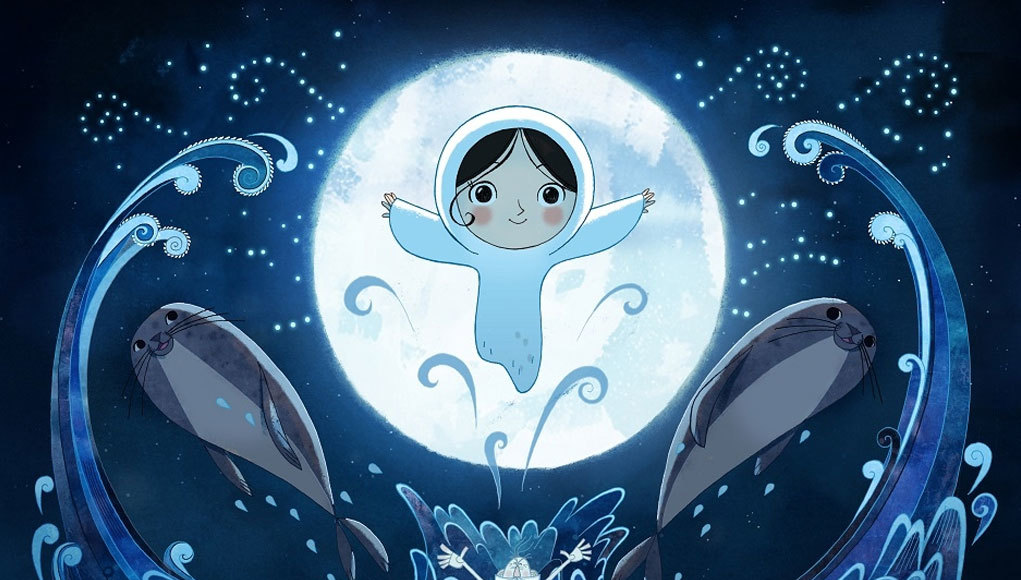
The Song of the Sea is a new animated film for children and adults. It tells the tale of Ben and his younger sister Saoirse. It’s beautifully animated and based on folkloric Irish tales of Selkies – mythological creatures that are seals in water and shed their skins to become humans on land. Unbeknownst to Ben his mother was a Selkie and so is his little sister. It is a stunning story about grief, growing up and family. However, the more I watched it the more I realised that I had seen this story many, many times before and it’s one that has been told over and over again – it’s the one all about men.
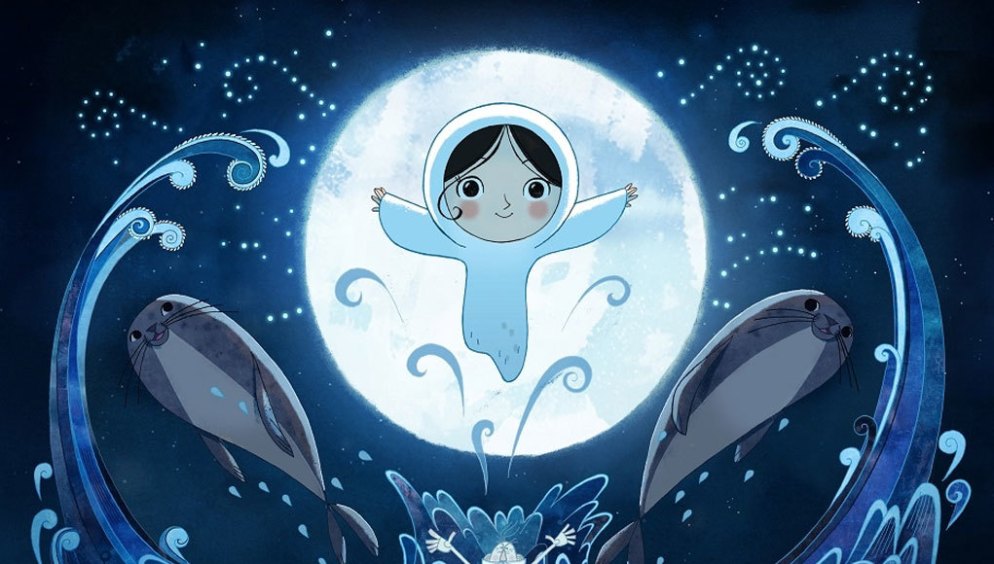
Song of the Sea

I’ll start with a brief plot synopsis (spoilers): Ben lives in a lighthouse with his pregnant mum and dad. The mum gives Ben a magic shell and then goes missing into the sea leaving behind Saoirse, his little sister. Six years later and the dad’s still pretty unhappy and Saoirse still hasn’t said a word. Meanwhile, Saoirse discovers a magic coat left behind by her mum which lets her transform into a seal. She goes swimming for a bit and that’s when we learn she’s a Selkie. Unfortunately, nasty granny arrives to take Ben and Saoirse back to the city. Ben doesn’t really like Saoirse and is annoyed when she follows him as he escapes from his granny’s house. Some magical fairies inform the siblings that Saoirse’s a Selkie and must sing the Song of the Sea to free all the trapped spirits – it’s a shame she doesn’t speak. Unfortunately she gets kidnapped by a witch, Macha, who bottles up people’s feelings (literally) thereby turning them to stone. Her reason is that she couldn’t handle her son (a giant) being so sad when his wife died so she bottled up his grief and turned him into a giant cliff (the dad is basically the giant and the gran is Macha). Ben rescues his sister who starts playing the magic shell which causes all the bottles to break. Macha, part stone, is overwhelmed by her feelings but relents and helps transport Ben and Saoirse back home. There, Saoirse finally speaks and she sings a magic Selkie song that frees all the ancient spirits so they can finally return to their magical land far away. The mum reappears to take Saoirse away with her but instead Saoirse relinquishes her Selkie abilities so she can stay with her dad and brother. Everyone lives happily ever after, even the nasty gran who shacks up with the old ferry driver.

It’s a nice story full of metaphors, folklore and fantasy but there are some all too familiar and all too sexist tropes. To start with there aren’t many female characters – there’s the mum who vanishes within minutes; the gran who is the typical crone character – old, haggard and someone no one would ever want to grow up to become and Macha – the evil villain who is basically an even worse version of the gran. The main female character is Saoirse.

Firstly, she is voiceless, she literally has no voice for most of the film, which means Ben gets to do all the talking. Whilst she is often portrayed as more intelligent than her wilful, older brother, who drags her around on a dog’s lead for quite a bit of the film, she is still forced to follow him, even when she knows he’s going in the wrong direction. He becomes less ambivalent towards her once he’s learnt she’s a Selkie. As the film progresses she becomes weaker and weaker and ends up getting kidnapped. This inspires Ben to take even more action and battle the film’s antagonist. It seems a little bit as if Saoirse only has worth as a character once her brother has realised she’s useful – i.e. has magic singing abilities.  He’s the one that puts the magic shell to her lips so she can play it and break all of Macha’s magic bottles. It’s almost as if little girls are being told to tolerate the whims and bullying behaviours of their elder brothers until their brothers realise they have voice and worth, and only then can they become somewhat empowered.

After her rescue Saoirse is even weaker meaning it is Ben  that must overcome his fear of swimming and dive deep to uncover Saoirse’s thrown away Selkie suit. So despite the fact that the sea is Saorise’s element and true home it still ends up being all about Ben and his newfound abilities. Meanwhile, Saoirse’s singing and shell playing skills appear somewhat arbitrary given that she just inherited them and they’re basically magical.  Saoirse’s voicelessness also means that apart from one brief chat with her mum right at the end the film categorically fails the Bechdel test. FInally, when Saoirse does eventually speak her first word isn’t hello or help or patriarchy, no, it’s Ben.

There are some nice messages in the film – namely that stories are very important, be they ones that run in the family or older more mythical stories that came long before the stories of the Bible. The film reminds us that our culture suffers when we lose our stories but it’s just a shame that the film’s own story tells us that men are the active ones whilst women sit around either trying to muck everything up (the gran and Macha) or are basically just there to sing at men’s command. The film also has something to say about men’s inability to emote, namely because the father remains confused and grief-stricken long after the disappearance of his wife but even this is implicitly traced back to his overprotective mother (the nasty gran) who constantly tells him she knows what’s best and lives a repressed, devout Christian life. This story is reflected in the mythical one with Macha literally turning her giant son to stone so he would no longer have to suffer the grief of the loss of his wife – if only women would stop meddling seems to be the point here. Other male characters include the comic ferry driver, the faeries (we see a few female faeries in the background at the end but none are given a voice) and the Great Seanachai – a mythical storyteller who remembers all the old stories and is thus a font of cultural knowledge and wisdom, oh, and he’s a man.

So, fifteen years into the 21st century and what do we get – another mythic adventure about boys and men saving the day. It’s nice that Saoirse sings her special song at the end and frees all the spirits but this is basically the same as Pepper Potts donning Iron Man’s suit at the end of Iron Man 3 in order to blast the main baddy to smithereens – it’s great a woman saves the day but it’s all a bit last-minute and tokenistic. Why not a whole film about an interesting and three-dimensional female character doing awesome and exciting things?

But that’s just it, it’s not that this film is a sexist travesty and should be banned, no, it’s just that this film follows in a long, long line of films and stories just like it – ones that portray men as the active and characterful heroes whilst women are painted as passive and regularly in need of rescue. The Song of the Sea slots so easily into this pervasive cultural narrative when it had so much scope to start rewriting it – why couldn’t it be Benjamina running off in search of her fey little Selkie brother? Why couldn’t the father have vanished right at the start? And why are there no characters of colour, or trans and queer characters partaking in the action, surely ancient Irish folklore isn’t just for white, heterosexual cisgendered people? The film has been described as a “timeless delight for all ages”- it’s only timeless because this masculinist and sexist narrative is so seemingly unkillable. It’s great to be inspired by old stories but it’s time we started telling some new ones, fit for the 21st century.

Update on 11th December 2024: I wrote this post over nine years ago and I’m grateful that so many people are still reading it. I’m also grateful to the folks who take the time to write comments. However, I’m not grateful when people try to insult me in their comments. For the time being I’m approving people’s comments but this may well change if/when I get tired of being insulted. You are welcome to disagree with my post and you are welcome to comment thoughtfully and respectfully. There are other comments which contain prejudice – these immediately get deleted. I’m sure I’ll write a post about this whole experience soon.
Would You Like To Flake With That?

The Urban Dictionary tells us that flaking (v.) means to bail out of something at the last-minute whilst a flake (n.) is an unreliable person; someone who agrees to do something, but never follows through. Now, I wasn’t around in olden days but I’ve got a hunch that flaking as an activity is on the rise and the number of flakes in society is increasing. This is partly due to the arbitrary increase in population size (so the number of flakes may well grow proportionately with that) but also because consumer culture encourages flaking whilst modern technology makes it far easier. So here’s a quick blog on the rise of flaking and why I certainly don’t want a flake with that.A Flake

To be happy in consumer society you’ve always got to buy the next big thing, keep on trend and own more stuff. There’s never any chance just to slow down and enjoy what you’ve got because if everyone slowed down then the economy would stop growing. This attitude of cost-benefit analysis and accumulation easily percolates into our social lives as we weigh up which event will most likely maximise our happiness. There’s so much to do so rather than commit to one thing we hold out on the off-chance something better comes up. This means we flake a lot. And it’s even easier to flake now we’ve got smartphones – all we need is a weak wifi signal to let our friend now that we’ve decided not to see them because something else has come up or, y’know, we just couldn’t be bothered. Back in the days of telephones-we-couldn’t-put-in-our-pockets flaking on an event was probably a bigger deal because more effort had to be put into arranging to meet in a certain place at a certain time, but now it just takes the silent clicks of a few touchscreen buttons.

Now, I get that in this world of shrinking economics, laptops and internet that everyone is very busy. We’re all so busy getting caught up in a flailing capitalist consumer economy but why should friendships have to suffer for that? Why pretend to commit to something that you probably won’t turn up to, why not just be honest? Of course, honesty is difficult and we fear upsetting people by telling them we’re not too fussed about hanging out with them which is why we try to smooth the situation with some half-hearted apology – “Oh I’m so sorry I didn’t make it, I’ve just been so busy and blah blah blah.”

Sometimes the apology is worse than the actual act of flaking itself because what it seems to say is this: hey, so I’m aware I flaked on you and I feel bad about it so can you stop me feeling bad by accepting this quasi-apology. But what about the person who has been flaked on, aren’t they thinking something like this: hey, so I’m actually somewhat upset that you flaked on me, it kinda suggests you didn’t give me much of a second thought, but now you want me to make you feel better by accepting your apology…well, I can’t fricking have coffee with your apology.

I think the simplest way to get around this increasing social problem is to create two different types of social event – the ‘event-event’ and the ‘flake-event’ – the former is one to which both (or all) parties are committed and will make as much of an effort as possible to attend (save ill-health, unforeseen grave circumstances etc) whilst the second is one that neither party will get too excited about because one or both may well decide to do something else or just decide to do nothing. The ‘event-event’ and ‘flake-event’ categories at least acknowledge that flaking is a common activity and helps us to cope with it better, rather than the endless half-apologies. Of course, we could just try to make more of an effort. Here’s comedian Aziz Ansari summing up flaking very nicely…

No More Mr Nice Guy

You probably know one of the really Nice Guys – he’ll be male (obviously), white, heterosexual and, y’know, he’ll be really nice. He’s probably passably attractive (by patriarchal standards) and knows how to compliment a woman in a way that doesn’t completely objectify her. He’ll know just enough about feminism to know that it’s about treating women well, to a point. He’s probably quite popular, with lots of straight, white, men friends, who like competitive sports and were most likely privately educated. He’ll be charming, polite and a gentlemen. In essence he’s a really Nice Guy. The trouble is…he’s not…and here’s why.

There are many Nice Guys out there who think they get feminism, they’ll say nice things to women that aren’t too objectionable, they’ll offer a helping hand (if appropriate) and they’ll listen to their female friends emote. But they have ulterior motives – they’re nice because they want to sleep with the women they think they are being nice to. They realise it’s not OK to be the Manly Man stereotype anymore (i.e. overlty sexist and aggressive, James Bond for example) so they resort to more underhand tactics instead. They get annoyed when women don’t choose them and pick someone else (who might be way less ‘nice’) as if women have some sort of obligation to sleep with them simply because they haven’t treated them badly. They use Tinder to get laid but won’t admit that’s what they’re using it for (“yeah, I, like, er, really want a relationship…(for 30 minutes)” – more like 30 seconds). Basically they don’t just don’t have the guts to ask women to engage in adult, consenting, responsible sex – precisely because they stereotype all women as needy, insecure and in need of being lied to about the possibility of a family, and because they themselves are incapable of having adult, consenting, responsible sex (for them it’s some sort of competition or game).

Nice Guys don’t like self-professed female feminists because they’re too shouty and angry, and they don’t shave their legs and aren’t ‘conventionally’ attractive. They’ll casually undermine and mock their girlfriend when she tries to make a feminist point, as if we’ve reached a post-feminist age where we’re all equal and women should stop whining. They might even go so far as to deny the existence of the patriarchy. They’ll also be somewhat homophobic, transphobic and racist. And why are they all these things? Because white, straight men are the most overly represented group in society. A Nice Guy will never have had to question their existence or worth because they are regularly made to feel entitled and worthy based on their arbitrary skin colour, possession of a penis and sexual inclination towards the opposite gender. Basically they’ve never had to learn how to empathise and think they’re the dogs bollocks (the sort of phrase a Nice Guy might use).

The litmus test for a Nice Guy is the fact they think they’re a Nice Guy – it’s like the Cool Kids, anyone who refers to themselves as one of the Cool Kids just isn’t (partly for using the phrase Cool Kids) – and any self-professed Nice Guy just isn’t one because they’re clearly insecure about all the nasty thoughts they have and things they do. They basically think they’re owed something because they’re not abusive, aggressive and overtly sexist. They’re deluded. The protagonist of that awful film 500 Days of Summer is the classic example of a Nice Guy or what should really be referred to as an ANNG – Actually-Nasty-Nice-Guy.

So, Nice Guys, what to do? Read up on feminism, start respecting people as people – not as things you could have sex with at some point soon – and practice the act of empathy (keep practising, you can get better in time). In the meantime know that you are not really a Nice Guy you are actually what Lily Allen calls a Wanker, you can listen to her song below (TW: homophobia – she equates Actually-Nasty-Nice-Guys with being closeted homosexuals. Sexism – towards Nice Guys, obviously). Oh, and here’s a great BuzzFeed article on Nice Guys.

Is It Just A Cake?

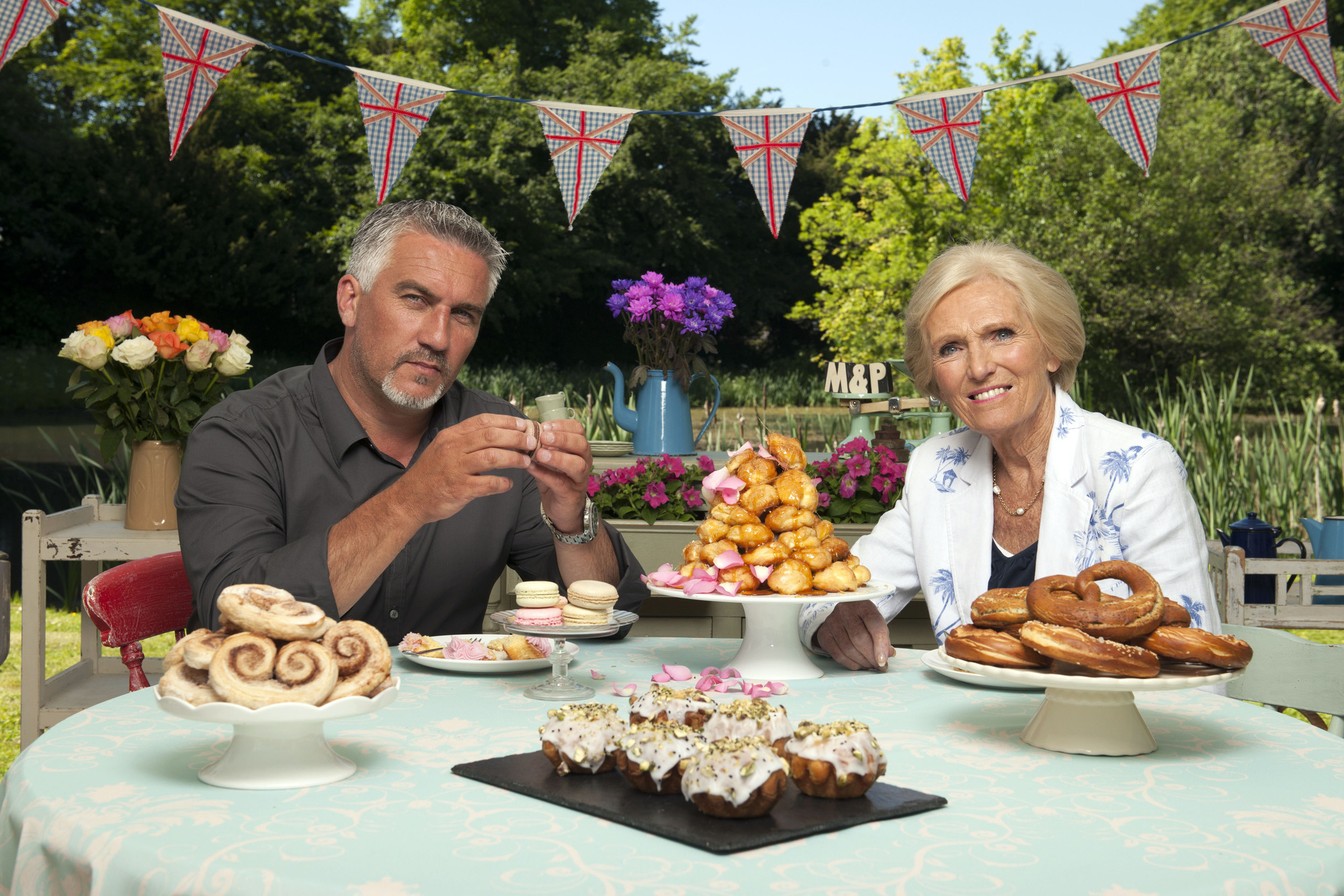
There’s something amiss in the Bake Off tent, not quite rotten but still not quite right. It’s visible in the eyes of the contestants as they wait nervously for Mary and Paul to judge their baking. It’s in the wringing of hands, the stressful sighs and the general air of fear. It bubbled to the surface most overtly when, in episode one, one of the contestant’s Black Forest gateaux kind of just fell apart in an oozing, chocolately mess. Minutes from the deadline she began to cry and comedian Sue Perkins came to console her saying “it’s just a cake” to which she replied “it’s not just a cake.” If this is indeed the case and it is not just a cake then that begs the question what exactly is it?

As the Court of Denmark in the play Hamlet comes to act as a metaphor for the entire body politic of the country, symbolic perhaps also of Elizabethan England, then perhaps there are ways in which the Bake Off tent is a metaphor for our own society. From birth onwards we are relentlessly judged – our parents/guardians/carers tell us how and how not to behave, our teachers deem us worthy by giving us marks and grades, professors at university do the same except the marks tend to be lower, our bosses tell us if we’re good or not via the medium of money (if we’re lucky enough to have a paid job), mainstream advertising likes to remind us that we’re not good enough, newspapers like to scapegoat and blame whole groups of people and even our friends and loved ones will often be there to remind us what we could be doing better.

It is from this societal context of relentless comparison and competition that the twelve bakers arrive at the tent. Judging only what I’ve been shown in the first hour-long episode it seems like lots of them have something to prove – they want to prove they’re good at baking, really good. This could be a healthy, competitive attitude but when one contestant explained that her mum had told her not to bother coming home if she got kicked out in the first round one does start to wonder. Furthermore, as Paul Hollywood reminds us, the contestants, whilst great bakers, are at “the bottom of pack of great bakers”. It’s so hard to be the best especially when Hollywood and Mary Berry seem to have a monopoly on bestness anyway, it’s an ever elusive goal that we can be goaded into pursuing even though we’ll never attain it. It’s basically the mantra of our society – work harder, be better, work harder still and one day you might be happy (oh, and don’t complain whilst you’re at it, all that stiff upper lip and ‘keep calm and carry on’ sort of thing).

And then there are the facial expressions. The grimaces of fear and anxiety as Berry considers the flavour and Hollywood judges the sogginess of the bottom juxtaposed with the sighs of relief when the baked goods have been judged worthy. It seems like one major ingredient in the Bake Off tent is desperation as contestants try to fill the holes in their hearts with nods of approval from Mary Berry and a delicious assortment of baked goods. The idea that these people may already be more than enough just as they are and don’t need to prove anything to anyone seems an alien concept when it all comes down to being the best.

At the end of the episode one of the contestants (the one whose cake collapsed) admits that she feels like she’s “been initiated into truly what Bake Off means”. What, then, is that? Is it to strive constantly to impress others hoping that their admiration will yield a sense of worthiness? Is it to chastise oneself for every soggy bottom and forget to celebrate every other solid bottom? Is it to whip guilt and despair with a tantalising sprinkle of unattainable hope all served on a dish of insecurity? If so it sure makes for compelling viewing!

Great British Bake Off
Judging you worthy: Bake Off judges Paul Hollywood and Mary Berry

Absolutely Mad Max

The situation is bleak: humans have all but bled the world dry of fossil fuels. Oil has become exceptionally scarce and a prize over which violent factions will go to war. These factions take the form of vast, sprawling patriarchies built on bizarre cults and rituals. Selfish warlords rule over their subjects with force and violence and send their armies to war to fight for the earth’s dwindling resources.

In one of the kingdoms water, also scarce, has been privatised and is occasionally supplied to the population at the whims of the greedy tyrant. He gives them just enough so they can live and keep on serving him whilst taking extra for himself. Unless you’re the ruler life is one of gruelling servitude as people work at machines all day with little hope of remuneration. People are pale and unhappy due to lack of exposure to the sun. Desperation and SAD are rife.

The highways are dangerous places to be, full of gas chugging automobiles that run people down for sport. Deaths on the road have become so normalised that they’re just a part of everyday life, to be expected. People make a point of ignoring the speed limit. Young men, obsessed with cars, go joy riding and happily die in the pursuit of the ultimate thrill.

But in this world there is hope and that hope is women. Women will fight for their place at the table of power, in fact, women will fight to overthrow the table of power and build a new and better table – one at which all can sit – whatever creed, colour, race, religion, sexuality or gender. For now though things are not so equal. When a woman dares to speak out she will be hunted, ridiculed and oppressed by a twittering mass of overgrown men-children. These men consider women mere property and subject them to humiliating acts of objectification such as wet t-shirt competitions (even in the desert).

So, enough about Conservative led Britain, let’s talk about the exceptionally intense and adrenalin filled movie Mad Max: Fury Road. You can watch the harrowing trailer below…

Corbyn: In The Box To The Left

Corbynmania is exciting stuff. It seems there’s actually debate to be had when it comes to politics. People are discussing things rather than just accepting the Tories’ line of austerity, tax breaks for the rich and cuts, as if these are immutable truths. Jeremy Corbyn, front-runner for the leadership of the Labour Party, is leading the debate and offering an alternative politics – one of hope. But it was Beyoncé who told her ex to put everything he owns in the box to the left and my concern is that Jeremy Corbyn is being resigned to that very same box.

One thing Corbynmania proves is that the Conservative victory at the last general election does not spell the end of politics. We are not consigned to a future of corporate giants crushing communities, endlessly bailing out big banks and the poor getting poorer until climate change melts us all, no, it seems politics could still shift leftwards – back to a bigger state that dares to close tax loopholes, challenge corporatocracy and reduce inequality.

But this isn’t enough (even if it happens). If we really want to change society for the best then we must recognise that some of the big issues we face are so much bigger than left and right-wing politics. For example, to address climate change we cannot just cut carbon emissions and green consumer capitalism because woven into the fabric of our political-economic system is an inherent flaw: it depends on endless economic growth on a planet that offers finite resources. As the name suggests a growth based economy has to keep growing to function but, as we saw with the banks, when things do get too big they can fail, except rather than just a financial system collapsing, rampant globalised capitalism threatens the very earth itself (imagine an impossible hamster getting bigger and bigger until it eats the whole world).

Whether you go rightwards to a smaller state and bigger corporations, or leftwards to a bigger state and smaller corporations, neither approach will tackle this underlying threat because both take capitalism at face value – they just have different ways of dealing with its problems (Labour tend to be nicer to the poor whilst the Tories like to ignore them). Corbyn hints at transcending party politics when he talks of distributing power beyond the state to include communities as well and certainly a push towards peace over arms proliferation could recognise that one of the many reasons we go to war is to ensure our economies can keep growing (the arms industry being a great example of the illogics of growth based economics because so much of the stuff it makes gets destroyed but this is a good thing for the economy because it means more stuff can be built to replace the old).

Corbynmania is exciting stuff. He’s diversifying and opening the debate, putting the demos back in democracy, but that doesn’t mean he’s answering all the questions which is why we’ve still got to keep asking them. We can’t let him get trapped in the box to the left because questioning our tired, destructive political-economic system in its entirety means transcending the left and right debate. Having enjoyed Beyoncé I’ll now leave you with a nice video of that impossible hamster I mentioned earlier…