Queer People Need You!

Do you have to be Lesbian, Gay, Bi-Sexual, Transgender, Queer, Intersex or Asexual to care about LGBTQIA issues?

Answer: No!

Now here’s a blog on how to be a queer ally, however straight you are.

But first the word ‘queer’. Why am I using it? Many might know it as a term of offense used to denigrate LGBTQIA people and this is certainly true. As a word it simply means ‘strange, peculiar or eccentric’ from the Old High German twerh ‘oblique’ itself coming from the Proto-Indo-European root *terkw ‘to turn, twist, wind’. By the late 19th century it was being used to describe homosexual people in a pejorative fashion. Fortunately, by the 1980s the word was being reclaimed by queer activists and scholars. And now queer is used as an umbrella term for people who don’t identify as heterosexual and are not cisgender (i.e. do not identify with the sex they were designated at birth). Interestingly, if I tell you I’m queer I’m not actually telling you that I fancy people of the same gender, or of both genders, or identify as the opposite sex. No, those exceptionally personal issues (what I do in my bedroom and how I relate to my own body is my business, not yours!) are not revealed instead I am saying I challenge the binary nature of gender (i.e. male or female) and any essentialisation of people for their sexuality. Of course, the queer community is a large and diverse one and even though I use the term to refer to the LGBTQIA community in general many might not. Many will prefer LGBTQIA and many will use queer to mean something else. However, for the sake of this blog I am using it as the umbrella term described above.

Anyways, in case you missed it, that was lesson one on being a queer ally – understanding the lingo, very important. Lesson two is about using it and this will vary from person to person. I’ll use myself as an example. I’ve often had people try to define my sexuality for me – people would label me with terms I never used to describe myself sometimes because they wanted to understand me, pigeonhole me and/or bully me. When it comes to politics I consider myself queer – I challenge gender and sexuality norms and I advocate for the equality and rights of the LGBTQIA community  – but when it comes to my personal life, am I gay, bi-sexual, queer or something else? None of your business! So please don’t assume you know what my sexuality is because you don’t and don’t ask me either unless you feel it’s appropriate to. If you’re straight the likelihood is you won’t be asked to defend your sexual preferences on a regular basis or even reveal them so please stop asking me what I like to do with my sexual organs! Just be happy with the knowledge that I am Robert and I’m a queer activist. However, I’m just one example, and many people are bisexual, transgender, gay etc and want to be recognised as such – it’s your job to find out what that means to them and to use the appropriate terminology.

Lesson three is about stereotypes. We’ve all got a bunch of them in our heads be they the mincing queen, the butch lesbian, the greedy bisexual, the weird old gay guy etc, and without even thinking about it we project them at other people. One I often get is when I ask to be introduced to other queer men and people immediately assume it’s for sex, I must be one of those “promiscuous gays.” Unfortunately, much of the time I’m just wanting to meet more people from a community I consider myself part of, yet people are still quick to pigeonhole me. Even worse is that if I do ask to be introduced to a man because I’m attracted to him I then conform to the “promiscuous gay” stereotype and just confirm everyone’s prejudices. So I’m screwed either way (although, ironically, maybe not screwed in the way I might want to be!). So those stereotypes you’ve got, whatever they are, just drop them. Even if you think you see someone conforming to a stereotype, they really aren’t because they’re a human and they come with a rich and varied story of their own. It won’t help you or them if you reduce them to a few tokenistic gestures and even if they do like to gesture in that way that doesn’t make them the stereotype. And remember, the more we stereotype minority groups the easier it is to pigeonhole them, to margininalise them, to dehumanise them, to ignore them and to hurt them. So it’s hashtag time, #humansnotstereotypes.

There are so many more lessons to be learned, for all of us, but for now I’ll sign off this post with an ace song from gay twins Tegan and Sara because, surely, even if it’s for sex or just friendship we all would benefit from getting a little closer. And just in case you find the concept of learning lessons about queer people a little patronising then please just see this as a chance to learn more about an awesome bunch of people who can make awesome friends and allies, and who throw pretty epic house parties (oh, and one other thing, never use ‘gay’ as a pejorative adjective. Nope. Don’t want to hear it. Just never. Thanks).
It’s Called X-Men For A Reason

Can’t wait for X-Men Apocalypse? I can. And the reason’s in the name. Sure, X-People or X-Humans might not have the same ring to it but we’d get used to it after a while. So, in anticipation of the next Latif and Bechdel test failing reboot of this endless franchise I thought I’d re-cap why the previous two films were such let downs.

X-Men: First Class pretty much starts as it means to go on with Rose Byrne’s character, CIA agent Moira MacTaggert, stripping off to some black lingerie to join a throng of female strippers as they ululate for various men in suits. Was this film made by teenage boy stereotypes? January Jones plays Emma Frost who can turn into diamond, a fairly typical result of minor DNA mutation and also a great excuse to have her in underwear and virtually naked most of the time. And if that wasn’t enough female semi-nudity Jennifer Lawrence plays Mystique, who spends most of her time being naked and blue. So, yup, this is one of those superhero movies for the “lads” – the sort of lads who choke if they eat their popcorn too quickly and fantasise about being Magneto. Talking of whom, Michael Fassbender and James McAvoy seem to enjoy getting all the best lines but also playing two right twerps – seriously, young Xavier is such a sleezeball who seems to fail to understand when ‘no means no’ even though he can read minds (a skill he uses to hit on women with, which is just wrong).

The younger mutants don’t fare too well either. There’s a whole bunch of them but they’re mainly white and hetero. The one black mutant, Darwin, played by Edi Gathegi, has a life span of around five minutes before Kevin Bacon’s villian fills him with strange, red energy causing him to implode and shatter into many pieces as his mate Havoc watches through white crocodile tears. Of course, this happens after the only other mutant of colour, Angel, decides to defect and join the baddies’ team (she survives this film but dies off-screen before the next one). So what’s the moral here? That the goodies are white and heteronormative and if you deviate from this trope you’ll end up dead one way or the other.

It’s a similar story for Days of Future Past – McAvoy and Fassender hog all the screen time as they fight over Mystique whose DNA, it turns out, was used to build giant, mutant-killing robots called Sentinels. Yup, a woman is to blame for why all the mutants face extinction. Ellen Page appears but spends most of her time holding onto Wolverine’s head as he gets to do all the fighting. Although you do see his bum for a few seconds in a half-hearted attempt to get some objectification of the male body in the film. It doesn’t last long because all those “lads” are probably too busy snorting on their fizzy drinks and trying desperately to affirm their heterosexuality. The only good thing this film does is to eradicate X-Men: The Last Stand – yup, history literally gets rewritten and one of the worst X-Men movies vanishes. And this means the brilliant Jean Grey is back and no doubt she’ll leave Xavier’s ridiculous school for mutant brats to join a team of awesome queer, female and diversely coloured mutants. So maybe things are looking up for Apocalypse especially with Mystique asking us to “forget everything you think you know.” Does this include the white, cisgendered, heteronormative patriarchy?

Tiny Violins For White People

Countless tiny violins are playing for offended white people all over the world. First, there was Charlotte Rampling saying that “it is racist to whites” to suggest that decades of institutionalised racism have yet again resulted in no people of colour being nominated for Oscars. Then there was Michael Caine reminding us that it took him “years to get an Oscar, years” so it’s only right that people of colour should “be patient” and wait their turn. And, finally, there are the many white people outraged that Beyoncé should use her latest music video to highlight the racism and abuse that black people continue to face in today’s society. I’m getting a bit bored of trying to encourage fellow white people to see things differently (cue my own tiny violin) but here goes.

Charlotte Rampling: As a female actor who rose to fame during the sixties she no doubt encountered an awful lot of sexism. An industry that is still predicated on the objectification and demeaning of women was surely worse back then. So kudos to Rampling for pushing through. However, even if my speculations are right and she did face discrimination this is no excuse to ignore the struggles of others as she willfully ignores the prejudice facing people of colour. “One can never really know, but perhaps the black actors did not deserve to make the final [Oscars] list,” said Rampling whilst discussing the boycott of the current Academy Awards. If the consequences of ignorance weren’t so grave this would be laughable – to actually think the Academy Awards are based on an objective judgement of acting talent carried out by unbiased judges behind closed doors is ridiculous. No, the predominantly white people who form the panel are just as likely to suffer from the prejudices and bigotry that run through all sectors of society resulting in biased behaviour. Sorry Rampling, you may be a good actor but you’re not that good and actors of colour aren’t that bad either.

Fortunately, Rampling issued a statement in which she clarified her position. Whilst not explicitly apologising she did say she regrets what she said. “I simply meant to say that in an ideal world every performance will be given equal opportunities for consideration.” Yes, but come on Rampling, we don’t live in an ideal society and crass comments about how talentless actors of colour are for which you don’t apologise form part of what doesn’t make it ideal.

Michael Caine: When it comes to winning awards, to suggest that people of colour need to “be patient” and hold tight until the Academy deigns them worthy is a right slap in the face. Caine is an individual actor of arguable talent whilst people of colour represent an absolutely vast talent pool. For Caine, as a privileged white male who will never have had to experience the sort of racism that people of colour have faced and do face in the film industry, to compare his situation with that of people of colour is ludicrous. Why doesn’t he hand over his awards to some of the many overlooked and discriminated against yet hugely talented actors of colour? Come on Caine, it’s time to step up by stepping down.

Formation by Beyoncé: Centuries of slavery and oppression meant black people were treated abysmally in the States and all over the world. Whilst slavery might have been abolished in the US its legacies of violence, prejudice and ignorance live on. It’s time white people acknowledged this history and recognised that we still benefit from huge amounts of white privilege (what’s white privilege? Check out this cartoon). Questioning this privilege means redistributing it in such a way that we can all be empowered – so it works out better for all of us, yes, even white people. Sure, it’s going to be tough for us whites to accept that an awful lot of violence has been and is still perpetrated in our name, often by us, but this will never be as tough as actually experiencing that violence. I could go on but Beyoncé’s latest video speaks for itself.

“People Did Things Differently Then…”

The journalist Catherine Shoard recently wrote an opinion piece for the Guardian in which she bemoans two things: 1) that our addiction to the digital world (social media, constant news, google etc) undermines our creativity, 2) that because we have become less creative we expect films to be more like our own lives and the contexts within which we live. Two interesting views worth exploring, unfortunately though, Shoard uses points 1) and 2) to back up a completely different and unrelated opinion: that it’s ok if women and people of colour are under-represented in films. What!?

The Bechdel Test and the Latif Test are two means of testing whether a film pays even a token nod towards inclusivity and diversity. The former concerns the representation of women on-screen and the latter people of colour. As Shoard points out five of the eight best-picture Oscar nominees for 2016 fail the Latif test. This isn’t good. Yet, Shoard argues, “sometimes to fail is more dignified than to triumph.” Following this useless aphorism she points out that three of the films are period pieces and the main action concerned did not really involve anyone but white men, so people should quit their whining. However, having just complained about modern audiences expecting films to be closer to real life because we all, apparently, lack imagination, she’s now defending movies that stick closer to the facts. This is what is known as a contradiction.

Shoard argues we shouldn’t try to rewrite history (another aphorism I’m getting very bored of) by adding women and people of colour into films about historical events that didn’t involve women and people of colour. If a bunch of white men did something amazing fifty or a hundred years ago then only a bunch of white, male actors should play those roles. She says we’re being overly sensitive if we expect the past not to insult the present yet she also acknowledges that this very same past has been invariably “cruel, unfair and imperialist.” It seems almost as if Shoard is trying to justify cinema’s reflection and repetition of this cruelty, unfairness and imperialism given that “people did things differently then” (trite aphorism number 3). Unfortunately, Shoard seems to be forgetting that ‘then’ – aka the past – wasn’t just populated by white men. In fact, I think there’s much evidence to suggest that women and people of colour existed in the past. And I imagine if they existed then they did things as well and I’m sure many of those things were great. Do you see where I’m going here?

We need more films like 12 Years A Slave, Suffragette, Pride, Made In Dagenham and The Danish Girl. Sure, all these films have their problems (e.g. apparently Emmeline Pankhurst was a notorious racist yet Suffragette glossed over all of this, including the contributions of women of colour to the suffrage movement) which is why we need more like them but better. We need more films that shine spotlights on new bits of history that haven’t been turned into films yet. This doesn’t mean rewriting history so as not to offend people it means highlighting the history that was never written about because history was so often documented by a bunch of supremacist bigots.

Shoard throws some more musings into the mix: that people like bungee jumping; that we’re addicted to social media;  that we like reading the news; that despite reading the news which is often about other people we struggle to relate to issues that aren’t about ourselves; that for some reason the hashtag #OscarsSoWhite signals the end of history (that’s at least the third time history has ended if we include the warnings of Fukuyama and the Mayans); we’re not very good at processing fiction – even though the majority of her article is about historical dramas (which are meant to be factual). In essence, this is a confused and quite boring article that poorly hides a justification of the white, male status quo. We’ve already got enough justifications of this we don’t need anymore.

Shoard’s final complaint is that modern audiences “just have to keep it real” but having read the article it’s hard to know what her definition of real is – is it the supposed ‘realness’ of a history written by the victors and conquistadors, is it the reality of sexism and racism still present in Hollywood, or is it the sort of real that demands we explore history’s little-written of stories helping to redress today’s maintained prejudices? I’m not sure Shoard would know the answer nor would it appear does Hollywood (see video below) but we’ll get there one Bechdel and Latif test-passing film at a time.

Star Wars Episode 8: Rey Retires Early (Spoilers)

The beginning of Star Wars Episode 8 is going to surprise quite a few fans. It goes like this: having arrived at the secret island where Luke Skywalker has been hiding, Rey, the hero of Episode 7, will give Luke his lightsaber back. After that they’ll have tea, chat about Midi-Chlorians for a bit and then Rey will say her goodbyes and leave. Yup, she will exit the plot and go off with Chewie to fly around the galaxy in a cool spaceship. But why do something as drastic as this, just when Star Wars was slowly catching up with the 21st century by casting a woman as one of the heroes of the film? Because Rey knows nothing could be more boring than having to go through the motions of becoming a hero – we all saw Luke Skywalker do it and given that Episode 7 was basically Episode 4, they might as well not bother making 8 & 9 and just copy/paste the new characters on top of the old ones in 5 & 6. It’ll save us all the cinema ticket price.

In Episodes 4 – 6 we saw Luke Skywalker go through the motions/plot devices of the Hero’s Quest, a supposedly “archetypal” story structure that 20th century mythologist Jospeh Campbell came up with. Campbell argued that this “fundamental” story has existed in cultures around the world for millenia. He thought it was the story of all time. In brief it is the story of a character who is called to do something great – drop a magic ring in a volcano, kill Voldemort, kill Darth Vader etc. Firstly they get some mentoring so they can learn the tricks of the trade (often killing), then they’re given a talisman to help them on their quest (often a weapon), then they leave the safety of their home and trek off into the unknown. There they will be tested by a range of foes and challenges (usually fights) until eventually they have to face the big baddy in order to triumph (usually an even bigger fight). Meanwhile, they’ll rescue a damsel in distress, resolve their father issues, and return home victorious. Luke Skywalker went through this exact process because George Lucas was good mates with Joseph Campbell and so based Episodes 4 – 6 off of Campbell’s research.

A few other hallmarks of the Hero’s Quest include the fact that heroes are basically always men – women are either trophies to be won or seductresses to be conquered (or a bit of both). However, with the introduction of Rey in Episode 7 the masculinist/sexist bent of the Hero’s Quest has been challenged (as it has in other films such as Mad Max). This is progress: Rey has been given the chance to play a role that was previously reserved for men. She’ll now get to fight with giant lasers and move things without touching them. This is awesome and as Laurie Penny makes clear it’s ace that new, diverse characters are finally being invited to the hero’s table – this represents a big cultural change in the stories of our times.

But the Hero’s Quest is still the Hero’s Quest – an overly-simplistic, totalising monomyth concocted by Campbell and retroactively applied to hundreds of older stories. It’s easy to claim something conforms to the Hero’s Quest as the structure is so broad and vague – someone gets asked to do something, they’re challenged, things happen and then more things happen (these things usually always involve violence). But it’s blind to cultural sensitivities and nuances, and up until only recently it was reserved for cis, white men. And Rey knows this. Rey knows she hasn’t spent years living by herself on a desert planet just so she can endure an unimaginative, oft-repeated plot structure – one where she finds a mentor, gets trained, fights foes, resolves her mother issues, and returns home the hero (yawn). She doesn’t want  a story that’s so historically mired in sexism, patriarchy, appropriation and the values of capitalism (especially ruthless individualism). “Sod that for a packet of biscuits” thinks Rey, she wants a story that transcends these tired clichés and prejudices. So you can have your lightsaber back Luke, Rey’s got a different narrative to live.

The Hero’s Quest in brief!

Love (Is) Actually (For Rich White Men)

I sat down to watch Love Actually last night, one of my favourite Christmas movies – y’know, the one where Hugh Grant plays the bumbly prime minister, Colin Firth plays some bumbly writer, Keira Knightley smiles a lot and a whole host of other famous British actors don’t deviate from their usual type-castings. All wholesome, British fun. At least that’s what I used to think but since then I’ve read Judith Butler and generally become more aware of the gross inequality in this country and the many problems of patriarchy. So, this year, I saw Love Actually a little differently and came to realise that it’s basically about rich, white men getting what they want. Spoilers ensue.

For starters, three of the central relationships are about middle-aged men with power (i.e. with important jobs – Alan Rickman (aka Snape) plays the CEO of a charity, Hugh Grant the PM and Colin Firth a wealthy writer) who attract much younger, women of ‘lower status’ – Snape’s secretary, the PM’s Cockney, ‘salt-of-the-earth’ type maid (played by Martine McCutcheon) and Firth’s Portuguese cleaner. The women go out of their way to attract the men whilst the guys just bumble around getting what they want without even trying. As for woman of power in the film…well, there aren’t m/any. Sure, there are plenty of female secretaries, there’s a put-upon wife (played magnificently by Emma Thompson), there’s a dead wife, there’s a nasty, younger wife who cheats on her husband (boo, we’re not supposed to like her), and a blushing bride (Knightley) but there aren’t many inspiring roles for women in this film. Add to that the often abysmal script that many brilliant female actors are forced to speak – Snape’s secretary tempts him to cheat on his wife with her saying cringe-worthy things about “dark corners” as she spreads her legs. She’s also forced to wear devil horns to the office party as women are literally demonised in this film. At least Emma Thompson gets to speak up for herself at the end after a bit of Oscar-worthy acting to the tunes of Joni Mitchell (see below) but I still feel Snape’s apology isn’t sincere enough.

Then there are the people of colour in the film, or lack of them. We’ve got a black DJ (who’s a joke), a not particularly nice black secretary (who is also forced to serve Grant’s PM), a black best friend (who gets the odd token line and manages to defy the laws of physics by being in two places at once) and a black husband (who plays second fiddle to Keira Knightley and that random, white guy from Teachers who is secretly in love with her, cue that awful scene in which it takes Knightley’s character far too long to figure out the Teachers guy is some weirdo who fantasises about her a little too much). But is any substantial role given to a person of colour…no. As for trans and queer characters – well, Emma Thompson makes a joke about a Barbie doll that looks like a transvestite and a few people are asked if they’re gay but then quickly and vehemently deny it. So zero points on the queer front.

And then there’s Colin Frissell – a young, bumbly white guy who never has much luck with the ladies. Perhaps because he calls women he doesn’t know beautiful and is generally inappropriate in the way he talks with women. We’re supposed to like him and his goofy antics but really his attitudes and behaviour are dire. But then he flies off to America and ends up with not one but three (maybe even four) busty American women who, thanks to the stellar script, are complete idiots. So, if at first you don’t succeed lads, just keep going until women relent. Oh, and there’s that plot line about Bilbo Baggins doing nude scenes with Tracey of Gavin & Tracey fame and naturally we get to see her breasts a lot but do we get to see his penis as a bit of nudity parity…nope. I’ve always wondered what a hobbit penis would look like.

As for the other plot lines, there’s one about a father (Liam Neeson) and son which would have been better if Neeson got to shoot some people; a nice enough bromance between an aging, male rock star and his male manager; and quite a sad office romance between an American woman and some French male model. And after all that what’s the moral of this heartwarming Yuletide story – if you want to live in London and fall in love you basically have to be rich, white and male. Happy Christmas.

My favourite scene…Emma Thompson capturing the MAMMOTH emotional repression and inability to communicate of the upper middle classes perfectly. She thought he was going to get her a necklace but he gave that to the nasty, devil secretary instead. Just watch as she tries to hold back those tears and maintain a stiff upper lip in front of the kids!

“Luke, Use The Patriarchy…”

Light sabres, Tie Fighters and Jabba the Hutt – it’s all a bit phallocentric (willy orientated). Yup, the Star Wars films are just one of many Hollywood franchises that promote patriarchy and under-represent women. And the reason for this isn’t just that Hollywood is full of sexist men with limited imaginations but it’s also because George Lucas based the plot of the original trilogy on one of the most enduringly sexist story structures – the Hero’s Quest.

This story structure was explored and popularised by the mythologist Joseph Campbell in the mid 1900s. In brief, the quest is as follows: a young, male hero is called to action, he leaves home, learns new skills from (usually male) mentors, begins his quest, faces trials, proves his heroism, overcomes the dark father figure and eventually triumphs. Women tend to be tokenised as nasty seductresses in need of vanquishing or pretty trophies in need of saving. Campbell examined cultures around the world and throughout history and argued that this structure kept repeating itself hence the title of his book The Hero With A Thousand Faces – yup, 1000s of male heroes doing their phallocentric thing (probably with swords or giant laser sticks). Campbell adds in a bit of Jung, Freud and fairytale analysis – suggesting that these characters are manifestations of our psyche (as if we all have lots of little libidinous armed men running around our heads). He deigned the Hero’s Quest an archetypal story structure and called it a monomyth – a monolithic mythic structure because he’s it’s such a big deal.

George Lucas, good friends with Joseph Campbell, based the first three Star Wars films on this structure – Luke is the hero, Yoda is his mentor, his call to action is the death of his foster parents, he rescues a princess, he fights a lot and there’s even the dark father figure who is both vanquished and made peace with. Of course, the twist was that the princess turned out to be the hero’s sister, so instead of the girl Luke got a bit of fame (and a metallic right hand).

However, one thing both Lucas and Campbell appear to forget to do is contextualise the Hero’s Quest. Rather than just assume it is some universal manifestation of the human subconscious in story form what if it’s such a pervasive story because it’s constantly used to justify the patriarchal conventions that many societies depend on. So many societies are run by and for men and it seems quite natural that this phallocentric (it’s a great word) bent appears in their stories, novels, movies and TV programmes. As is ever the case if we want to understand the human condition – and in this case it’s the recurrence of masculinist story structures – we need to contextualise it.

But there may be hope. Watching the trailer for the next Star Wars film, The Force Awakens, reveals characters of colour and female characters having lead roles (as well as being able to use The Force). Maybe the all-white boys club is finally coming to an end and the patriarchy is going the way of Darth Vader and the Old Republic. Of course, there will always be those who want to grab their phalli light sabres and defend oppressive traditions but it’s time the next generation taught them a lesson. The lesson being that it’s not the princess who needs saving it’s the hero – saving from the clutches of an oppressive, violent and creatively dull (so dull it rewrites the same story over and over again, 1000 faces…more like 1000 yawns) patriarchal system.

The Slightly Sexist Song Of The Sea

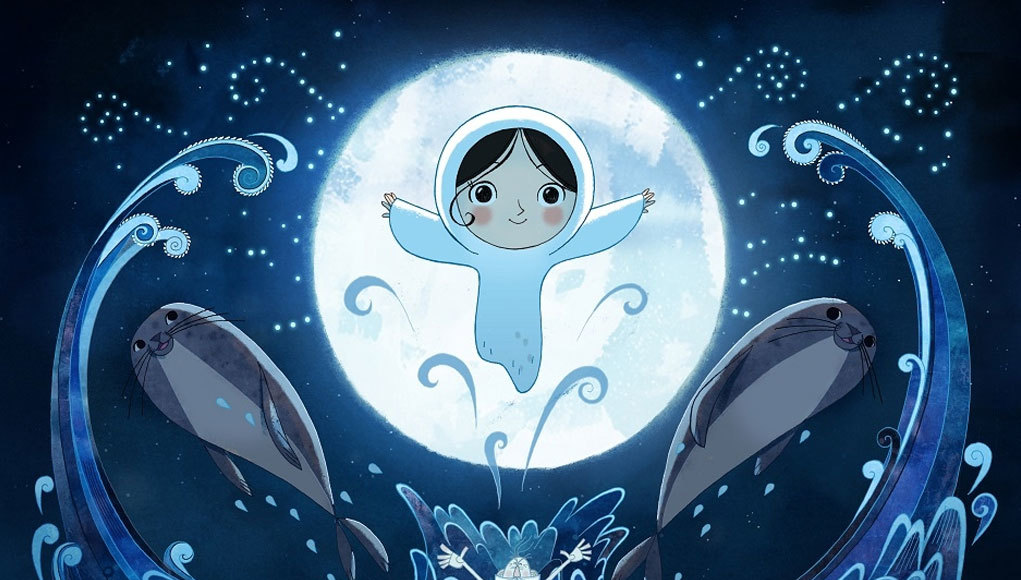
The Song of the Sea is a new animated film for children and adults. It tells the tale of Ben and his younger sister Saoirse. It’s beautifully animated and based on folkloric Irish tales of Selkies – mythological creatures that are seals in water and shed their skins to become humans on land. Unbeknownst to Ben his mother was a Selkie and so is his little sister. It is a stunning story about grief, growing up and family. However, the more I watched it the more I realised that I had seen this story many, many times before and it’s one that has been told over and over again – it’s the one all about men.

Song of the Sea

I’ll start with a brief plot synopsis (spoilers): Ben lives in a lighthouse with his pregnant mum and dad. The mum gives Ben a magic shell and then goes missing into the sea leaving behind Saoirse, his little sister. Six years later and the dad’s still pretty unhappy and Saoirse still hasn’t said a word. Meanwhile, Saoirse discovers a magic coat left behind by her mum which lets her transform into a seal. She goes swimming for a bit and that’s when we learn she’s a Selkie. Unfortunately, nasty granny arrives to take Ben and Saoirse back to the city. Ben doesn’t really like Saoirse and is annoyed when she follows him as he escapes from his granny’s house. Some magical fairies inform the siblings that Saoirse’s a Selkie and must sing the Song of the Sea to free all the trapped spirits – it’s a shame she doesn’t speak. Unfortunately she gets kidnapped by a witch, Macha, who bottles up people’s feelings (literally) thereby turning them to stone. Her reason is that she couldn’t handle her son (a giant) being so sad when his wife died so she bottled up his grief and turned him into a giant cliff (the dad is basically the giant and the gran is Macha). Ben rescues his sister who starts playing the magic shell which causes all the bottles to break. Macha, part stone, is overwhelmed by her feelings but relents and helps transport Ben and Saoirse back home. There, Saoirse finally speaks and she sings a magic Selkie song that frees all the ancient spirits so they can finally return to their magical land far away. The mum reappears to take Saoirse away with her but instead Saoirse relinquishes her Selkie abilities so she can stay with her dad and brother. Everyone lives happily ever after, even the nasty gran who shacks up with the old ferry driver.

It’s a nice story full of metaphors, folklore and fantasy but there are some all too familiar and all too sexist tropes. To start with there aren’t many female characters – there’s the mum who vanishes within minutes; the gran who is the typical crone character – old, haggard and someone no one would ever want to grow up to become and Macha – the evil villain who is basically an even worse version of the gran. The main female character is Saoirse.

Firstly, she is voiceless, she literally has no voice for most of the film, which means Ben gets to do all the talking. Whilst she is often portrayed as more intelligent than her wilful, older brother, who drags her around on a dog’s lead for quite a bit of the film, she is still forced to follow him, even when she knows he’s going in the wrong direction. He becomes less ambivalent towards her once he’s learnt she’s a Selkie. As the film progresses she becomes weaker and weaker and ends up getting kidnapped. This inspires Ben to take even more action and battle the film’s antagonist. It seems a little bit as if Saoirse only has worth as a character once her brother has realised she’s useful – i.e. has magic singing abilities.  He’s the one that puts the magic shell to her lips so she can play it and break all of Macha’s magic bottles. It’s almost as if little girls are being told to tolerate the whims and bullying behaviours of their elder brothers until their brothers realise they have voice and worth, and only then can they become somewhat empowered.

After her rescue Saoirse is even weaker meaning it is Ben  that must overcome his fear of swimming and dive deep to uncover Saoirse’s thrown away Selkie suit. So despite the fact that the sea is Saorise’s element and true home it still ends up being all about Ben and his newfound abilities. Meanwhile, Saoirse’s singing and shell playing skills appear somewhat arbitrary given that she just inherited them and they’re basically magical.  Saoirse’s voicelessness also means that apart from one brief chat with her mum right at the end the film categorically fails the Bechdel test. FInally, when Saoirse does eventually speak her first word isn’t hello or help or patriarchy, no, it’s Ben.

There are some nice messages in the film – namely that stories are very important, be they ones that run in the family or older more mythical stories that came long before the stories of the Bible. The film reminds us that our culture suffers when we lose our stories but it’s just a shame that the film’s own story tells us that men are the active ones whilst women sit around either trying to muck everything up (the gran and Macha) or are basically just there to sing at men’s command. The film also has something to say about men’s inability to emote, namely because the father remains confused and grief-stricken long after the disappearance of his wife but even this is implicitly traced back to his overprotective mother (the nasty gran) who constantly tells him she knows what’s best and lives a repressed, devout Christian life. This story is reflected in the mythical one with Macha literally turning her giant son to stone so he would no longer have to suffer the grief of the loss of his wife – if only women would stop meddling seems to be the point here. Other male characters include the comic ferry driver, the faeries (we see a few female faeries in the background at the end but none are given a voice) and the Great Seanachai – a mythical storyteller who remembers all the old stories and is thus a font of cultural knowledge and wisdom, oh, and he’s a man.

So, fifteen years into the 21st century and what do we get – another mythic adventure about boys and men saving the day. It’s nice that Saoirse sings her special song at the end and frees all the spirits but this is basically the same as Pepper Potts donning Iron Man’s suit at the end of Iron Man 3 in order to blast the main baddy to smithereens – it’s great a woman saves the day but it’s all a bit last-minute and tokenistic. Why not a whole film about an interesting and three-dimensional female character doing awesome and exciting things?

But that’s just it, it’s not that this film is a sexist travesty and should be banned, no, it’s just that this film follows in a long, long line of films and stories just like it – ones that portray men as the active and characterful heroes whilst women are painted as passive and regularly in need of rescue. The Song of the Sea slots so easily into this pervasive cultural narrative when it had so much scope to start rewriting it – why couldn’t it be Benjamina running off in search of her fey little Selkie brother? Why couldn’t the father have vanished right at the start? And why are there no characters of colour, or trans and queer characters partaking in the action, surely ancient Irish folklore isn’t just for white, heterosexual cisgendered people? The film has been described as a “timeless delight for all ages”- it’s only timeless because this masculinist and sexist narrative is so seemingly unkillable. It’s great to be inspired by old stories but it’s time we started telling some new ones, fit for the 21st century.

Update on 11th December 2024: I wrote this post over nine years ago and I’m grateful that so many people are still reading it. I’m also grateful to the folks who take the time to write comments. However, I’m not grateful when people try to insult me in their comments. For the time being I’m approving people’s comments but this may well change if/when I get tired of being insulted. You are welcome to disagree with my post and you are welcome to comment thoughtfully and respectfully. There are other comments which contain prejudice – these immediately get deleted. I’m sure I’ll write a post about this whole experience soon.