Bake Off: Why Women Aren’t Good Enough (Spoilers)

There’s always a lesson to learn during the final episode of the Great British Bake Off and this one came right at the end. The camera is focussed on a tearful, victorious Candice who just won herself gold with some tasty little pig sausage roles, moist chocolate cake and custard tarts. She’s got a bouquet of flowers in one hand and the random, glass medal thing in the other (oh, it’s a cake plate) and this is what she says: “I did it, I am good, I’m good enough.” And it’s funny because when I watched Candice ace it through each round of the final I never doubted whether or not she was good enough, for me, she was always more than good enough. But this isn’t the first time I’ve heard a woman doubt her self belief and I wonder if something’s going on?

The two female finalists got a lot of flack over the past few weeks. Candice was disliked for her varying shades of lipstick and her pout. She was disliked for her accent and her choice of clothes. Meanwhile, Jane was disliked for being old (she’s only 61!), for her hair and for her supposed headmistress sternness. All of these things are, of course, bullshit and we should have been cheering both them on for being such star bakers. Yet patriarchy is as patriarchy does and in a world where women are constantly made to feel inferior to men they have far more work to do to get to the top. But get to the top they did without a soggy bottom in sight.

Now, I don’t want to be accused of too many generalisations but it saddens me when people don’t think they’re good enough because often that attitude is the product of a misdirected over-ambition and an inability to see the good in oneself. Can’t we all just give ourselves a break and allow ourselves to be good enough? However, as our history is one of so much misogyny it’s often women who have even less self-belief. Anecdotally, I have never heard a successful man say he suffers from the imposter syndrome (i.e. the belief that you shouldn’t be where you are professionally and you’re just a sham waiting to be uncovered) but I have heard many successful women say it. Goddammit. Success is for all of us and we should be free to enjoy it without guilt (providing it’s the right sort of success, i.e. baking great cakes, not earning loads whilst crashing national economies).

So I hope winning the Bake Off helps Candice realise just what a blooming brilliant baker and person she is but I hope she knows she’s these things anyway, even if she hadn’t won. For me, the final showed that woman absolutely rock as lovely, earnest Andrew was forced to cash in on his male privilege and step aside. And what’s even better is that Candice and Jane, who shared a great rivalry throughout the show (for which they got much online flack), are now off on a baking road trip together. There are a lot of stereotypes out there that suggest women can’t be friends because they’re always bitching about each other and competing for men (or star baker) but, once again, the women of Bake Off showed us what a load of unbaked, bullshit that is. And here’s a funny penis cake.

https://i0.wp.com/i.imgur.com/Bp2fErz.jpg

Why I Love/Hate Black Mirror

I’ve been called a lot of things in my life. These include pessimist, joyful cynic, misanthrope and just the other week, faggot. And sure, if you read some of these blog posts you’ll see I have a pretty critical view of the world. I’m not overwhelmed by the capabilities of world leaders, I’m not hugely inspired by consumer capitalism’s track record and I hate war. But despite this I still like to believe that on the best of days I’m an optimist. I believe that all the answers we need we already have, some of them might be technologies (including ancient ones) but most of them are in us, especially in our hearts. I think the human being has a profound capacity for boundless love, altruism and kindness, and I just wished we lived in a world that made those things easy. Unfortunately, we don’t and this is where Black Mirror comes in and why I love to hate it and hate to love it.

A quick, spoilerful recap of the new series, which I just binge watched. There’s Hated In The Nation, a futuristic cop drama about a bunch of robo bees subtly representing the ‘stinging bees’ of the twittersphere and killing a bunch of people. Loved this one and it had all the hackneyed tropes of police procedurals – cynical, tech-illiterate older cop works with young, tech-savvy cop etc. It also has a really nasty journo who thrives off her online abuse but she’s only around for a couple of minutes. San Junipero was also ace, basically about humans’ inability to just die instead resigning themselves to a seemingly paradisiacal purgatory of endless themed discos or terrible kink clubs (I think I’ll just die, thanks). Men Against Fire had lots of soldiers, shooting and a big metaphor about the dehumanisation of the enemy, i.e. migrants, refugees, people from other countries. Playtest was kinda Inception meets shoddy horror movies and a dig at selfish, gap yah millennials who never call their parents. Shut Up And Dance, a grim take on shame-based blackmail that cashes in on a he’s-a-paedophile-twist.

Now, don’t get me wrong, these were all exceptionally well written, well acted and not necessarily subtle pieces of TV drama, I just get a bit annoyed that Charlie Brooker gets loads of acclaim for glibly documenting how terrible the world is. Isn’t there enough cynical and depressing media out there without a whole series of Black Mirror reminding us how venal and brutal we all are? I mean, anyone for a little hope on television? And that’s why my favourite episode was Nosedive. Not only did it establish that I have a hidden love for Bryce Dallas Howard that I did not know about (maybe because I loved The Village all those years ago) but I just thought it was spot on because in and amongst all the jabs at how selfish and self-absorbed the facebook millenials are there was also redemption. After Howard’s character, Lacie, loses all her popularity and ‘disgraces’ herself at her friend’s wedding she hits rock bottom. Her life nosedives and she ends up unpopular, lonelier than ever and in prison. But it’s there she learns how to let go as she starts a game of insult tennis with the guy in the opposite cell. Wouldn’t we all just love to yell ‘fuck you’ at a world so full of needless insecurities and anxiety-inducing social media? That’s when the episode ends and wonderfully that’s when it seems Lacie’s story begins because she’s thrown off the shackles of pretending everything’s fine and trying to constantly impress others and is learning how to be herself.

And I’ve certainly nosedived before: when I appeared to have lost so much of what I valued only to discover that what I valued was a whole load of bullshit. And even though it seemed like I’d lost everything it turned out that I hadn’t because I had to learn (the hard way) how to appreciate what really was of value in my life. I didn’t always get it right but I did try to learn from my mistakes. And I still have regular mini nosedives, never quite as bad as the ones before, but most of the time I know I can get through them and the low mood or period of difficulty will pass. If I’ve done it before I reckon I can do it again. And maybe little, self-contained nosedives can be useful for really reminding us what’s important. Nothing too big or too scary but a gentle wake up call to tell us to quit focusing on all the bad stuff, start recognising the good stuff and get back to fighting the patriarchy. Or maybe not and this is just me rambling. Either way, do watch Black Mirror. At times it’s violent and just cashes in on shock and at other times it’s joyfully cynical and just downright pessimistic but sometimes it has real heart.

The HIV Monologues

On 24th May 1988 the authorities decreed that any local authority in the UK “shall not intentionally promote homosexuality or publish material with the intention of promoting homsexuality…or promote the teaching in any maintained school of the acceptability of homosexuality as a pretended family relationship.” This was Section 28 of the Local Government Act and so a generation of children, myself included, were subjected to yet more homophobia and a complete lack of education in how to live a happy, flourishing and safe LGBTQIA life. On 21st June 2000 Scotland repealed this abysmal amendment and the rest of the UK caught up by 18th November 2003. But we haven’t really caught up because there is still so far to go and that’s where The HIV Monologues come in (a few spoilers ahead).

This was never going to be an easy play to watch and it wasn’t but not because it was terribly acted, far from it, but because it’s about HIV. It’s a seemingly simple story about Alex and Nick who are out on a Tinder date. It’s going really well until Nick says that he is HIV positive. Moments later and Alex gets stuck in a window trying to escape and Nick is pretty pissed off. Denholm Spurr makes a great Alex – insecure, selfish but irritatingly cute. He’s one of those likable unlikable characters, a bit like Fleabag from the hit BBC show, and as the story unfolds we do come to care about him. Meanwhile, Sean Hart portrays Nick’s despair, resolve and power brilliantly as he comes to terms with the new normal of his life. The monologues do occasionally become dialogues and when Spurr and Hart are on stage together the chemistry works (more on that in the next paragraph). I also absolutely loved Irene the Irish nurse played by Charly Flyte, who was treating AIDS in the 1980s. A presumably straight woman, she befriends one of her gay, male patients and takes up the cause. A scene in which she tells a bunch of salivating journalists what shame really is was just fantastic and I felt it a shame her character was only met once as she clearly had a life and story of her own that I wanted to know more about. Then there was Barney played by Jonathan Blake who had me crying before he’d even said anything. Blake (not Barney) was one of the first people to be diagnosed with HIV in the UK (and he was played by Dominic West in Pride) and his depiction of Barney was spot on as the partner to one of Irene’s patients. Warm, funny and quietly powerful Barney/Blake is someone I’d like to go for a drink with.

For me the most powerful scene was when Nick aPicturend Alex are on stage together, hiding in the toilets of G-A-Y about to have sex. Alex has just finished performing in an important play about HIV funded by the Elton John AIDS Foundation (hint, hint, come on Elton, get your wallet out). But neither of them have any condoms. Instead, Alex says he’s got a pill and Nick’s confused because he’s already taken his anti-HIV pill (of which there are many different types that reduce the viral load of HIV and allow the immune system to repair itself, start here to find out more) but Alex is taking PrEP: Pre-exposure prophylaxis, which prevents HIV infection. I’ll repeat that, it prevents HIV infection. And what ensues is a beautifully described moment in which Alex and Nick enjoy having sex together for the first time. Of course, in the world of the play and the real world PrEP is still not accessible on the NHS and people who don’t have access to the medication nor the appropriate education are still needlessly contracting the virus. As I said, even with the repeal of Section 28 we still haven’t caught up.
.
The HIV Monologues are on this Thursday & Friday, get your tickets here. Asides being brilliantly acted the monologues are well crafted and poignant pieces of writing by Patrick Cash and director Luke Davies evokes a whole rainbow of emotions from his cast. The stage and lights are also fab. So, no excuse, go, go, go. Be entertained, get educated and then go do what you can: help ACT UP in the fight to get PrEP mainstreamed, support your friends who might be at risk of getting HIV or who have it and educate everyone else, straight or gay, who has missed out on years of vital education. And then one day we’ll all meet at that epic G-A-Y after party funded by Elton John!

Adam Curtis’ HyperNormalisation: Over-Hyped

If, like me, you just spent two hours and forty-six minutes watching HyperNormalisation, the new Adam Curtis film on BBC iPlayer, who might be despairing at the state of the world. Terrified that the world is run by either nefarious villains who arbitrarily play the system and court paradox with the aim of confusing and alienating the populous (e.g. Trump and Putin) or ardent capitalists who pretend to have values whilst selling out to the highest bidder (e.g. Reagan, Blair, Bush etc). Terrified also of the monsters that thrive in the wake of these superpowers such as terrorists unafraid of killing civilians in a bid to create chaos. Meanwhile, the rest of us, powerless and paranoid, decide to retreat into a world of cyberspace where nothing is real, no one is really listening but we are being watched by nasty megacorporations who just want to sell us more crap. Yup, it’s a horrible world according to HyperNormalisation and even those who attempt to fight it – Occupy, the Arab Spring – end up dead, defeated or defecting to the baddies. But I’m not one for relentless pessimism and I kind of felt much of this has been said before.

Take Guy Debord, one of many 20th century French philosophers with a difficult surname to pronounce. He wrote a book called The Society of the Spectacle (1967) and it focuses on how social life has become increasingly self-reflexive. He wrote that “all that once was directly lived has become mere representation” and what I understand him meaning by this is that we spend far more time looking at representations of the world rather than at the world itself. For example, rather than go for a walk outside we play a computer game about going for a walk outside. Life becomes increasingly virtual as we watch endless TV, surf the web and monitor our online profiles, all the while losing touch with what’s authentic. We get lost in a world of representations, spectacles and signs, and lose our ability to figure out what’s real (the hyperactivity of the world becomes normalised). In HyperNormalisation Curtis picks up on this theme and explores how increasingly surreal politics have become. For example, Western superpowers create convenient supervillian baddies (aka scapegoats) in the Middle East to justify their continued wars waged to maintain the capitalist military industrial complex rather than actually deal with the genuine complexities of a globalised world. I see this as forming part of the larger postmodern critique of modernism – i.e. that those grand narratives so beloved of the US and UK such as Progress, Civilisation, Enlightenment and Happy Endings are a bunch of bullshit facades used to sugarcoat vicious and corrupt political systems that make a bunch of people rich.

However, the problem, and this is one of the problems I think Curtis’ film suffers from, is that the postmodern critique can only go so far. It takes the premises of modernism (i.e. those big narratives), finds them very wanting and then flips them on their heads. But once you’ve flipped a shoddy grand narrative on its head there’s not a lot you can do with it other than get cut amongst the broken pieces. And that’s what HyperNormalisation is – a lot of broken pieces fused together to form their own grand narrative that itself is much too simplistic and keeps reiterating the point that we’re doomed and there’s no alternative. It does this by juxtaposing endless clips from pop culture with pictures of mass destruction and dead bodies. It’s shocking, desensitising and a product of the very HyperNormalised world it tries to critique. Like the conniving politicians who try to bamboozle us into submission with paradoxical messages the film leaves us confused, devastated and gasping for air without offering any hope.

But I call bullshit to a hopeless future. Whilst money and banks are referenced there’s scant economics in this film – namely the economics of consumer capitalism and how it fuels so much of the conflict charted in the film. There’s also little time spent on examining alternatives – steady-state economies, sustainability, gift economies and the like. And whilst Curtis looks at various forms of terrorism and the West’s grand narratives as important systems of belief he doesn’t look at other more peaceful ones, for instance, CND, Quakerism and environmentalism. In essence, Curtis just contributes to the agenda of doom, despair and nihilism that has ravaged so much of our culture and caused the death of so many. He’s a documentarian of apocalypse and whilst he’s certainly created a spectacle that is at times informative and entertatining it’s also incredibly overwhelming and anxiety inducing. It floods us with highly selective information without providing any tips on how to use this information. Now here’s a picture of a banana with a condom on it because, hey, everything’s postmodern these days and doesn’t need to make sense…

https://i0.wp.com/i.imgur.com/Z4ekJ7h.jpg

Even The Tories Hate The Tories (And An Apology To Scotland)

I find it a little worrying when Tory voters I know start despairing at our current Tory government. I mean, I thought they were supposed to be united in cutting back the state, unleashing the market and serving big business but it seems rotten things aren’t just unique to the State of Denmark.

First things first, there’s Theresa May. She wasn’t actually elected Prime Minister but it seems she’s intent on claiming the position as her own as she ushers in a new wave of right-of-right conservatism. She wants hard Brexit (even though the referendum had nothing to do with what degree of boiled Brexit would be), she wants grammar schools and she doesn’t want to pay much attention to Scotland. Then there’s her cabinet of curiosities: Borish Johnson (need I say more), Amber Rudd’s openly racist statements (and then she got all defensive about being called racist saying that a conversation about immigration needs to be had as if the two, racism and immigration, go hand in hand), Philip Hammond (having second thoughts about restricting immigration from the EU much to the consternation of hard-boiled Brexiteers), Andrea Leadsom (who farmers hate, naturally she’s Environment Secretary), Jeremy Hunt is still there (he’s the one that legitimised us using the ‘c’ word without actually having to use it) and I’d go on but I’m in tears now.

It’s becoming increasingly clear that the Tories haven’t got a clue. Many of the right-wing, hard-boiled Brexiteers see the referendum result as carte blanche to discriminate, revealing a worryingly racist and discriminatory nature. Meanwhile, many ‘lefty’ Tories are baulking at the behaviour of their more extreme comrades as they wake up to the fact that if you support a right-wing party expect right-wing prejudices. So whilst the media is leading us to believe that the Labour Party is intent on tearing itself apart it seems the Tories are doing it too. The big problem is that the Tory party are the ones leading the country. Their prejudices, rivalries and inability to grasp economics are having national and international consequences and this is not good. So please, if there are any moderate Tories out there, please take back control of your party and try to make it into something you can be proud of. And sure, this post will rile and patronise you but, seriously, can you do something about the bigoted mess that is your party because it’s not funny. In the meantime, here is something that’s funny: Fascinating Aida’s take on the Brexit mess with an apology to Scotland.

That Night I Met Loneliness

I’ve known loneliness for years now but there is one night in particular back in the summer of 2014 that sticks in my memory. My life seemed a bit discombobulated at the time – I wasn’t getting a lot of work, I’d recently moved and things weren’t really slotting into place. And it was one of those evenings – I was out at dinner but wasn’t really connecting with the people around me and didn’t feel very listened to. I said goodbye and cycled over to see some newish friends in a pub but it was too late, I was slipping away and those stories were coming home to roost. The stories of how I had no friends, that I was pointless and worthless, that what I was doing wasn’t really contributing to anything and that I wasn’t living the glamorous 20s lifestyle I was supposed to be. The stories were coming and the cracks were opening. So I left the pub, got on my bike and cycled away.

But for the first time in a long time I did something different. I sang. I just started singing nonsense rhymes as I cycled, not because I’m much of a singer but because I wanted to block out the stories. I wanted to stop them creeping in and making themselves at home. So many times before those stories had destabilised me and often tipped me into periods of depression. I sang to stop myself from thinking. I got back to the random little house I was lodging in and got ready for bed. And there, in the bathroom, I felt something well up inside of me. It wasn’t a story because it wasn’t coming from my head instead it was a feeling in my chest. It felt like an emptiness, it was bleak and desolate, growing between the cracks, and slowly it pushed its way up from my heart and that’s when I started to cry. I cried a lot and hugged myself too as I washed my tears down the sink with toothpaste and Listerine. The feeling bloomed and I knew what it was – loneliness.

I thought I’d share this experience because I think that was the first time I ever psychologically and physically held myself through loneliness. Rather than just let it overwhelm me and flood me with its stories I acknowledged the feeling underneath. It wasn’t a pleasant feeling, not at all, and I wouldn’t wish it on anyone but it was a feeling rather than a fact. And to let myself feel it, rather than push it away or succumb to its stories, felt like an achievement of sorts, as lonely as it was. This was by no means the end of the story, things didn’t magically get better and I didn’t suddenly feel fine. I’d need much support from my friends and family (and for once I had the guts to ask for it) and I would need to start slowly, slowly changing the things in my life that were bringing me down. I started with those oft-repeated stories, the ones that thrive off the potent and powerful emptiness of the feeling of loneliness. I had to keep reminding myself that they weren’t true and that I wasn’t worthless. But I guess the real reason I’m sharing this experience is that I’ve heard many people tell me that they fear loneliness. And, yes, it is not something nice and for many it is devastating and can’t just be witnessed and ameliorated. However, for others including myself, it is a feeling and it does pass. And it’s also perfectly normal, a part of all of our lives, and that’s why I was very proud of myself that night I met my loneliness. And now for a suitably melancholic song from Regina Spektor’s new album (yup, I’m just trying to get her to retweet me, one day).

Theresa May: Woman of the People or Beyond Parody?

If there’s one thing Prime Ministers have known since Margaret Thatcher got Saatchi to do her advertising it’s that PR trumps politics. Tony Blair befriended Rupert Murdoch, promised us things could only get better then went about selling out Labour values and destroying Iraq. Gordon Brown was a bit of a non-event but David Cameron was all schmooze and no substance, the friendly face of a decidedly unfriendly party (he was so nice about gay people after all). Now Theresa May’s on the case and she really is positioning herself as woman of the people if her party conference speech is anything to go by. Of course, it’s not and we know it’s bullshit, she knows it’s bullshit (unless she’s deluded enough to believe it) and the rest will be the continual unravelling of the welfare state, increasing inequality, a fallback to xenophobia and darker times ahead. Seriously, do humans ever learn their lessons?

First she claimed Brexit was a “quiet revolution” during which the people had spoken and they could not be ignored. Remember the referendum?! It was a slim majority, not everyone voted or could vote and the whole reason it happened was because Cameron cocked up. And remember the last general election!? The Tories got a tiny majority and that was with David Cameron as leader, who promptly went about ignoring the people anyway. And who actually voted for May to be PM? Oh, no one. But being a Conservative revolutionary (yup, it’s an oxymoron) wasn’t enough for May. It seems she also wants to put off people from other countries from working and studying here. Remember Brexit!? Hasn’t Britain done enough already in telling the rest of the world to fuck off and scapegoating immigrants. Fortunately she wants us to be less selfish and individualistic, much like the triathlete Alistair Brownlee who gave up his chance to win so he could help his ailing brother over the line. Remember the job market!? It’s inherently competitive and actively discourages us from helping others. But she does want more state intervention in helping British people get jobs and claims the Tory party is the party of the NHS, of teachers, etc. Remember austerity?! That cut the welfare state and undermined the jobs of those who work within it. She then went on to tell big companies and big bosses not to avoid tax and do other nasty things. Remember the Tory Party!? These big bosses are the very people who fund it and the companies that benefit from the neoliberal policies it has promoted for decades. Finally, she reminded us that change is what people want and “a change is going to come.” Remember the laws of physics? Cause and effect, change always happens, it’s inevitable. But the implication was that the Tories have a plan and a well-thought through policy. Remember well-thought through Tory policies!? The big society, austerity, cutting the deficit. Um, none of those worked and the Tories just did what most governments do, ride out the booms and busts of capitalism and hope for an economic upturn come election time.

All together now: “I call bullshit!” She says she wants the Tory party to be the new party of the centre but can I remind you that the centre has never really existed. It’s a nice myth that perfectly polite middle class people want to believe: that somewhere between those mad socialists and crazy Ukips is a peaceful middle ground of politics where everyone can have their cake and eat it (well, not everyone, especially not poor people and poor foreigners). Capitalism, resting as it does on a military industrial complex, can never be peaceful and it can never be middling. But it seems May is choosing to ignore that and telling nice tales about fictional worlds where things end happily ever after. It’s called lying and politicians have done it for a long time. As for the rest of us, let’s be more like Alistair Brownlee, and give each other a helping hand because I really doubt the government is going to.

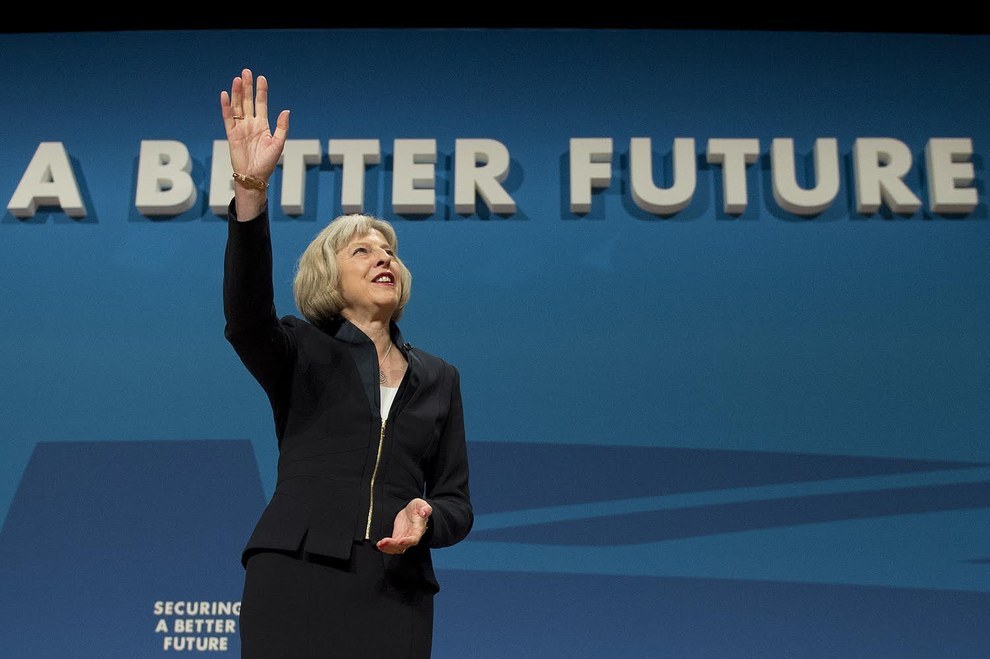
Home secretary Theresa May finished her speech to the Conservative party conference by holding her hand up to the audience. Unfortunately, in the process she accidentally rewrote the Conservatives' "Better Future" slogan.

Owen Jones, Will You Marry Me?

It’s the Conservative Party conference and what should any leader of the opposition be doing? Absolutely destroying it with zinging one liners and put downs then explaining how their progressive and innovative alternative is what this country needs to transcend the woeful contradictions of capitalism, deal with climate change, end inequality and ensure people can get back to the important task of being happy and watching Bake Off. So, what’s Jeremy Corbyn doing? Tweeting about the Labour film festival. Facepalm.

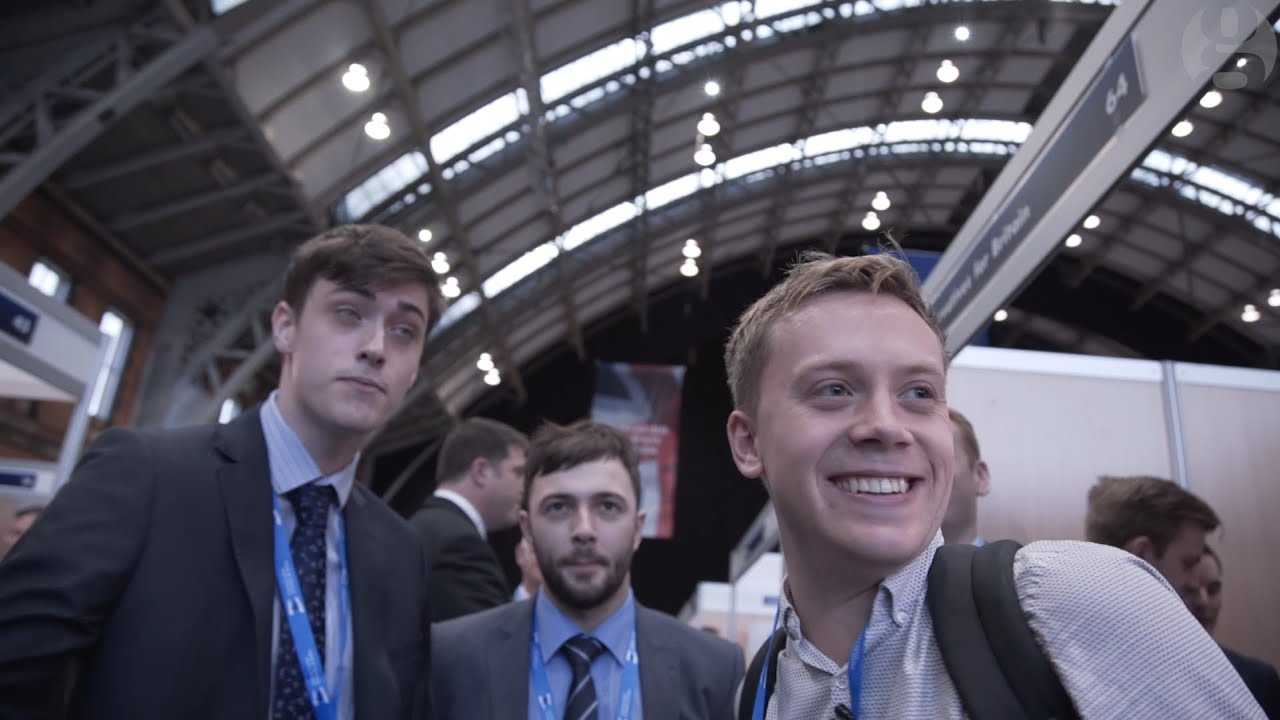
Fortunately, someone whose a fan of Labour lives in the 21st century and understands how social media works and that’s everyone’s favourite cherubic Guardian (or is it guardian?) journalist, Owen Jones. “Labour need clear, crisp, repeated messages on everything from the Government’s retreat on economic policy to Brexit chaos – and fast” he said yesterday, whilst actually at the conference. He was going around with his cheeky-chappy grin and interviewing Tories, helping the rest of us see that these people are human even if many of their policies are inhumane. “The Tories’ harsh Brexit puts your job at risk – only a Labour Brexit will protect your job. Labour’s line should be something like that.” Say it like you see it Jones and thank god someone is. As for Corybyn, “. is coming to the North West for the 1st time. Find out about the great films they’re showing here → .” Ok, so the current Chancellor is basically backtracking on a load of Tory economic policies and resigning this country to another ‘lost decade’ and you have nothing to say about it? The Tories are practically handing you their own heads on silver platters and you’re too busy tweeting about a film festival!? You can tweet about more than one thing!

If, like me, you find yourself frustrated with some of Corbyn’s behaviour but realise he has just been re-elected as head of the opposition then I reckon now is the time to call on him to step up. Yes, he has many great principles and ideals but that’s not enough. They must be used as beacons to guide a very practical and pragmatic politics for right now. The situation is dire and we aren’t going to get any form of socialist utopia anytime soon. Behavioural and value change across a nation will take at least a generation, this is barely the start. So, Jeremy, get tweeting, get zinging and call out the many failures of the Tories. Please make good on your re-election and prove to us you really can be the next Prime Minister because Britain is scared of change and we need to have confidence in the one who professes to be the harbinger of said change. And, Owen, marry me?

https://i.ytimg.com/vi/y_JDQinNE8w/maxresdefault.jpg
Owen Jones grins at Tories at last year’s conference

The Problem With Couples

Now, don’t get me wrong, I love couples. There are some great couples out there like Paul & Mary, Ben & Jerry, Brad & Angelina…oh. But sometimes couples can be problematic and here’s one of the ways I think that’s true. So, picture this: six nice people sat around a table at a restaurant having lunch. They’re all catching up about their lives, eating lettuce and sipping smoothies, something like that. They each take it in turn to talk about their lives and it turns out the first four are all straight and in relationships. They’re waxing lyrical about their partner, s/he is just fantastic, s/he just swam the Channel, s/he just invented a cure for cancer, etc. Wonderful. Isn’t that nice. However, person number five is straight and single and when it’s their turn things get a little awkward, they’re not in a relationship after all. As for person number six, they’re single and queer, so that awkward silence just got awkwarder. You get the gist right, let’s take a closer look.

Our society is just rammed with narratives that pressure us into believing in and aspiring to certain things. A big one concerns relationships. Rom coms, billboards, novels, magazines etc all encourage us to find that perfect partner. Alongside getting a job, getting enough money and finding meaning, finding ‘the one’ is just another box we need to tick on that all important list of ‘things you need to do to not be a total failure’. And it’s a huge relief when we finally find someone to settle down with (or endure for a year or so). It’s like a big weight is off our shoulders and we’ve just avoided a grim, sex-free future of loneliness and isolation, not to mention no grandkids. Phew. It’s understandable that if we believe in this narrative we will be relieved once we’ve found a partner and we’ll be happy as well, it’s fun having someone to share your life with, do stuff with and alleviate your insecurities. Ideally a best friend we can sleep with. Naturally, we want to tell our friends all about our new lover (finally, something interesting has happened in our lives).

Unfortunately, the flip side of this narrative is that it doesn’t work so well for ‘singletons’. Even the idea of being single implies we’re just a placeholder half-person until we gain meaning as a couple. We’re just biding our time and doing our best to ride out loneliness. Our lives must be grim. Which is why when lunchtime conversation shifts to us it gets awkward: if we’re single and unhappy then we affirm the narrative but also don’t really have a chance to talk about it because everyone else is coupled and happy. We’re often forced to pretend ‘everything’s fine’ even if on the inside we’re screaming. We do this because we want to fit in, because (coupled) people struggle hearing about others’ suffering and because we might believe that narrative too and think we’re failures. Next is the single but happy person, naturally, we’re considered slightly deluded because no one can be happy and unpartnered right, that sounds like far too much of a threat to this precious narrative. Then there’s the single, happy person who has lots of sex, also known as a ‘slut’ who just can’t settle down and hasn’t found the one. And then there’s the queer and single one, it’s highly likely we won’t even be asked about our relationship status because queer people don’t really exist right, we’re just some ‘exotic’ addition to a social group whose way of life is so different and alien to heteronormativity that it’s too hard for straights to get their heads around.

So, people in relationships, it’s time to step up. Yup, it’s great if you’re happy and in a relationship, well done, but please create space for people who aren’t in relationships be they happy or not. And please, if you believe that pressuring, deceitful narrative that life only means something if you’re partnered, please do not project that onto others. Basically, just do not become one of those smug and judgemental couples who will probably break up anyway because no decent long-term relationship can thrive off the mutual avoidance of fear (or maybe it can, I’ve never tried). Why not help out your single friends who want a partner by introducing them to other people (so they can enjoy the happiness of coupled life that you profess to) or offering some emotional support. And single folks, queer and straight, don’t single, be independent, and own it if you have the resources and the resilience. Also, if you need help, ask for it, even if you’re asking help from smug coupled people (they’re not that bad, well, most of them aren’t). Don’t give a toss about what they think because the priority is you getting the support you need and not pretending ‘everything’s fine’ if it isn’t. Anyway, I’m not single, I’m independent and if you find this blog challenges a narrative you hold dear then good. Here’s P!nk.

Bake Off: Climate Change Week

Week 7 of the Great British Bake Off and things got environmental. As comedian Mel Giedroyc explained at the start of the show it was a Bake Off first, Botanical Week: “We wanted to highlight the plight of nature as bee populations collapse, sea levels rise and numerous species become extinct due to human’s inability to live peaceably on the planet. We felt it was important to stand up for Gaia.” So those bakers got baking with flowers, herbs, leaves and other things that grow out the ground (y’know, like most things)

Round 1 was a classic: lemon meringue pie. Except they wanted a further citrus twist. “This might appear a controversial decision,” explained celebrity chef and national treasure Mary Berry, “But the reason we wanted them to use a wider panoply of citrus fruits such as grapefruits, oranges and clementines was to raise awareness of global warming. Just this summer Gravesend recorded a temperature of 34.4C, that’s the hottest day of the year since 1911, incidentally the year I was born. Ironically this will make Britain’s climate more amendable to the growing of citrus fruits and whilst I love a good lemon meringue pie I don’t want it to come at the price of numerous small island states going underwater, the Arctic melting and more hurricanes. I get that this is too little too late but if Bake Off can’t be used to make important political statements then what’s the fucking point.”

Round 2 was fougasse, a type of bread typically associated with Provence in France. Judge Paul Hollywood chose this one: “I don’t actually believe in climate change and care little for the environment but a fougasse should be made in the shape of a leaf. So it was my token nod towards nature but who really gives a shit about nature. I mean, I’m off to Channel 4, I don’t have values, I just want cash. Sure if we each did our bit and consumed less, recycled more, became more politically active and challenged power then things might change. But that sounds like too much effort.” Swiftly onto Round 3 where the bakers had to make 3+ tiered cakes covered in floral patterns. It was contestant Candice who did a 4 tiered cake with each one representing a different season. She purposefully misaligned them as she piled them one on top of the other to ensure they looked, in her words, “higgledy-piggledy, like the seasons.” She went on to explain: “Because climate change has ransacked seasons around the world. They used to be predictable and delineated but now summers are cold, winters are even colder and there are heat waves in October. Basically the seasons are screwed and I wanted to convey that with my cake.”

And so the episode drew to a close and whilst it was lovely guy Rav who got booted off the last word went to Andrew. The adorable Welsh perfectionist, sitting on a rustic stone step surrounded by trees and flowers, was reduced to tears: “These tears are partly for me and my insatiable hunger for affirmation from octogenarian Aga users but they’re also for nature. I mean, why do we treat her so badly, polluting the seas, trashing mountains and killing baby seals. If only Mary Berry ran the UN.” Next week Bake Off will be focussing on plight of the worker under capitalism because, as Berry says, “If we can give a toss about 12 randomers in a tent then of course we can care about the exploitation of labourers around the world.”