Bake Off: Our Damnation And Salvation

Spoilers ahead if you didn’t catch this week’s episode of Great British Bake Off – think Game of Thrones meets the Home Counties by way of the Hummingbird Bakery. And this week was a corker – broken eggs, soggy bottoms, tarts galore and Mary Berry even cracked a joke. However, two things really struck me, one concerns filo pastry and the other concerns our dearly departed Val.

Kinda half way through the programme Mel or Sue (the comedy commentators who keep the whole thing together) go off on a tangent to reveal a bit of the history of baking. This week was Baklava. Back in the 13th century Ottoman Empire the Sultan was getting a bit peckish, so his royal chefs invented filo pastry. It’s a tricky process that involves finely rolling numerous sheets of pastry, so fine that you can read a book through them (or a bottle of alcohol as contestant Jane did, ahem). The process required such skill that, back in the day, the number of sheets within the filo pastry was used as a signifier of wealth. Rich households would demand a minimum of 100 layers. Wait a second. Number of sheets in filo pastry as a sign of wealth. What the actual f*ck?! I mean, come on people, let’s get a grip. But it was then, as I watched Mel bite into a tasty morsel of pistachio filled Baklava, that I realised we’re doomed. Humans are actually doomed. We prioritise the number of layers in filo pastry over things like lessening hunger in the world, tackling climate change and redistributing wealth. And things haven’t changed that much since then except it’s less about filo pastry and more about number of yachts, houses and watches. The irony is that once a year the Sultan would host a great Baklava ceremony and the servants of his Empire would be given some of the stuff as a token of gratitude in return for their unending service. After that it was back to a life of gruelling slavery. Humans. We’re the worst.

As you can imagine I was in despair and then Val was outed from the Bake Off tent. She’d had a bad week but when the camera turned to her these were her parting words: “When you bake you always bake for a reason, you’re giving it to people, so you make it the best you can and you make it with love. And whenever I make anything I stir love into it, I knead love into it, so when I present it, it’s special. I’m not unhappy, I’ve had a great time with some great people and, phwoar, I didn’t expect it, I didn’t expect to ever get here, never mind be honoured.” And those words speak for themselves. What a woman and what an inspiration to us all – so positive, so grateful and just so darn nice. All the other characters (I mean contestants) spoke so highly of her positive personality and even judge Paul Hollywood had a good word for her. And what a world we might live in if we didn’t prioritise the number of layers in our filo pastry but prioritised love instead. It sounds cheesy but it tastes great.
Turns Out We’re All Insecure

We have a habit of projecting success onto others. We see our facebook friends’ holiday pics and assume their lives are just fantastic – they have the best holidays, they have the most fun friends and they have a monopoly on the sun. We see attractive people walking down the street and assume their lives are great – with a face like that they must get invited to all the best parties, have no self-esteem issues and have great sex. We see our hyper-successful boss and assume they’ve got it all sorted – a big salary, a big house with equally big happiness to boot. And all the while as we project success we internalise failure, telling ourselves our lives aren’t busy enough, we haven’t got enough friends and we’re just not good enough (or whatever our hook-ups are). But the thing is, it turns out we all do this because everyone’s insecure.

It’s not that we’re the only ones failing to find that abundant happiness we assume everyone else thrives in, it’s actually that we are all subject to the same slings and arrows of consumer capitalism. It makes us all feel inadequate, even those at the ‘top’ because there’s always more to buy, more money to make, the possibility of looking a bit better, having more friends, the list goes on. It’s a zero-sum game and there are only a few seats at the top table. But no one really wins and the very idea that society is predicated on the concept of winning, that it’s a competition, makes its inherent madness all the more obvious.

However, insecurity goes much deeper than the effects of living under capitalism, it goes right to the heart of the human condition. Regardless of how many holidays we go on, how often we shop and how ‘good’ we look, there are things universal to being human, namely ageing, illness and grief. We all get old, we all get ill and we all lose people we love. All of these are perfectly normal and natural but that does not make them easy. It’s not just that advertising campaigns make ageing a sin it’s also that losing things you once enjoyed is tough. Meanwhile, illness can knock us for six and, depending on its severity, change our lives forever. And loss. That empty feeling that can overwhelm our hearts when we lose a loved one and struggle to comprehend what death actually is, that is also very, very tough. Living, whilst often flipping fantastic, can also be devastating and difficult. Thus, interwoven into the very fabric of our being is the fragility and vulnerability of being alive. Our insecurity is part of who we are (not to mention the fact that we all die but that’s another blog, or book).

We are all insecure and for so many reasons. We all have different histories, no two experiences of grief will be the same, just as ageing and illness will affect us all differently. As will enduring and attempting to thrive in the zero-sum world of competitive capitalism. And why is it useful to know this? It’s not to make us feel better by luxuriating in the suffering of others instead it’s to let us all off the hook a bit. We can stop pretending everything’s ‘fine’ when it’s not and ask for help instead. We can also be a little more compassionate towards others recognising that no matter how irritating they are they will have their issues and sufferings too. So if I am going to make any categorical statement about the human condition on this blog it will be this: that, on the surface and in our deepest depths, we are all insecure.

Donald Trump Meets Mack The Knife

Mack the Knife is the psychopathic protagonist of Bertolt Brecht’s Threepenny Opera, now showing at the National Theatre in London. He’s misogynistic, greedy, ruthless arch-villain who is obsessed with money. Incidentally he has much in common with Donald Trump, currently doing the rounds in Trumpageddon at the King’s Head Theatre in Islington. One opera and a one-man show both painting bleak portraits of the world. The former a nihilistic, musical satire and the latter an ominous omen for things to come (but hopefully won’t).

The Threepenny Opera first. Wow. What a show. All singing, all dancing, with bits of set flying around the place, a band on stage, costumes to die for (and die in) and lots of jazzy smoke effects. It wasn’t quite Cabaret (but then again that’s a musical not an opera if we’re going to quibble) but Mack’s London is one of back stabbing, front stabbing and rape. It’s not a fun place to be and that’s the point. The joke’s on the audience as we’re mocked for wasting our cash on a show like this, a show full of low lifes and reprobates. Meanwhile, Brecht’s script does its best to ‘alienate’ us – “playing in such a way that the audience [is] hindered from simply identifying itself with the characters in the play. Acceptance or rejection of their actions and utterances [is] meant to take place on a conscious plane, instead of, as hitherto, in the audience’s subconscious” (Brecht). Yup, no sitting back and relaxing, instead we’re regularly reminded by the script that not only is this a play, what with characters shouting “scene change” and “interval”, but it’s also a visciously barbed reflection/refraction of the world we live in. Whilst that’s all well and good not being allowed to connect with the characters meant I didn’t really care what happened to them, especially Mack  as he was such an utter b*stard. It also didn’t help that Rory Kinnear, who plays Mack, couldn’t quite maintain his accent (was it meant to be Cockney or Russian or posh English?).

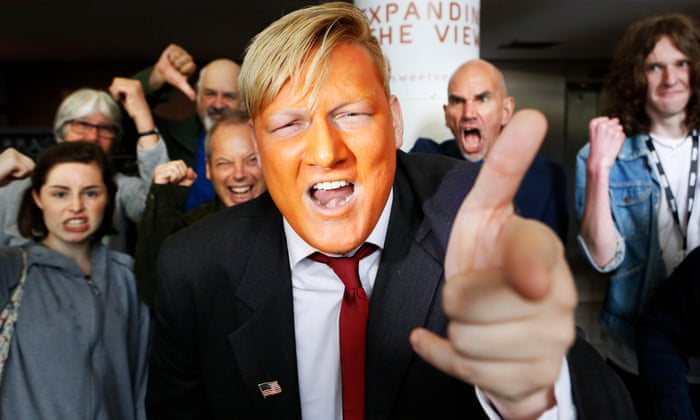
Someone who can maintain an accent is Simon Jay. His show Trumpegedden sold out at the Edinburgh Fringe and won many an accolade including an article in the Guardian and now it’s come down to London town. First I have to make a disclaimer: I know Simon (but I don’t know Kinnear) and think he’s a thoroughly good bloke but when I went to greet him before the show my arm was practically yanked off in a handshake from his orange faced, peroxide blond Trump. He was in character all night and it was terrifyingly brilliant. As he shoved his blond assistant around the stage, as he offended the audience, as he contradicted himself without qualm (often verbatim), so we were given a glimpse of an all too possible world should the real Trump win the vote in little over 50 days time! This will be a world of open hostility and violence that will be worse for women, the LGBTQIA community, people of the Muslim and Jewish faiths, people of colour and so many more. Basically anyone who isn’t white, male, American and rich. We’re fucking doomed if this guy wins and Mack’s dodgy London will appear a mere prelude to apocalypse. So share this new Avaaz thing to encourage US voters around the world to vote (even if they’re not in the US), go watch Simon’s play (next/last show Monday 19th September) and then swing by the NT if you fancy an opera (personally, I’d recommend Chicago).

Why Do Fairy Tales End In Weddings?

And it all ends happily ever after – the dragon slain, the terrible King overthrown, the witch thwarted, the wolf outrun, the villagers saved, the damsel rescued and…wedding bells. In old folktales, in Disney cartoons, in far too many movies and, of course, all over real life. Many people spend a lot of time, pain and money trying to craft that perfect day – the white dress, the giant cake, the big guest list. Sometimes they’re lucky and the only problem is the slightly leery uncle and other times it’s a disaster of catering, drained alcohol supplies and family feuds. Either way it seems we’ve taken the concept of a fairy tale wedding very seriously and tried to recreate it in real life. But I think we’ve slightly missed the point.

I do love a good fairy tale but I get pretty bored when it’s all about cisgendered, white, straight guys rescuing helpless damsels and marrying them, yawn. But the tradition was somewhat reclaimed for me when someone explained why fairy tales have a habit of ending in weddings. It’s not because the tale is literally a how-to manual for planning the big day, no, it’s a little more subtle than that. One way to interpret a traditional fairy tale is to see the characters in the story as facets of our personality (or psyche). We all have a questing hero in us and sometimes we can be a bit of a tyrant as well. There’s a wild wolf in us too, a wise sage, a jokey trickster, a helpless victim, a cunning witch and even a terrifying dragon (metaphorically speaking). We’re not just supposed to identify with the hero (y’know, that dull straight, white guy), instead all the characters represent different aspects of who we are. Many of us might play the part of the fool more often than the wise one, or the tyrant than the victim, but the point is the potential is there and our psyche is multi-faceted (whatever those dull personality tests tell us, give me dragons and witches over ENTJ any time). Basically, folktales are a form of psychology and therapy developed hundreds of years ago, pretty cool huh.

So why the wedding? Well, it’s not just some random straight folks tying the knot, it’s the marriage of your psyche. Say what? It’s when all of you, all of you, is invited back home to one giant party – it’s when you finally come to terms with being you. In many traditional tales the wedding won’t just include the in-laws but the tyrant king will be there (and he may well ceremoniously die as metaphor for you conquering your inner b*stard), the annoying brother, the sage, the mentor, the dragon’s head maybe, the witch (providing she survived and promised to be a little less wicked) and even the wild wolf might be seen flitting around in the garden. The guest list is vast and the catering cost astronomical but the point is all of you has been welcomed back home. It’s not about white dresses and multi-tiered cakes, it’s about inner healing and empowerment. So, as symbolism for inner transformation goes I think fairy tales are pretty ace. However, if like me you’re not such a fan of heteronormative ceremonies traditionally based on the buying and selling of woman, you’ll agree that the tales need a bit of a 21st century makeover. No more weddings for me, just one giant queer house party. All welcome.

What Is True Love?

It’s a question on many of our lips as we navigate the marketing campaigns, movies and relentless narratives of heteronormative patriarchy that tell us true love is something to be shared with one other person of the opposite gender for the rest of our lives. True love will involve a white wedding, 2.4 children and a mortgage. True love will look good in public and any problems will be hidden behind closed doors. True love will be shared on Facebook and Instagram whilst the passive aggression happens off camera. Fortunately, P!nk and Lily Allen aren’t buying into this bullsh*t.

Well, ok, I think both Lily Allen and P!nk are married with kids although they probably own their houses outright rather than have mortgages. However, there’s a lot of angst in this song as they complain about how irritating their partners are, how infuriating, how stupid and a whole load of other negative things (there are also quite a lot of domestic abuse references as well as some causal anal sexism, but that will be another post). And at least they’re honest. Love isn’t all roses, doves and honeymoons it can be annoying, smelly and sometimes quite disappointing. But I do like the idea of taking the rough with the smooth and committing to something bigger than  just two (or multiple) people, where 1 + 1 makes more than 2 (or 1 + 1 + 1 etc for those in polyamorous and/or open relationships). I think that’s something worth committing to and not that crass and crushing heteronormative, consumer capitalist version of “true love” created to make us buy more stuff and go to bed feeling guilty and alone. And I don’t think that better kind of true love (maybe just call it love to sound a little less presumptive) has to last forever either, what a sad benchmark for a relationship’s success if it only counts if it ended at death. It also doesn’t need to involve kids and a mortgage, dogs in a housing co-op are ace too. And it certainly isn’t just for straights. Queers welcome.

Now, don’t get me wrong, I am not against people marrying, having 2.4 children and getting mortgages. It’s often a brilliant and inspiring (and very, very difficult) thing to do, hats off to you. But I do mind if that’s all you do, if you’ve just glanced at the ‘true love’ manual (aka watched a few Julia Roberts films and dressed your son in blue and daughter in pink) and taken it at face value. Worse still, not just read the manual but started to recite it as well, as you take for granted that society (and this includes politics, economics and culture) is often weighted in your favour (but only if you’re wealthy enough). I reckon the best thing you can do is acknowledge that space has been made for your type of love, enjoy it, and then set about helping create space so others can enjoy their types of love too. In brief, as with most posts on this blog, check your privilege and don’t be prejudiced. Then we can all have a go at mucking up true love (p.s. and yes, this post was basically an excuse to post that song, it’s just so catchy).

Pokemon Go: The Conspiracy

Once you think about it, it makes complete sense. That the latest smartphone game currently taking the world by storm, Pokemon Go, is actually the product of a conspiratorial collusion between world governments and gaming corporations. A conspiracy that has no grander aim than the complete subjugation of the human race. Marx is spinning in his grave.

Pokemon Go is an innovative idea: you hold your phone up and through the screen you see the real world on the other side. So far, so boring. However, what’s that over there? No way! It’s Pikachu! Yup, Pikachu is just a few metres away lolling around that random park near your house. So, off you creep, and then boom: you must do your best to capture Pikachu in one of those little pokeballs. A few button clicks later and, hurrah, Pikachu is in your collection. Now, I hear rumour there’s a Bulbasaur near the library the council just closed down. Gotta catch ’em all.

So far, so innocent, unless of course you accidentally walk into a rake, a wall or ensuing traffic, or stop to question the idea that Niantic (the inventors of Pokemon Go) have just populated the entire world with virtual Pokemon without seeking anyone’s permission and without much forethought for the consequences, which include accidental death, robbery and murder. However, it’s no coincidence that the game’s release coincided with the collapse of Western democracy, the EU’s implosion and the rise of yet more extreme right-wing political parties. What a brilliant way to distract people from the mess that is politics by getting them addicted to hunting pixellated animal things (it’s not so much fiddling whilst Rome burns, it’s imaginary creature hunting whilst the world burns). Like most consumer goods it’s a way to soften the blow of capitalism’s inherent destructiveness whilst further lining the pockets of the mega-rich. This is textbook consumer capitalism and we love it. It probably also helps governments keep an eye on the populous, getting us all to wave our phones at each other – the next Jason Bourne movie will probably involve the CIA tracking him via Pokemon Go users and then imprisoning him in a giant red and white ball.

However, there might be something else going on – as more and more people take to the streets with smartphones in hand off to fill Central Park or clamber over the Hiroshima Peace Memorial a critical mass is slowly being reached, enough people to fill streets, block offices and surround the fancy houses of the 1%. Maybe the Pokemon Go inventor isn’t a greedy capitalist after all but a radical anarchist who is soon to initiate that worldwide revolution we’ve all been waiting for – it’s not Charizard we’ll be hunting, it’s the global elite. Maybe Marx will get the last laugh. Either way I just spotted a Voltorb…laterz.

Pokemon Go

Anal Sex(ism)

I posted a while back on the anus and I am going to do it again because anal sexism is rife. It hides in plain sight in our everyday language and we don’t even know it’s there. Once upon time ‘gay’ was just a pejorative adjective we casually used, not thinking that it undermined and tokenised a whole community, permitted violence to be perpetrated against said community whilst also undermining our own lives and the freedoms we could enjoy. We now know better. Unfortunately, that’s not the case when it comes to anal sex.

“He’s such a brown noser.” You know, that terrible person who’s always trying to impress the boss or sidle into each social clique. The idea that putting your nose near someone’s anus is disgusting and befit only of sycophants and losers. “Just go shove it up your arse.” Yeah, you, that person with terrible views and an irritatingly loud voice. Go on, “stick it where the sun don’t shine” because only people we don’t like do things like that, nothing worse than putting something in your anus, amirite. “Ugh, their head is so far up their own arse.” They’re just so arrogant, so self-obsessed, so selfish, so self-absorbed, and naturally all those states of being need to link to the anus, that grim place where terrible things happen and with which we should only associate the bad.

Many of us use these common phrases without a second thought but what we might not realise is that they denigrate a whole host of people who enjoy anal sex. They denigrate the men who like men who like bum sex. They denigrate the women who enjoy anal and are probably already getting enough flack for it. They scare the questioning and the curious who are tempted but worried exploring the anus will make them ‘look gay’ or land them a whole host of ridicule and bullying. And they affect you too, the sayer of such seemingly simple phrases because they belie your fear, your ignorance and your prejudice. That’s not to say you’re a nasty person, of course not, I bet you’re really nice, but you live in this society after all which is so interwoven with prejudice and phobia. It’s probably woven into you as well and you hadn’t even noticed.

And finally, perhaps most obviously yet insidiously, there’s the most famous phrase of all: “Stop being so anal.” It’s blunt, isn’t it. It’s not circumnavigating the issue, it’s a direct order to stop being deviant because deviance is bad and deviance gets persecuted, bullied and beaten. Don’t do that, just be normal and stop being so anal. Stick to conventional sex, recondition yourself and we’ll let you fit in. No, I don’t like the sound of that one bit, I’ll be anal if I want to be. So next time, catch yourself as you say it or stop yourself in advance. Say something else, use the vast vocabulary of the English language and stop permitting persecution and prejudice. And, yeah, I get it, you’re not a bigot and you are a good person but that doesn’t give you carte blanche with your language. Freedom of speech isn’t just a right, it’s a responsibility. Use it well and leave the bum well alone (unless you’re going to sing its praises).

Bums
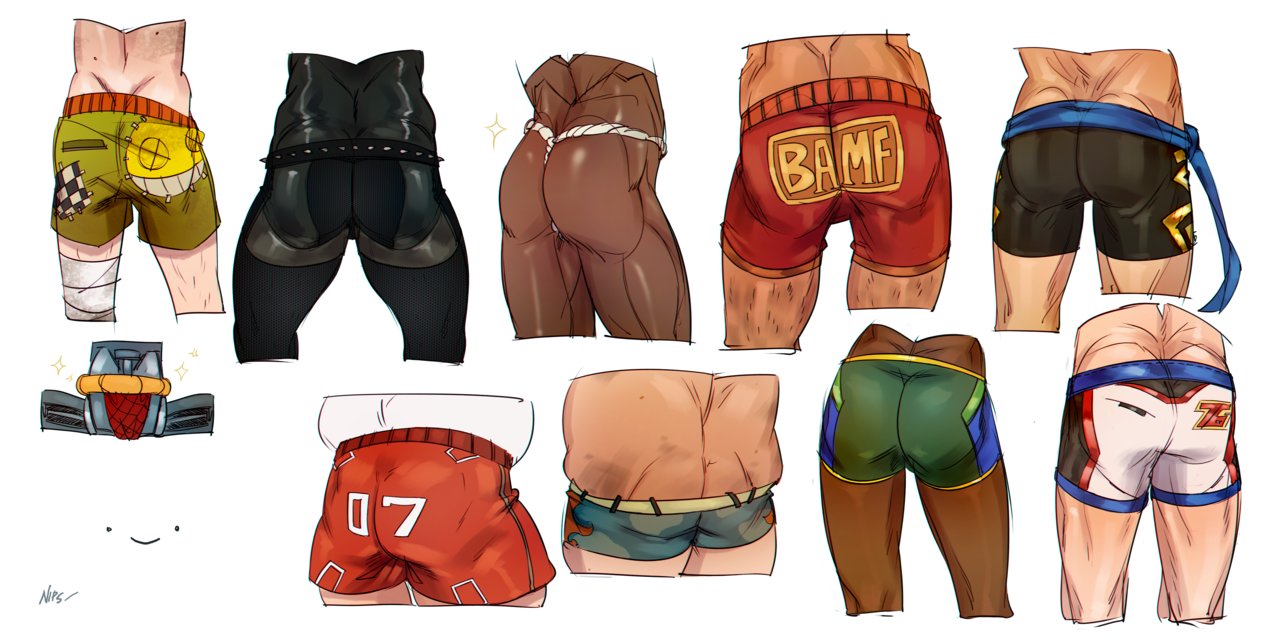
A great gallery of male bums from ohnips – http://ohnips.deviantart.com

The Chemsex Monologues

Chemsex kinda does what it says on the tin, mixes chemicals and sex. The drugs used can include mephedrone, crystal meth, cocaine and ketamine. Naturally, a whole load of stereotypes get flung at the people and groups who engage in these activities which is why The Chemsex Monologues are so important because they reveal the all too human side behind the prejudiced slurs and sensationalised stories. But before you read my review go book your tickets, it’s on tonight until Saturday at 9.45pm at the King’s Head Theatre in London.

Directed by Luke Davies, written by Patrick Cash and designed by Richard Desmond this was an intense hour-and-a-bit. Through a series of monologues we were introduced to various characters: the narrator, played by Richard Watkins, who falls for that hot boy on the scene with the great abs and the endless energy. Then Denholm Spurr brings that boy to life as Nameless, who gets to live his dream and meet a porn star. Meanwhile, Charly Flyte plays Cath, the ever faithful fag hag who’s getting a little fed up of her so-called fag. And Daniel, the wonderfully upbeat sexual health worker who loves handing out condoms and lube at saunas and brings red wine to a chemsex party rather than chems. All the cast were fantastic, they found the nuances of character and the expressive range to ensure each monologue was delivered as the multi-layered story it was written as. It wasn’t just someone stood up and talking for fifteen minutes instead we were drawn into worlds of sweaty bodies, M&S ready meals and chemically fuelled orgies. That all the monologues wove together to tell a larger, interlinked story and showed the same characters from different angles proved very satisfying but I shan’t spoil anything (but what I will say is that I’m very glad how things turned out with Swallows).

What also worked so well in this production as in Queers (also produced by Dragonflies Theatre), was that thread of emotion that meant the stories told were more than just anecdotes but had real heart. That Cath was so much more than a fag hag but also a loyal friend, a hardworking single mum and an amazing source of positivity. That Nameless was more than the boy in short shorts (and nothing else) but had so much love to give and poetry to share. That both the narrator and Daniel could see the cracks in the facade of this seemingly glamorous world and still be there to offer a hand. I’d also like to add that I sincerely hope Matthew Hodson is as nice in person as the characters he plays are – Daniel was a legend as was the character Hodson played in Queers (no pressure Matthew). However, the niceness of these characters just exacerbates the tragedy that runs throughout the play. There’s a moment when Daniel’s wondering to himself why so many people do mix chems and sex. He thinks back to a GCSE classics class and remembers that the word ecstasy comes from the Greek extasis: a displacement or removal from the proper place. “Why do so many gay men want to be outside themselves?” he wonders and I thought that was a very good question. Is it just for fun or is it that this so-called real world can be so endlessly hostile and unwelcoming, so shaming of minorities yet so quick to tokenise and ridicule them whilst remaining indifferent to their suffering. If this is one of the messages woven into The Chemsex Monologues then it’s a wake up call for so many of us to stop being so indifferent and unfriendly because people like Nameless, Daniel, Cath and whatever-the-narrator’s-actually-called are priceless and should be made to feel at home. Anyways, enough of that, go book your ticket.

ChemSexMs
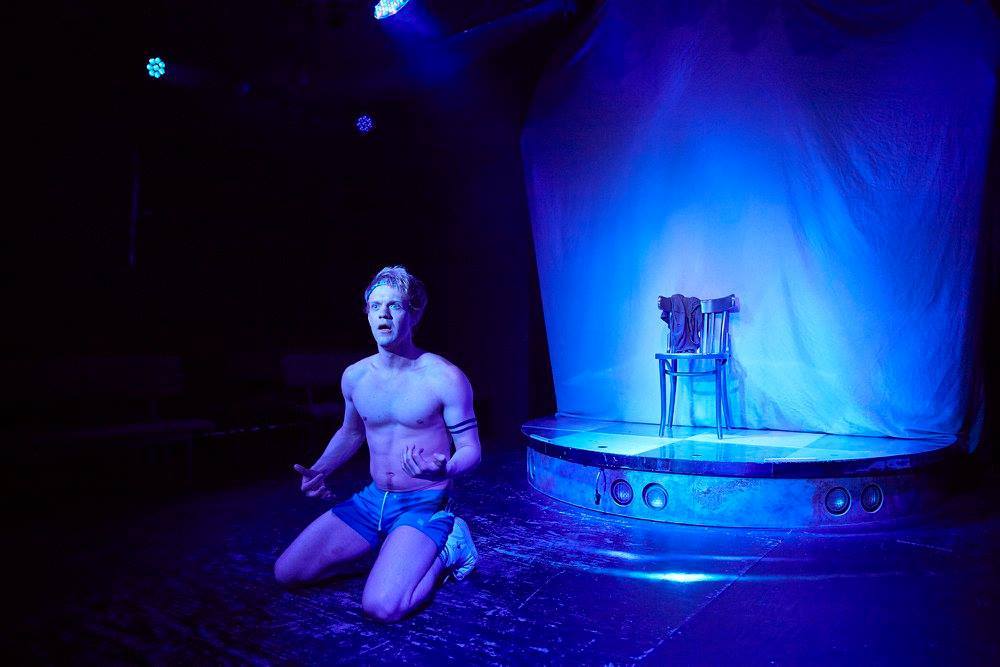
Denholm Spurr as Nameless in The Chemsex Monologues


Bleeding Hearts With Regina Spektor

There’s a new Regina Spektor album on the way and I am excited about that. Her latest song Bleeding Heart has a curious melancholy to it. If you listen to each verse it tells the story of someone who, for so long, has been lonely and angry. They’ve been stuck at the back of the class, ignored at the dance, wishing for connection with others but getting rejection instead. So they get bitter, start drinking and wall themselves up in their “prison-like home”, brooding on their memories and hating on the world of judgemental, unfriendly people. “It’s you versus everyone else.” Regina sings on that someday they’ll grow up, forget the pain and move on. That is until they see “a sad pair of eyes…and up will come back all the hurt.” All they’ve repressed and suppressed will come flooding back and even though they want to help they’ll move on because their life has been tough enough, “cause you won the war so it’s not your turn but everything inside still burns.” And they douse that fire with more drink, thinking on the refrain: “never never mind bleeding heart, bleeding heart, never mind your bleeding heart.” But everything changes in the final verse.

How long must I wait till you learn that it’s not too late,
How long must I cry till you know that you really tried,
How long must I try till you learn that dreaming’s hard,
How long must I dream till you heal your bleeding heart,
Never mind your bleeding heart.
 .
And that’s just it, we should always mind our bleeding hearts. Because they’re right there, in our chests, all the time. To not get to know our hearts is like having a smart phone without any apps or only playing Goldeneye on the N64 (as good as that game is) – we’re severely underusing this fantastic piece of technology.  Just like a smart phone, the heart is fragile, prone to breaking and bleeding, and it can be very tough to experience this. What we tend to do though is try and ignore the times when we are hurt and upset. Much simpler to brush these issues aside, pretend we’re ‘fine’ and move on. It’s all that keeping calm and carrying on rubbish, the stiff upper lip bullshit and all the other ways we try to condition and cajole ourselves out of having feelings as we pretend that not being invited to the party didn’t upset us or all those other times we’ve been forgotten and ignored haven’t hurt us. But those things do hurt and their effects do add up and we can’t hide behind seeming indifference and bitterness for too long.
 .
Fortunately, as Spektor in her endless wisdom, already knows, it’s not too late to recognise we are human: fallible, fragile and oh so incomplete. It’s never too late to have another go at being human, to try getting in touch with our emotions and recognising our feelings. We can also acknowledge that we have really tried even if we don’t think we have. We can be kinder to our past selves because they were the ones that got us here and without them we wouldn’t be where we are today. Sure, we might not have always used the best tools or made the best decisions but we did try and that’s something we can keep on doing and maybe now we can do it with better tools and not make the same mistakes. And dreaming is hard, it’s dangerous to want things you might not get and to hope for the best in such seemingly hopeless times. Far easier to wall ourselves up in cynicism and prison-like homes. But isn’t that life of passivity, denial and fear much worse than one of wanting, striving and dreaming? And in amongst the making up for lost time, the trying and the dreaming well maybe, just maybe, our precious bleeding hearts will heal. So, yes, always mind your bleeding heart.

Game of Thrones: One Penis Doesn’t Make Equality

They say one swallow doesn’t make a summer and the same has to be said for Game of Thrones‘ latest attempt at bridging the gender nudity gap. You might not have heard of GoT but it’s a TV show about monarchs, back stabbing, walls, climatic extremes and sex (contemporary politics basically but with dragons). Something that also features prominently is nudity. Naked women abound in the show, sometimes they’re just hanging out topless at their window, sometimes they’re being stripped in front of the other characters, sometimes they’re stripping, sometimes they’re emerging from flames with no clothes on…you get the gist. However, what is often lacking are naked men…until now (a few spoilers ensue, one involves a penis).

https://i.kinja-img.com/gawker-media/image/upload/s--Z1r3ddW0--/c_scale,fl_progressive,q_80,w_800/xb0mdu4e8ovvyi205adx.png

Yup, in a surprise turn of events that has delighted many fans (and infuriated others) we have been shown a close up of a man’s penis (see above but imagine it without the emoji). A few willies have been wangled before on the show (even if one of them was a prosthetic) but this one was up close and personal. The character played by actor Rob Callender is an actor playing another character (it’s all quite boring really) and he gets his dong out to check for genital warts. Turns out he has them. And so GoT did it, it unleashed the penis and we got a face full. The glass ceiling of male nudity has been broken…or has it.

Unfortunately, one penis doesn’t make equality and whilst the odd cock shot does redress the balance it’s about more than just exposure. It’s about a whole culture in which it is normal to regularly see women naked, often objectified and reduced to their genitalia. It is about a culture in which men write the books, direct the shows and get their penises out only once in a while and rarely as sex objects. If we really want “total equality” as actor Emilia Clarke is calling for we’re going to have to do more. But that equality doesn’t have to mean routinely objectifying men as often as women are, in fact, I’d suggest we veer away from routine objectification entirely (you can use google if you really want that). A show like GoT provides interesting characters and their nudity should form part of their role and not be a needless adjunct to please a subset of audience members. Just as Clarke was happy to have her character emerge naked from a fire to show her strength (she has flame resistant skin), let’s have naked men appearing from battle as well and not just checking their members for warts (as important an act as this is). So, yes, a battle has been won, but the war is still waging. Despite winter’s arrival we must call for more men to remove their battle garments whilst encouraging writers and directors to ensure female nudity earns its place on-screen and doesn’t just exacerbate the denigrating and objectifying culture of nakedness within patriarchy. We can reclaim nudity. Equality is coming.