You Can’t Stop The Beat Of Equality

Fascists painting swastikas in blood on the sides of buses during an anti-refugee march in Dover. Rich Oxford University alumni threatening to write Oriel College out of their wills if the college removes a statue of the racist Cecil Rhodes. Mega-corporations getting away with avoiding paying billions of pounds worth of tax during a time of austerity and increasing inequality. Sometimes, maybe always, it seems like the world is going to pot and that the bad guys really will win. And whilst I don’t think equality and justice are guarantors but are contracts in need of endless renewal, in the same way the social fabric is a patchwork in need of constant darning, I do know that despite all the hatred out there it is so much easier being nice. Plus, nice people get a better soundtrack.

Bigotry is hard work. As the Red Queen boasts to Alice that she can believe six impossible things before breakfast so too must bigots juggle all sorts of contradictions and paradoxes in order to justify their narrow-mindedness. For example, one of the fascists who marched in Dover yesterday has to believe that certain groups of people are inferior whilst demanding that they themselves, and the people they care about, are superior. It tends to be one rule for them and one rule for me (and my family). A fascist also has to believe that our economic problems can be blamed on migrants and refugees, meaning they get to scapegoat the vulnerable whilst not bothering to question the economic and political realities that keeps a constant stream of wealth and power flowing to the elite minority at the expense of the majority (a majority that they are part of!). On the other hand, it’s much easier for a nice person who realises that nothing makes anyone inherently better or worse than anyone else and so doesn’t need to expend lots of energy discriminating against certain groups. They can also google around the issues of inequality rather than just accept what the newspapers tell them. At the end of the day (and at the start of it) love is a much more sustainable energy source than hate.

And nice people get a much better soundtrack. Take You Can’t Stop The Beat that ends the ace musical Hairspray (big spoilers by the way, equality wins). All the characters, even the baddies, shake their booty to a song that relishes the striving for so many forms of equality – between people of different races, skin colours and body shapes. “You can try to stop the paradise we’re dreaming of,” they sing, and of course (as Taylor Swift also told us) haterz gonna hate, because that’s what haters do. But “you can’t stop today as it comes speeding down the track,” sings Queen Latifah, “Child, yesterday is history and it’s never coming back.” And she’s right, today is zooming straight at us like a highspeed train and we get to choose whether it’s a train that runs people over or if it’s some awesome party train to which all are invited (rehabilitated fascists included). Because when it comes down to it hate and love are choices, and as difficult as we might find it to choose the latter, there’s still time to learn (trust me, it’ll be fun). And so concludes my blog about being nice – perhaps just an excuse to post this awesome song which does what this blog does anyway but too a far catchier tune (Spanish subtitles included).

The Museum Of Statues

You might have heard that Oriel College, Oxford, has come under a lot of scrutiny recently with regards whether or not its statue of Cecil Rhodes should be removed. Rhodes was a Victorian mining magnate who made lots of money from diamonds and the exploitation of labour, however, he did give some of his cash to Oxford University to set up a scholarship for international students. On one side are the students leading the Rhodes Must Fall campaign demanding that the statue be removed because Rhodes was a notorious racist and it’s pretty offensive having to walk past his effigy on a daily basis. Then there are the conservatives (for want of a better word) demanding that the statue stay because students these days are too easily offended and removing a statue is tantamount to erasing history. And there’s Oriel College staff – caught in the middle of it until a recent article revealed that a bunch of wealthy college alumni threatened to withdraw hundreds of thousands of pounds if the statue was removed. So, because money speaks louder than students (unless they’re very rich students) the statue will stay. I agree – I think the statue should stay – just not in Oriel College.

Different sides of the debate keep asking us to focus on the ‘bigger picture’ – be it the reputation of Oxford University, the literal whitewashing of history, historical legacies of racism and not forgetting the contemporary incidences of racism in a notoriously white university, brilliantly explained in this article. However, there’s another bit of the ‘bigger picture’ that I would humbly suggest we are missing – our obsession with statues. I mean seriously, they’re everywhere, whole buildings festooned in big blocks of stone carved into the likenesses of…well…mainly white men. White men who led us into war (Winston Churchill, Nelson), white men who got rich (Cecil Rhodes, George Peabody) and white men who fought dragons (St George). Sure, women get statues too – Queen Victoria and Elizabeth, two women who by the sheer accident of birth ended up ruling our country. There’s Justice and Britannia, not real women who existed and actually did things but personifications of moral sensibilities and countries. And Jane Austen gets some odd statue-plaster-thing outside her museum in Bath but then it’s not as if her novels were known for their diversity.

Nowadays we tend not to erect statues to random rich and belligerent men – it’s not as if Cameron and Blair are getting plinths any time soon (at least I hope not). But back in the day people loved it or at least the people who actually had the money and power to demand a statue be built in the middle of London or on an Oxford University college. And that’s because back in the day rich, white men were writing history – a history far too many of us take at face value when we decry that removing Cecil Rhodes’ statue is akin to rewriting history. No, it’s recognising that history tends to be some terrible, bigoted agenda written by the victors (aka supremacists) with whom we no longer want to associate ourselves.

So where should the statues go? Into the fifth or sixth empty home of some random rich person who would rather their house lie empty than house people in need of accommodation. So it can accommodate statues instead. They could all be lined up for people (well, overly sensitive people who get easily offended when people ask for old statues to be taken down) to look at and underneath each statue there would be a plaque that contexualises it according to the latest, historical findings. Thus, underneath Cecil Rhodes would appear, amongst other things, the word RACIST. And we don’t approve of racism anymore which is why we don’t need statues of racists lining our streets and educational institutions. And rather than faff about spending lots of money on new statues we can build affordable housing instead.

https://i0.wp.com/www.ashmolean.org/assets/images/Services/RSGSlide05.jpg
The Museum of Statues (aka The Ashmolean)

This Advert Really Buggs Me

Adverts. They’re blasted at us everyday from all angles – next to our facebook posts, on billboards lining the streets, in between songs on Spotify, at the bottom of websites, in the newspapers we read and on the telly. Everywhere, adverts are everywhere, trying to convince us that if we buy a certain product or service we really will be a more beautiful/successful/happy/worthy/etc person. I try to ignore them as best I can, especially the ones that make me feel very ugly, but sometimes they get through. And the British Airways Holiday advert is one of the ones that slipped through my defences.

I think it’s the song that does it for me. Lightning Bolt by Jake Bugg. Now, I’m sure Jake Bugg is a really nice guy and it’s a great song – grabbing hold of life and really trying to live in a world that conditions us to just get by. Hence the lightning bolt – a metaphor for the electrifying possibilities of life. Yet I associate none of these things with booking a holiday with BA (not that I’ve ever booked a holiday with BA). Booking holidays is actually quite boring because it involves lots of online forms and they really aren’t fun. Yet here’s BA using a catchy soundtrack and two passably attractive, heterosexual people, to try and convince us that booking a holiday with them is some sort of guarantor of euphoria (it’s not, trust me).

And it’s what the irritating couple do that’s even worse – they jet off to fancy locales with little regard for their bank balances, they order coffee in quintessentially rustic cafes, they take photos with overly large lenses and the second they get home, the second they actually have to sit down and spend some time together and contemplate the hollowness of their relationship they just spend another thousand odd quid and zoom off on another holiday. They have sex in expensive hotels, swan around on rooftops as if they’re really living the high life and even make packing into some sort of sexy game. I’m not sure what BA is trying to sell us here – holiday packages, heterosexual monogamy or bundles of shame for not being a successful enough yuppie. But, oh no, the couple are rowing in front of a fountain but, phew, BA is to hand with its 24 Hour Helpline, which for some reason provides marital advice as well as insurance advice. To cut a long story short, she ends up dancing with an older man, then they go to Barbados to try and patch things up before she tries to run off into the sea to escape their shallow, airbrushed sham of a relationship.

So, yeah, you might have guessed that this advert really bugs me, especially because it always (and I mean always) comes on when I’m catching up on murder mysteries on ITV. It’s the indie rock sounds of Jake Bugg, the ridiculous lifestyle of the couple that would bankrupt most people, and the fact that it’s for BA, which just makes me think of being stuck in a stuffy, giant, metal tube at far too high an altitude (ideally miles away from any lightning bolts).

A New(ish) Story: The Heroic Community

Stories are often constrained by the medium through which they are told. Shakespeare’s five act play structure lent itself well to the amount of time people could sit/stand through a play at the Globe. Dickens’ instalment-stories leant themselves well to regular publications in periodicals. And for the past few decades Blockbuster movies have slavishly followed the Hero’s Quest style narrative with great, multi-billion dollar success. And we have the original Star Wars trilogy to thank for this, or should that be blame? Effects-heavy, stereotype-rich and plot-lite is the typical approach for your average Blockbuster – there are basically only 90 minutes to tell the story of one main character (usually a man) doing a series of heroic (usually violent) things culminating in an explosive climax. Meanwhile, in-depth characterisation and moral ambiguities are ignored. Endless films keep using this formula backed up by a growing library of how-to books based on questionable psychology and claims that the Hero’s Quest is the best structure for a good story. Really!?

But that was then and this is now, and there’s a new hero in town, namely the television series. Attracting mammoth budgets, very special effects, stellar casts and nuanced plots – each 45 minute episode is now a bit like an instalment of a Dickens classic. These stories can involve multiple characters and multiple plot strands as well as having the time to explore bigger questions beyond the best way of blowing something up. We finally have an antidote to Hero Quest-itis, we’re no longer just watching the story of one man desperately trying to invest in staving off a midlife crisis. This is no longer the story of the lone hero getting by with a little, token help from his friends, it’s when the friends get to become actual characters with depth, backstory and plot. It’s not just Leia, R2D2, Chewie et al being plot devices in Luke’s success, it’s about opening up heroism (in all its forms) to the whole group. It’s basically the movie Pride.

https://i0.wp.com/www.ziff.or.tz/wp-content/uploads/2015/06/Pride-Film-Poster-638x424.jpg

Based on a true story this tells the tale of the group Lesbians & Gays Support the Miners who raised money for striking Welsh miners in the 1980s. One of the pioneers of the group was Mark Ashton, a young, London based activist, and Pride could have been The Story of Mark – how he went from living your average life in London to being a hero of the Civil Resistance to the 1970s/80s Conservative Government, how he had to face obstacles (discrimination, violence etc) but triumphed over them to glory. But no, this film wasn’t just about Mark, it was about tens of people – a mix of gays, lesbians, miners, protestors, parents, friends, families, women, men, homophobes, naysayers, and bigots. The film portrayed the lives of many people, not just one, and gave depth and personality to a range of characters – quite a feat given that they didn’t have at least 20 episodes to do it in. Multiple protagonist stories abound (Calendar Girls, August: Osage County, Shakespeare’s canon) and they are a good antidote to the idealised, hero story. Pride tells a very different story – that of the Heroic Community perhaps.

The simple point is that we don’t have to look far to see beyond the structural limitations of the Hero’s Quest – for too long this go-to plot has been gone to by movie makers because it lends itself brilliantly to 90-minute, Blockbuster, cash-making extravaganzas. But the bit that really bugs me is the huge amount of literature, science and philosophy that is used to justify the endless use of the Hero’s Quest (ahem, Joseph Campbell). Fortunatley, we can retaliate by populating our stories with diverse characters and not being afraid to diverge from the predictable path of the hero. TV, comics, books, plays and video games are already streaming ahead (and have been for a long time) and now mainstream cinema needs to catch up.

Money Makes The World Go Round

In my previous blog You Don’t Own Me I cited the work of anthropologist David Graeber and his very big book Debt: The First 5000 Years. It’s not quite 5000 pages long but in his tome he explores the origins of money in debt, war and slavery. He suggests that debt existed before money and human societies have been divided between debtors and creditors for a long time. Debt peonage is when someone has to pay off their debts by working for someone else (i.e. if they can’t afford to pay off their debt with cash). It’s also known as debt slavery and people have been doing it throughout history – the priests of Sumerian temples would make peasants work the land and pay with produce in return for being able to live on the land and the Romans would often enslave those they captured and make them work in their houses. Slavery is the ultimate form of ‘ownership’ whereby someone has complete power over someone else’s life (the slave ‘owes’ their life to the their master). However, slavery wasn’t the only way to increase one’s power, money was also a good mechanism.

Let’s say the Roman Empire is expanding and they’ve just conquered Britain, the Roman Emperor won’t want to kill all the Britons because not only will many of them make good house slaves but they can also be used to ensure the British economy keeps going. Of course, that’s a British economy that now serves Rome. What the Emperor does is issue all his soldiers with Roman coins which he can let them spend in Britain. The soldiers will be expected to pay tax and they have to do that with Roman coins, so coinage in this regards is a good way of ensuring the soldier’s money goes back into the Roman Empire’s economy. Meanwhile, the Britons that haven’t been enslaved will want to attract the custom of the soldiers so they’ll get busy making and selling stuff for the soldiers, which will be paid for with Roman coins. Furthermore, the Emperor might also wish to impose a debt on Britain – the war machine costs a lot of money and invading Britain proved quite expensive, so he’ll make them pay it back. Yup, the conqueror is enforcing a debt on the people he just conquered. He can do this because he’s the winner and he’s got all the power in terms of brute military strength (the soldiers) and economically (in terms of all the Roman coins). So this is how you grow an Empire – conquer people, expand your currency and force your conquests into debt. It adds a twist to the famous phrase “man is born free but everywhere he is in chains”…or in debt perhaps.

And so on and so on for thousands of years argues Graeber. Even now we still live in a time of debt – whether it’s the banks offering giant loans to help people buy houses or it’s the World Bank loaning money to developing nations to help them get on their feet whilst ensuring they’ll be in debt for years. However, things are different now because the value of a currency is no longer defined in terms of some underlying precious material (i.e. gold) for which it could be exchanged. It’s not as if for every £5 we have there’s a £5 amount of gold hidden in a vault somewhere. We don’t have real money anymore, instead we have virtual money that exists as numbers on a screen. Sure, we still use coins and notes but those things themselves are worthless, it’s what they stand for that counts. However, as money is virtual it theoretically means there is no limit to how much money we can have – numbers on a screen are limitless after all. So we can keep spending more and more and getting in bigger and bigger amounts of debt for longer and longer, hurrah!

But why this brief history of money? Because money has been and continues to be a big deal – it makes the world go round, or so Liza Minelli sings in Cabaret. Currently, the US dollar is the most powerful currency in the world and the States put a lot of effort into ensuring it remains so (read that as military force, foreign policy and diplomatic effort). Money is one of the most important numbers we’ve got – it’s how we value almost everything, from the price of a lemon through to the price of an hour of someone’s labour. And because money has been such a big part of our societies for so long its effects have reached far beyond the economic realm into the political and personal realms as well. To be continued…

You Don’t Own Me

Grace, the Australian singer, recently covered Lesley Gore’s ace 1963 single You Don’t Own Me and it sure gets the feminist feet stomping. Each inspiring verse is interspersed with some sexist thoughts from rapper G-Eazy (Sl-Eazy more like it) as he tries to assert his male dominance over the woman he “would love to flaunt” as she’s not one of your average “basic bitches”. Indeed, she’s the “baddest ever…Never borrow, she ain’t ever loan, That’s when she told me she ain’t ever ever ever gonna be owned.” Then Grace blasts back with a booming chorus and puts Mr Misogynist back in his place. But all this singing of possession makes me wonder exactly what ownership actually is?

Why is it that Grace needs to assert that someone else does not own her? How could the scenario even have arisen in which people come to think that they actually own others? Part of the answer (and I reckon quite a big part) is, unsurprisingly, to do with money. As a brief scan of anthropologist David Graeber’s 500+ page book called Debt reveals, money has played an integral part of human society for hundreds of years. Economists tend to tell us that money came into being when barter systems got too confusing – if I give you ten oranges, three pigeons and a mug in return for a pair of shoes, two bananas and a kitten…but instead of all that faffing about with oranges and bananas a different system of exchange was introduced whereby something came to act as a store of value. It could be a coin, a rod of iron or a piece of paper, as long as everyone agreed that the values remained consistent and commensurate over time.

But, argues Graeber, that fictional land of peaceful and friendly barter didn’t exist, as least not on a large-scale. Instead, he argues that money grew out of debt. Take the Roman Empire for example – when they invaded a new territory they would often turn their captives into slaves. Slavery is the ultimate form of ownership as it rips someone from their social context and ties them to someone else. The alternative to being enslaved was basically death or slowly, slowly buying back one’s freedom by working long and hard enough. A slave owed their life to their master but only because the master had the power. Money itself is also debt. On a £10 note it says: “I promise to pay the bearer on demand the some of ten pounds.” The actual piece of paper is worthless but it’s what it stands for – i.e. that these items or services are all worth £10. Money is one giant system of IOUs. However, it’s clearly not an arbitrary system because there’s a whole system of banking, policing and law-making  to ensure that people pay their debts.

So, concludes Graeber, behind money is debt and behind debt is power, and the history accords with this – the economic power of the Roman Empire depended on its military strength because it had to have a way of enforcing its debts, having a giant army helped with this. And something similar is true today, only those with power can call in their debts and this power usually involves violence or the threat of it. G-Eazy says that Grace is an independent woman “All because she got her own dough, Boss bossed if you don’t know, She could never ever be a broke ho”. And that certainly is one way of getting out of slavery, by making lots of money, but humans existed long before money and whilst we do put a price on freedom and maintain that price with force it’s still just a system of belief, albeit a very powerful and tragic one. But maybe there’s a different way. More ideas to come, in the meantime here’s the original, without G-Eazy offering us his sexist thoughts in between the good bits.

Star Wars Episode 8: Rey Retires Early (Spoilers)

The beginning of Star Wars Episode 8 is going to surprise quite a few fans. It goes like this: having arrived at the secret island where Luke Skywalker has been hiding, Rey, the hero of Episode 7, will give Luke his lightsaber back. After that they’ll have tea, chat about Midi-Chlorians for a bit and then Rey will say her goodbyes and leave. Yup, she will exit the plot and go off with Chewie to fly around the galaxy in a cool spaceship. But why do something as drastic as this, just when Star Wars was slowly catching up with the 21st century by casting a woman as one of the heroes of the film? Because Rey knows nothing could be more boring than having to go through the motions of becoming a hero – we all saw Luke Skywalker do it and given that Episode 7 was basically Episode 4, they might as well not bother making 8 & 9 and just copy/paste the new characters on top of the old ones in 5 & 6. It’ll save us all the cinema ticket price.

In Episodes 4 – 6 we saw Luke Skywalker go through the motions/plot devices of the Hero’s Quest, a supposedly “archetypal” story structure that 20th century mythologist Jospeh Campbell came up with. Campbell argued that this “fundamental” story has existed in cultures around the world for millenia. He thought it was the story of all time. In brief it is the story of a character who is called to do something great – drop a magic ring in a volcano, kill Voldemort, kill Darth Vader etc. Firstly they get some mentoring so they can learn the tricks of the trade (often killing), then they’re given a talisman to help them on their quest (often a weapon), then they leave the safety of their home and trek off into the unknown. There they will be tested by a range of foes and challenges (usually fights) until eventually they have to face the big baddy in order to triumph (usually an even bigger fight). Meanwhile, they’ll rescue a damsel in distress, resolve their father issues, and return home victorious. Luke Skywalker went through this exact process because George Lucas was good mates with Joseph Campbell and so based Episodes 4 – 6 off of Campbell’s research.

A few other hallmarks of the Hero’s Quest include the fact that heroes are basically always men – women are either trophies to be won or seductresses to be conquered (or a bit of both). However, with the introduction of Rey in Episode 7 the masculinist/sexist bent of the Hero’s Quest has been challenged (as it has in other films such as Mad Max). This is progress: Rey has been given the chance to play a role that was previously reserved for men. She’ll now get to fight with giant lasers and move things without touching them. This is awesome and as Laurie Penny makes clear it’s ace that new, diverse characters are finally being invited to the hero’s table – this represents a big cultural change in the stories of our times.

But the Hero’s Quest is still the Hero’s Quest – an overly-simplistic, totalising monomyth concocted by Campbell and retroactively applied to hundreds of older stories. It’s easy to claim something conforms to the Hero’s Quest as the structure is so broad and vague – someone gets asked to do something, they’re challenged, things happen and then more things happen (these things usually always involve violence). But it’s blind to cultural sensitivities and nuances, and up until only recently it was reserved for cis, white men. And Rey knows this. Rey knows she hasn’t spent years living by herself on a desert planet just so she can endure an unimaginative, oft-repeated plot structure – one where she finds a mentor, gets trained, fights foes, resolves her mother issues, and returns home the hero (yawn). She doesn’t want  a story that’s so historically mired in sexism, patriarchy, appropriation and the values of capitalism (especially ruthless individualism). “Sod that for a packet of biscuits” thinks Rey, she wants a story that transcends these tired clichés and prejudices. So you can have your lightsaber back Luke, Rey’s got a different narrative to live.

The Hero’s Quest in brief!

How To Flake Well

So, you’ve been invited to more than one New Year Eve’s event and a couple of them look pretty fun. But you can’t quite decide which one to go to so you’ve said a vague yes to all of them. And as the days count down and it gets closer to 2016 so the last-minute cancellations/changes of plans/surprise illnesses start to appear as you begin flaking on the events you don’t want to go to. Yup, it’s that time of year – the festive period – when statistics reveal that flaking is at its highest.

It’s not an uncommon phenomenon – flaking. It takes many forms: not turning up at the last minute; texting half an hour before to cancel; getting a better offer and changing your plans; deciding you’re going to spend the day in bed. All of these, providing it involves reneging on a planned social event, constitute flaking. Quite a lot of people do it but they tend to do it very badly, getting caught up in webs of white lies and half-truths as they don’t want to hurt anyone’s feelings. Unfortunately, webs of deceit can get a bit tangled and sooner or later the truth will out and not only will you have disappointed your friend by not turning up to their event but you will also have upset them by lying to their faces.

And that’s the crux – when it comes down to it, which is worse – declining an invitation or lying? The latter, of course. And herein lies the solution, herein lies the trick to successful flaking – telling the truth. Yup, it’s as simple as that, no elaborate stories about lost cardigans, surprise tickets to see Adele and long-lost lovers appearing, just plain, simple honesty. It doesn’t have to be brutal honesty – “I’d hate to go to your boring party where I’ll meet only self-righteous, pompous boring people” – it can be sugar-coated honesty instead – “Ah, that’s such a lovely invitation but no thank you.” This might appear to fly in the face of everything we’ve been taught about being ‘polite’ but I think honesty trumps politeness. People are more robust than we think and can probably handle the odd rejection better than being lied/patronised to. We all have a right to refuse an invitation after all, it might not be an actual right recognised by the UN but there’s no law saying we must go to everything we’re invited to. Sometimes staying home and watching Netflix is just more fun.

Furthermore, flaking well is very important in this day and age when people don’t have much time and are just so busy. So the trick here is to manage other people’s expectations from as early on as possible – “Oh I’m just so busy” hours before an event starts that you’ve known about for yonks doesn’t really cut it but “Gosh, I’m just so busy at the moment, I’m finding it hard to commit to things” said a suitable time before the event is better, and also lets others flag you as that overly-busy, potentially-flakey person. So good luck flakers, here’s to 2016 being a year of flaking well. Consider this fantastic video a How-To guide….

Was Agatha Christie An Anarchist?

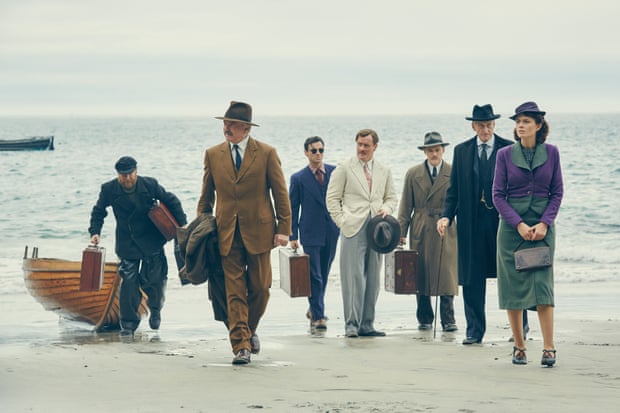
A toffish cad. A louche adventurer. A religious spinster. A pompous war general. A Harley Street doctor. A private investigator. A self-important judge. A teacher at a private girls’ school. A supercilious butler. A jittery maid. Yup, it’s the characters of And Then There Were None, Agatha Christie’s most successful murder mystery novel. Now, many of us will know Agatha Christie not only for her ingenious twists but also her racism, homophobia and sexism. She might have been ahead of her time in terms of plot devices but she certainly wasn’t when it came to values. However, it’s always the ones we least suspect and I think that behind all the casual bigotry lay an undercover anarchist. Here’s why (with big spoilers but I certainly won’t reveal whodunnit).

It starts with that cast of ten characters – between them they represent the British establishment: there’s inherited wealth, colonialism, imperialism, religion, the military, the justice system, private school, wilful/enforced servitude, the class divide and the law (perhaps there should be an MP there too but inherited wealth and private school pretty much cover that one). They are also predominantly male and all are white. So they’re everyone wrong with elitism and all are incredibly nasty people – not least in personality but also because each one of them is guilty of murder. Yup, as if being bigoted snobs weren’t enough they’re also killers and many of them show no remorse for it – turns out there’s such a thing as daylight murder as well as daylight robbery.

So this just basically sounds like yet another homage to posh, British people a la Downton Abbey, Brideshead Revisited and any Tom Stoppard/Noel Coward play. But because it’s Christie and because she really couldn’t let ten terrible people get away with murder she does something your typical English-aristocracy-tribute doesn’t do – she kills them all. That’s right, one by one they get picked off, in increasingly brutal fashion, by an unknown killer on some sort of deranged vendetta. So that’s how Christie treats her posh people and for me nothing could scream undercover anarchist more loudly. Of course, anarchists don’t condone murder but they do condone a complete overhaul of the establishment and what better way to do that than metaphorically bump off all the usual, elitist suspects – the ones with the vested interests that keep society unfairly rigged in the favour of the 1%.

Convinced? Probably not. But post-colonial, feminist revisions are always fun, next time I’ll apply the queer gaze. Although before I do that I should probably lay my cards on the table and confess to being a huge Christie fan – whilst I can’t help but feel she had similar views to her characters (but perhaps not, Hercule Poirot was a refugee after all and made a habit out of standing over the dead bodies of rich Brits) she was the mistress of the red herring and surprise ending. The trick now is to take those plot devices and place them firmly in the 21st century, to ensure curtains for bigotry as well as all those nasty, murderous elites. Oh, and the BBC are showing this Christie classic at the moment, it even stars Poldark!

https://i.guim.co.uk/img/media/5d1f01b367318717fa96fb7d18d6ec5e6568d0d3/0_0_4284_2856/master/4284.jpg?w=620&q=85&auto=format&sharp=10&s=3edcc85717f2d2d6ac96224642c880f4
When Brits go abroad they don’t come back…

Star Wars: The Force Awakens (Spoilers)

I’ve finally seen it, the new Star Wars, and boy did it deliver – loadsa aliens, giant space ships, cute robots, a female protagonist that isn’t forced to wear a bikini and pastries, a character of colour in a lead role, amazing explosions, lightsabers, an awesome baddy and an average plot. It did what it said on the tin and gave a whole new generation of kids an endless supply line of plastic toys to get at Christmas. So here’s a quick review in which I highlight some of the hits and misses, big spoilers ahead (also for Scream 4).

HIT – Better Than Scream 4: Ok, what does a slasher series from the 90s have to do with a space opera? Well, over a decade after Scream 3 was released we were given another outing of a guy in a ghost mask killing teens. It did what franchise rebooting films should do and had the surviving members of the original films return as well as introduce a whole new cast of preppy, spunky high schoolers all waiting to get killed off one by one. But despite the tagline “new decade, new rules” it actually proved to be pretty old-fashioned, sure there was the odd smartphone and facebook reference but the monochrome and hetero cast just didn’t ring true for the 21st century and it spent far too long paying tribute to the old films that it didn’t do anything new (save for the killer twist at the end, that was ace). The nail in the coffin was killing off the entire new cast and leaving behind the original trio…again. It also wasn’t very scary. Fortunately, Star Wars didn’t make this mistake – whilst it brought back the old cast it also gave us a new, awesome one and even went as far as offing one of the old members. This is a good way to keep old fans but get plenty of new ones. Although Episode 8 could backtrack on all this if it becomes all about Luke Skywalker again (yawn).

MISS – Conflict Needs Tension: I’m often told that all good stories need conflict – a character wants something but then something else blocks their desire, namely an obstacle, and this creates conflict. We then watch as the character tries to overcome the obstacle. Will they find BB-8? Will Finn survive her kidnapping? Will they find BB-8 again? But it’s quite easy to create conflict, as simple as DESIRE + OBSTACLE. However, if we want the audience to be hooked by a conflict we need to feel genuine tension, we need to feel the stakes are high, and that the character really might not get what they want. This is where the final part of Episode 7 got a little dull – the whole Starkiller Base (basically a very big Deathstar) wasn’t very believable in the first place, it’s silly solar powered laser was just silly and the way it could just blow up planets was boring. So, despite the Starkiller Base being a very big obstacle I was never convinced it was an actual threat. Sure there was conflict: DESIRE (Rebels want to survive) + OBSTACLE (Starkiller is going to blow up Rebels), but I’d seen this before in Episode 4 and the ease with which a few Rebel spaceships and well-placed bombs destroyed the whole Starkiller anyway was just a let down. Yeah, it was one giant conflict but it lacked tension, I mean, did we ever think they could fail? And seriously J. J Abrams, why not invent a new plot device rather than rehash all the old ones…desert planet, cute droid carrying secret message, baddy in mask, big spherical laser firing spaceship thing etc.

HIT – Into The Grey Zone: Star Wars is known for it’s really simple plots – Good v. Evil, Light v. Dark, Jedi v. Sith, etc (“kindergarten mythmaking” as a review in the FT put it). It presents two opposing poles and has characters take sides, you’re either a goody-goody or a baddy-baddy. But this time things were a little more nuanced as the film took a look at that place between the poles, namely the ‘grey zone’ – where moral ambiguities abound. Take Finn for starters – he starts out life as your average Stormtrooper – just hopping from planet to planet taking other people’s orders and killing innocent villagers. But when the lasers start firing and the people start dying (including his Stormtrooper mates) it all gets a little much for him. He takes off his mask to reveal a human underneath and then decides to join with the goodies. In Finn’s character the normally faceless Stormtroopers are humanised and we come to realise they’re flawed and fallible, and it isn’t just as simple as Good v. Bad. Next comes Kilo Ren (the best character!) – Leia and Hans’ son who has turned to the Dark Side and got himself a cool, new lightsaber (and a hilarious twitter account). In his character we see a genuine internal struggle between good and bad, we see someone hovering in the middle, with an emotional and unstable core that could tip either way. Unfortunately it tips towards the Dark Side. But this brings me on to my biggest complaint…

MISS: Why Bother Being Bad? I just don’t get why anyone would choose to join the First Order (basically the Empire Mark 2) – firstly, the life of a Stormtrooper looks exceptionally dull especially if they have to wear their helmets all the time. As for Force users, those on the Dark Side end up working for complete psychopaths but unlike bankers they don’t even get fancy apartments in London as compensation. So what’s the point, what’s the appeal, save power, but what’s the point of power if you don’t get to indulge in it? What possible motive could so many people have for just going around destroying everything? Don’t they even want to inhabit the planets they defeat and build elaborate temples, casinos and amusement parks? What do they even eat? We all know that villains are way more interesting than heroes but villains need back stories too and whilst Kilo Ren got one all the others were just cardboard cut-outs. Who the heck are Hux and Snope for starters? Maybe Episode 8 will answer these questions but as for Episode 7, I just didn’t think the baddies had credible motives for all that destruction. Baddies are human/alien after all and it’s always fun to know why they are the way they are.

So, all in all, I’d say it was a Hiss or a Mit…not quite as great as it could have been but still very fun.  The new Star Wars team really must learn the important lesson of Scream 4 – pay homage to the original movies but give us something new as well. In Episode 7 this came in the guise of Rey and Finn, two new and exciting characters, but the plot also needed a reboot, an even bigger Death Star simply will not do. And now for lots of thumb twiddling until 2017…